Insect Technique
Dr. William Lemon
2014
HHMI Janelia Research Campus
Ashburn, VA, USA
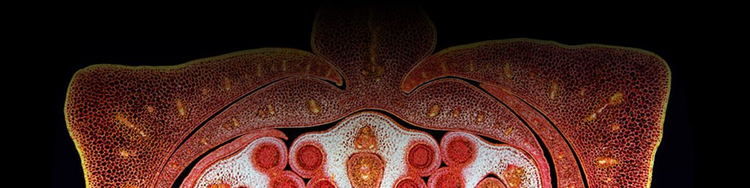
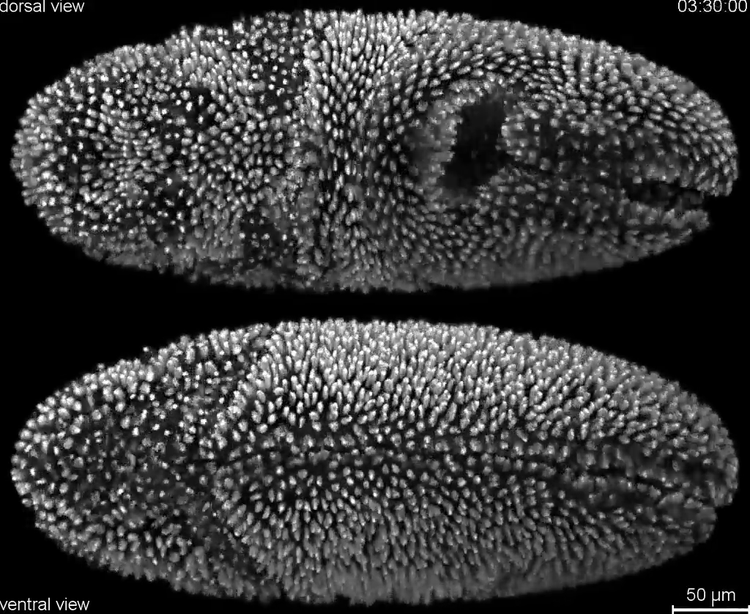
Specimen: Multiple views of Drosophila embryonic development. This embryo was recorded in 30-second intervals over a period of 24 hours, starting three hours after egg laying. The video may help reveal cell lineages, cell differentiation and whole-embryo morphogenesis, essential aspects of developmental biology. The newly hatched larva begins to crawl off screen at the end of the video.
Technique: Custom-built simultaneous multi-view light sheet microscopy
Co-prizewinners: Fernando Amat, and Philipp Keller
Dr. Igor Siwanowicz
2010
Max Planck Institute for Neurobiology
Munich, Germany
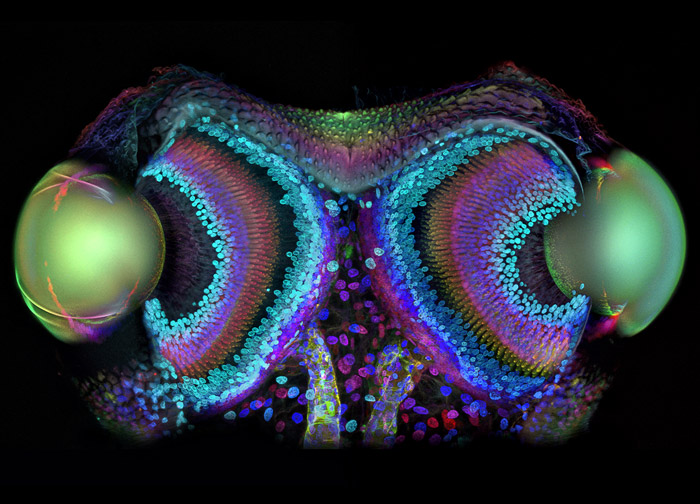
Specimen: Frontal section of Phalangium opilio (Harvestman/Daddy longlegs) eyes
Technique: Confocal
Mr. Spike Walker
2008
Penkridge, Staffordshire, UK
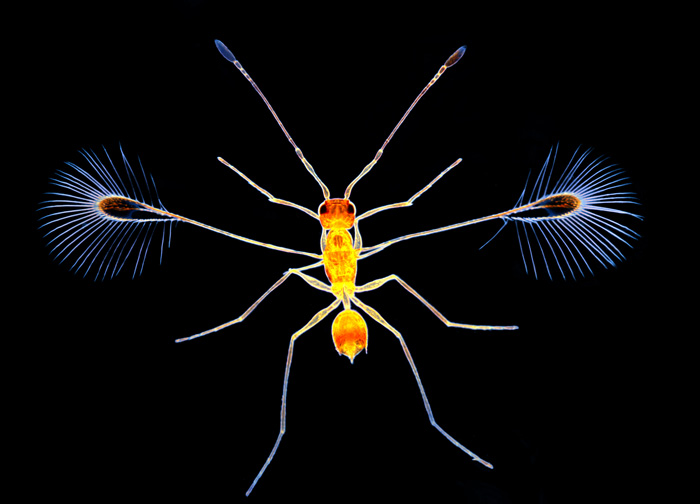
Specimen: "Fairy Fly" Wasp
Technique: Rheinberg Illumination
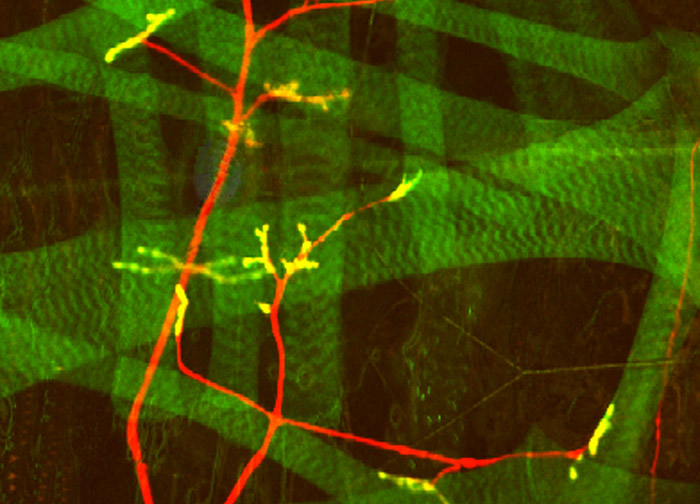
Dr. Hermann Aberle
2006
MPI for Developmental Biology
Tuebingen, Germany
Specimen: Drosophila Somatic Muscles
Technique: Confocal
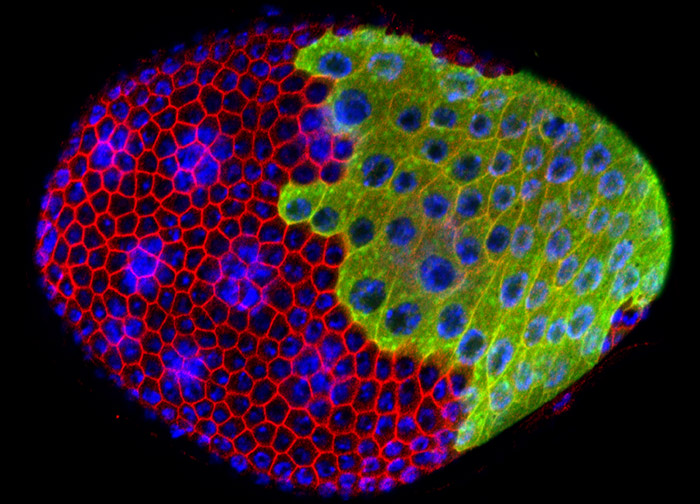
Dr. Daniel Kirilly
2004
Stowers Institute for Medical Research
Kansas City, MO, USA
Specimen: Mutant follicle cells (green) expanding on the surface of fruit fly egg chamber
Technique: Confocal, 100x Objective
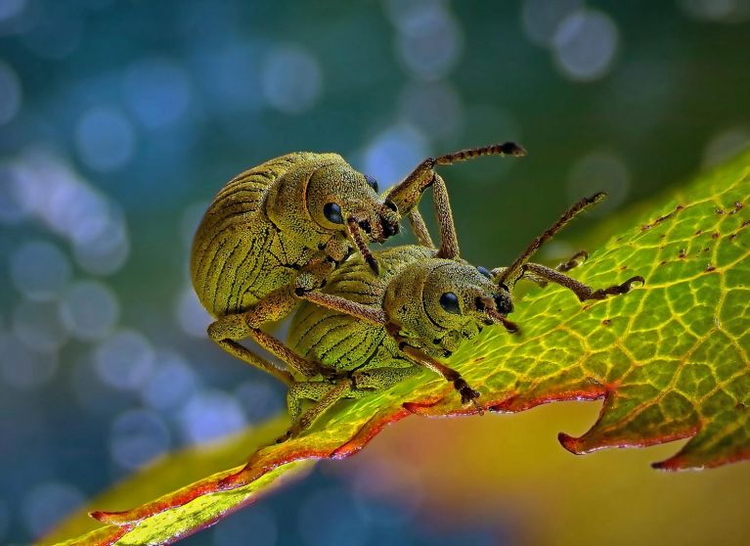
Dr. Csaba Pinter
2014
Keszthely, Hungary
Specimen: Phyllobius roboretanus weevils
Technique: Stereo microscopy
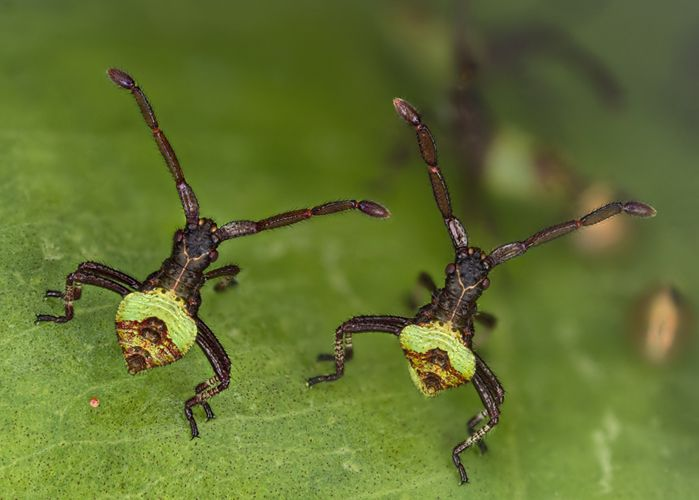
Mr. Kurt Wirz
2013
Basel, Switzerland
Specimen: "Brother bugs." Gonocerus acuteangulatus, two hours old. Size 3mm.
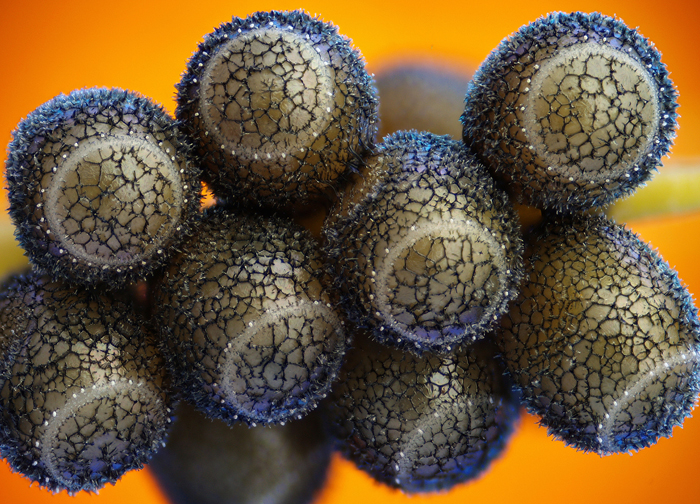
Mr. Haris Antonopoulos
2011
Athens, Greece
Specimen: Stink bug eggs
Technique: Brightfield illumination
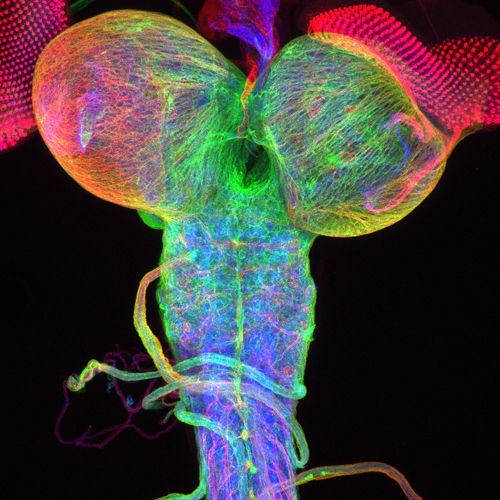
Dr. Christian Klämbt
2012
University of Münster, Münster, Germany
Specimen: Beta-tubulin expression of a Drosophila third instar larval brain, with attached eye imaginal discs.
Technique: Confocal microscopy
Co-prizewinners: Imke Schmidt
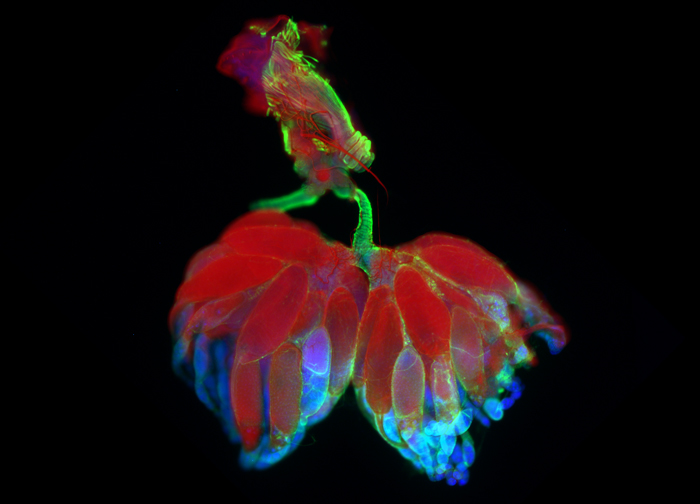
Mr. Gunnar Newquist
2011
University of Nevada
Reno, Nevada, USA
Specimen: Drosophila ovaries and uterus
Technique: Fluorescence
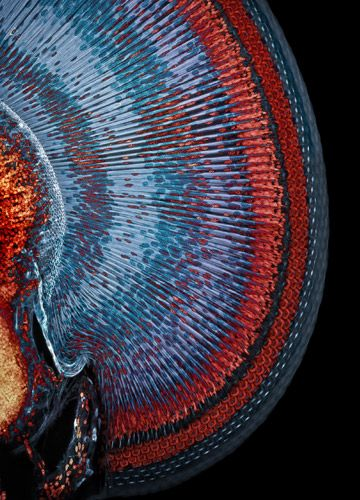
Dr. Igor Siwanowicz
2010
Max Planck Institute for Neurobiology
Munich, Germany
Specimen: Eye of a common blue damselfly (Enallagma cyathigerum)
Technique: Confocal, series projection
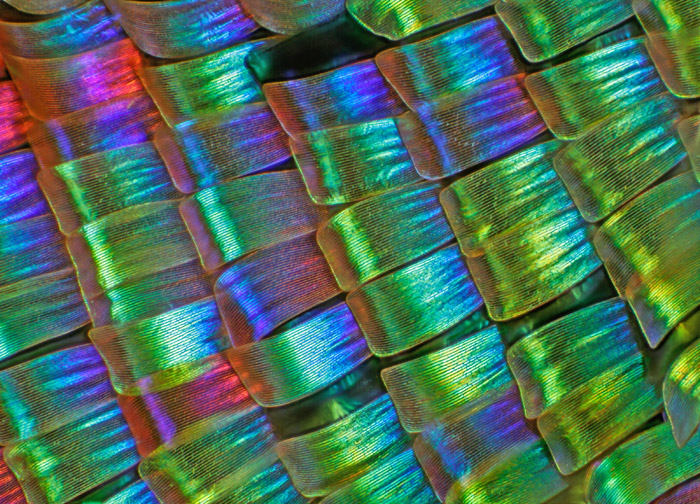
Mr. Charles Krebs
2005
Issaquah, WA, USA
Specimen: Wing Scales of Sunset Moth
Technique: Reflected Light, 25x Objective
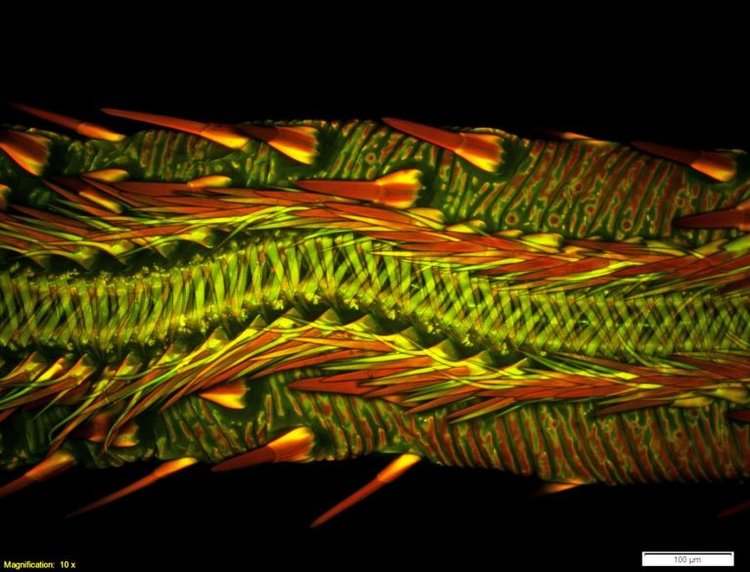
Dr. Matthew S. Lehnert
2014
Kent State University at Stark
North Canton, OH, USA
Specimen: Proboscis (mouthparts) of a vampire moth (Calyptra thalictri). The moth was captured by Jennifer Zaspel in Russia. The proboscis was imaged at 10x and shows the dorsal legulae, tearing hooks, and erectile barbs that facilitate the acquisition of fruit juices and mammalian blood when feeding
Technique: Confocal microscopy
Co-prizewinners: Ashley L. Lash

Dr. James LaFountain
2011
State University of New York at Buffalo
Marine Biological Laboratory, Woods Hole MA
Specimen: Crane fly Nephrotoma suturalis sperm cell at metaphase of meiosis. Images were captured every 15 seconds for 35 minutes of cell division
Technique: Polarized light microscopy, 60x objective
Co-prizewinners: Rudolf Oldenbourg
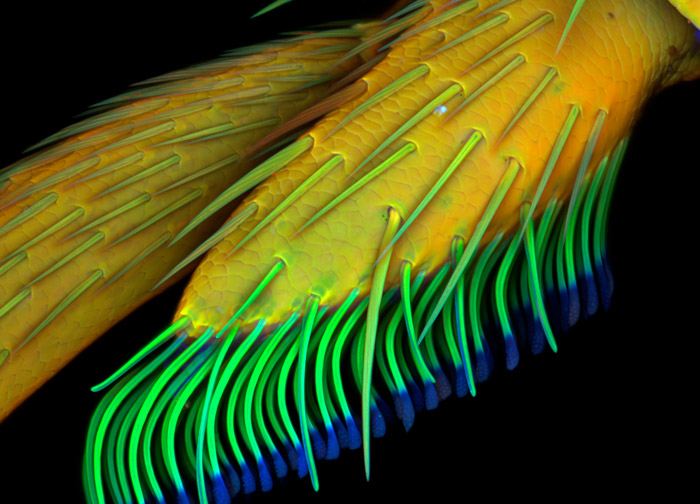
Dr. Jan Michels
2010
Christian Albrecht University of Kiel, Institute of Zoology
Kiel, Germany
Specimen: Adhesive pad of the first leg of a beetle (Clytus sp.)
Technique: Autofluorescence
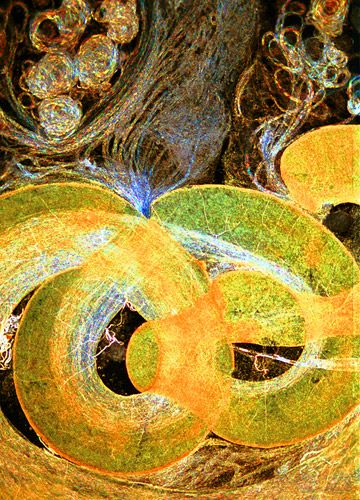
Mr. Earl Nishiguchi
2007
Lihue, HI, USA
Specimen: Drosophila Testis
Technique: Darkfield Illumination
Mr. Ralph Grimm
2006
Jimboomba, Australia
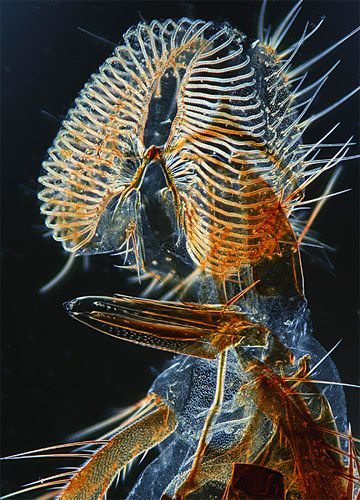
Specimen: Housefly Proboscis
Technique: Darkfield Illumination
Dr. Igor Siwanowicz
2014
HHMI Janelia Research Campus
Ashburn, VA, USA
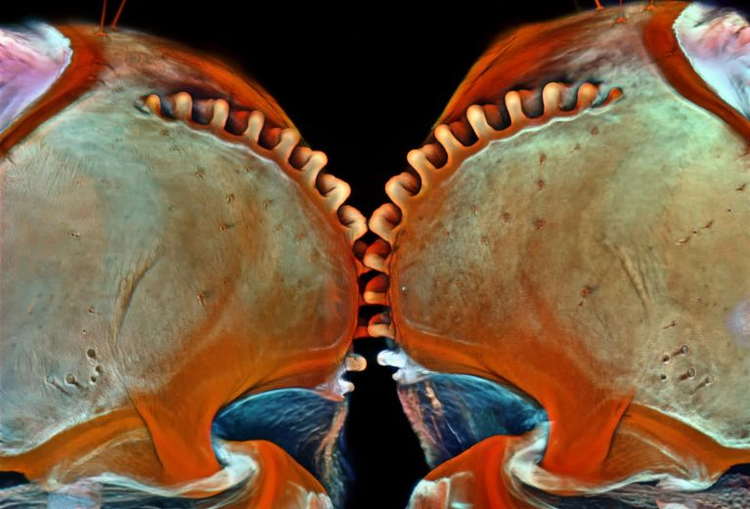
Specimen: Green coneheaded planthopper (Acanalonia conica) nymph with its gears. The insects are accomplished jumpers, able to accelerate at staggering 500 times the force of gravity (500xg); to synchronize the movement of their hind legs, their trochanters are coupled with a pair of cogs. Image shows dorsal view of these trochanteral gears. The insect demonstrates that gears, which until recently were thought to be a human invention, exist in the natural world
Technique: Confocal microscopy, magnification ca. 200x
Mr. Fabrice Parais
2013
DREAL (Regional Directorate of Environment, Planning and Housing) of Basse-Normandie
Caen, France
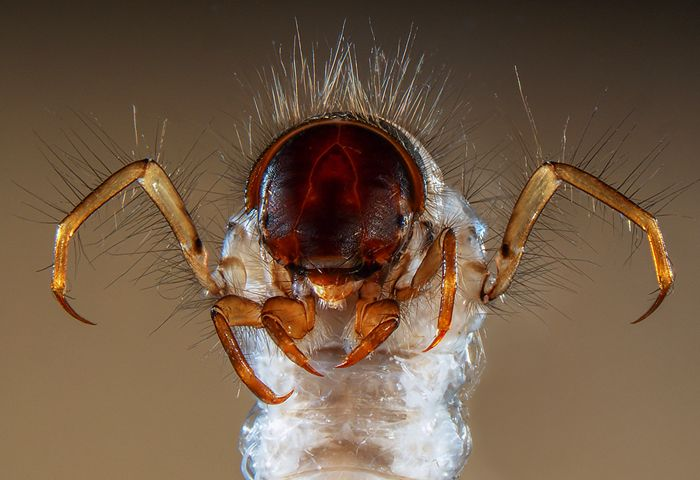
Specimen: Head and legs of a caddisfly larva: Sericostoma sp., a benthic macroinvertebrate that can be used for freshwater biomonitoring; because it is relatively sensitive to organic pollution and dies if water is dirty, it is a good indicator of water quality.
Technique: Stereomicroscopy, 15x

Mr. Charles Krebs
2008
Issaquah, WA, USA
Specimen: Chrysochroa fulgens (Jewel Beetle)
Technique: Stereomicroscopy
Mr. Charles Krebs
2012
Issaquah, Washington, USA
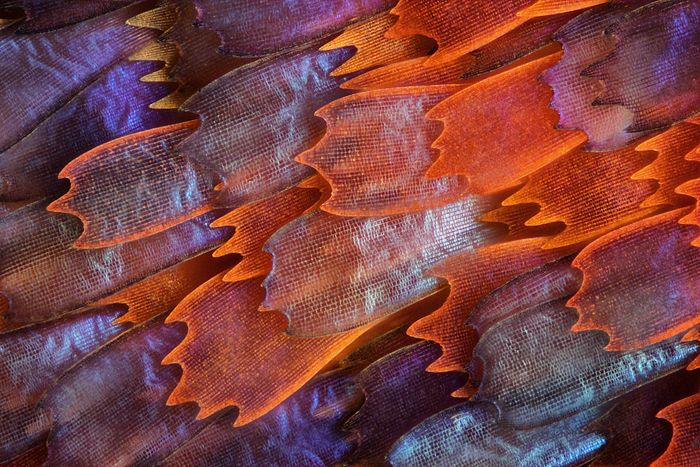
Specimen: Diffused reflected illumination
Technique: Diffused reflected illumination
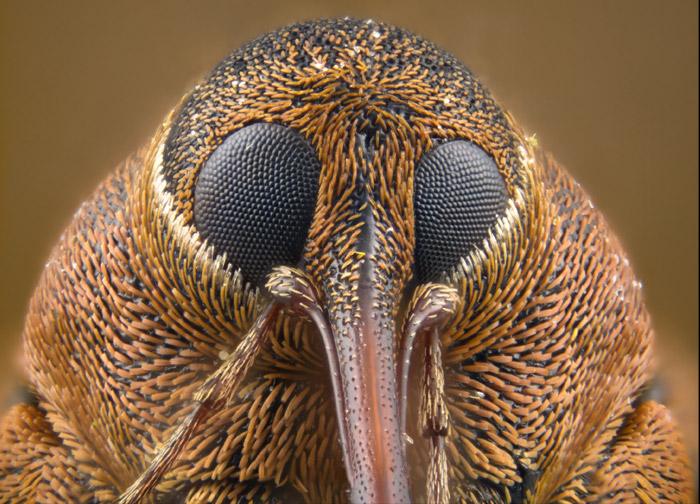
Mr. Laurie Knight
2010
Tonbridge, Kent, United Kingdom
Specimen: Weevil (poss. Curculio nucum or Curculio glandium)
Technique: Episcopic illumination