Confocal Technique
Dr. Igor Siwanowicz
2013
HHMI Janelia Farm Research Campus
Ashburn, Virginia, United States
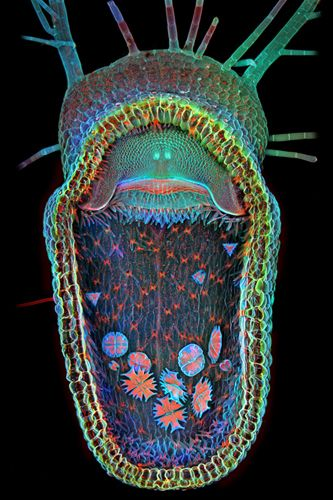
Specimen: Open trap of aquatic carnivorous plant, humped bladderwort Utricularia gibba, with single-cell organisms inside.
Technique: Confocal imaging, 100x
Dr. Igor Siwanowicz
2010
Max Planck Institute for Neurobiology
Munich, Germany
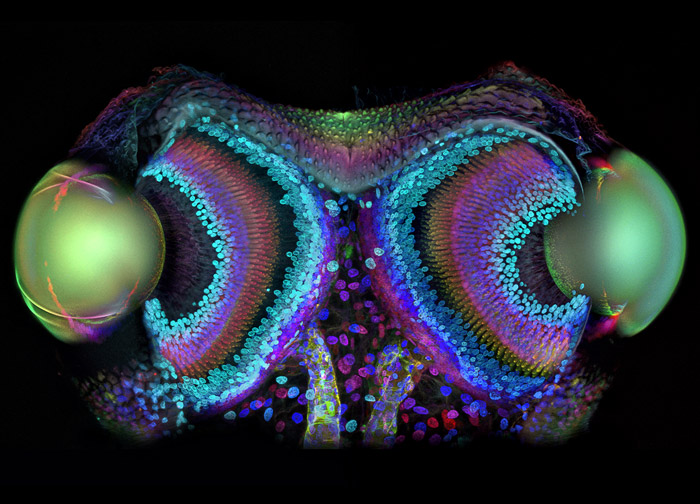
Specimen: Frontal section of Phalangium opilio (Harvestman/Daddy longlegs) eyes
Technique: Confocal
Dr. Jean Livet
2007
Dr. Jeff Lichtman Laboratory, Harvard University
Cambridge, MA, USA
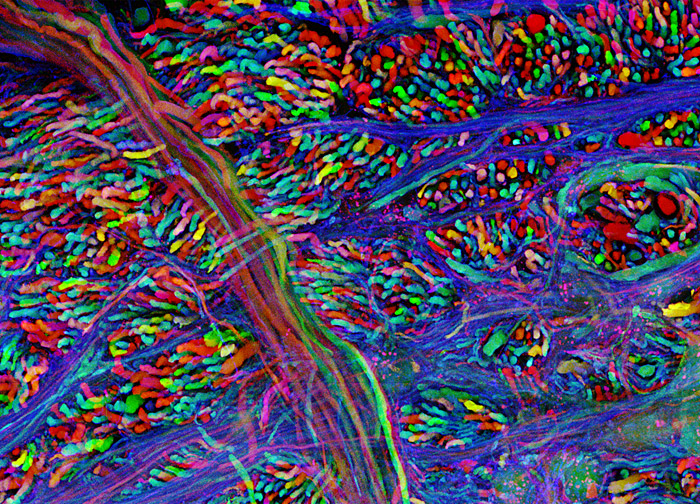
Specimen: "Brainbow" Mouse Brain Stem
Technique: Confocal
Mr. Thomas Deerinck
2006
University of California, San Diego
La Jolla, CA, USA
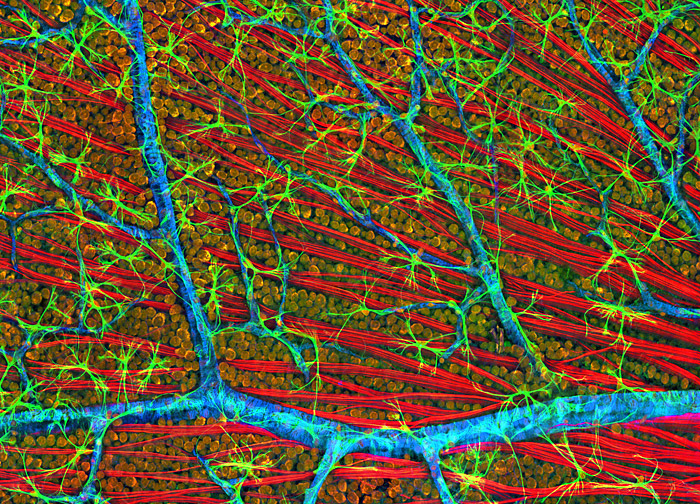
Specimen: Mouse Retina
Technique: Confocal
Mr. Hussein Mansour
2005
Department of Anatomy and Histology, The University of Sydney
Sydney, Australia
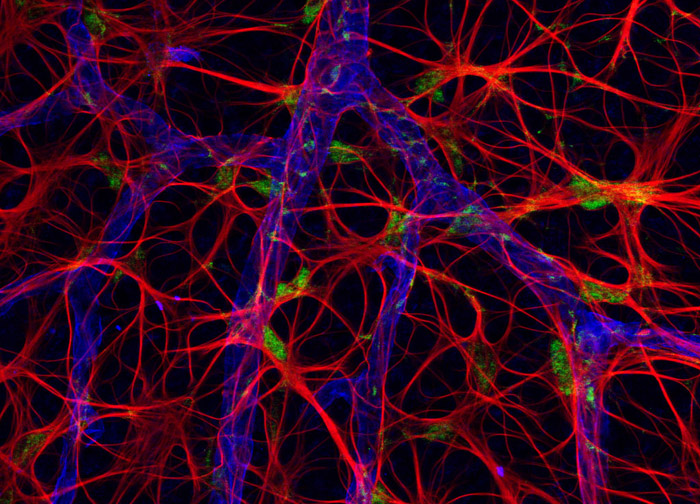
Specimen: Retina Astrocytes
Technique: Confocal, 40x Objective
Mr. Donald Pottle
2004
The Schepens Eye Research Institute
Boston, MA, USA
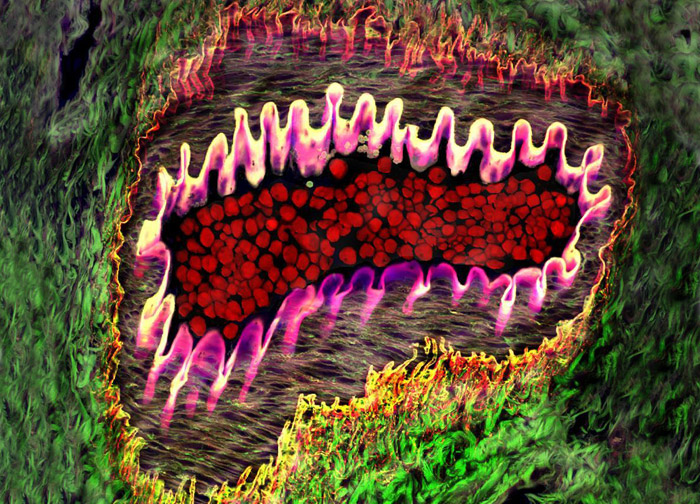
Specimen: Healthy arteriole in eye, with tough, flexible elastin wall (pink), red blood cells (red) and supporting collagen fibers (web-like "netting," and yellow & green areas)
Technique: Confocal, 40x Objective
Mr. Glen MacDonald
2007
Virginia Merrill Bloedel Hearing Research Center, University of Washington
Seattle, WA, USA
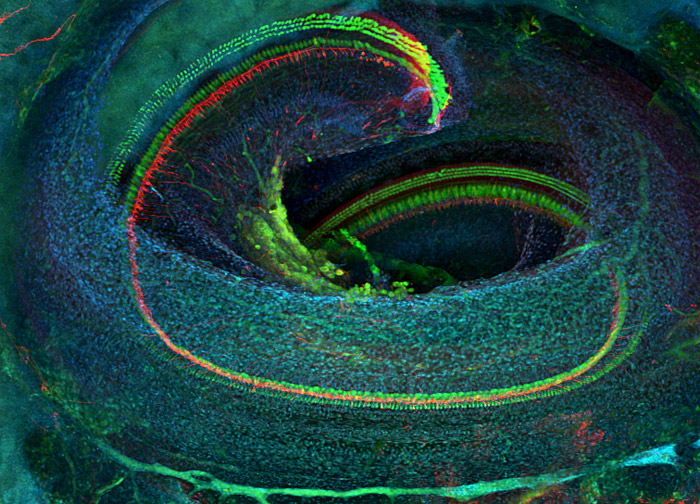
Specimen: Mammalian Inner Ear
Technique: Confocal
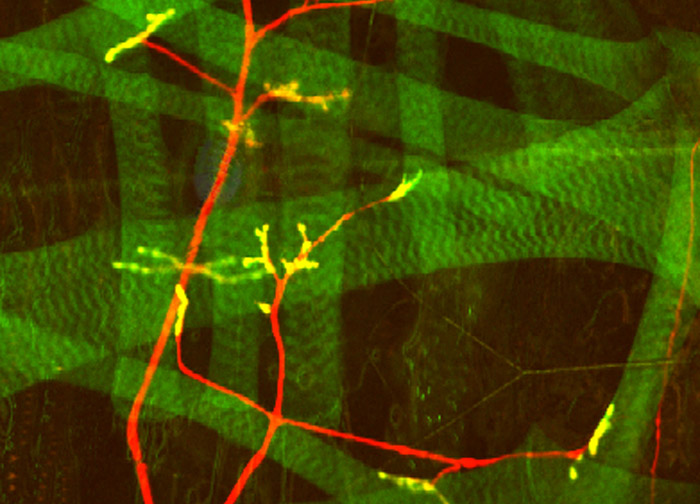
Dr. Hermann Aberle
2006
MPI for Developmental Biology
Tuebingen, Germany
Specimen: Drosophila Somatic Muscles
Technique: Confocal
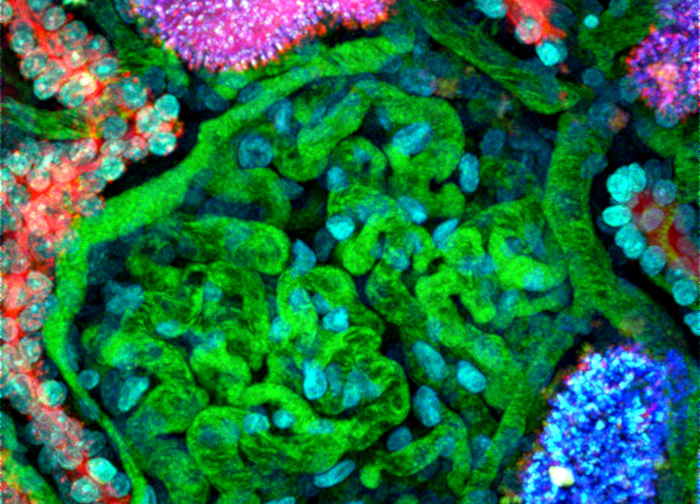
Mr. Ruben M. Sandoval
2005
Indianapolis, IN, USA
Specimen: 3D Glomerulus
Technique: Confocal, 60x Objective
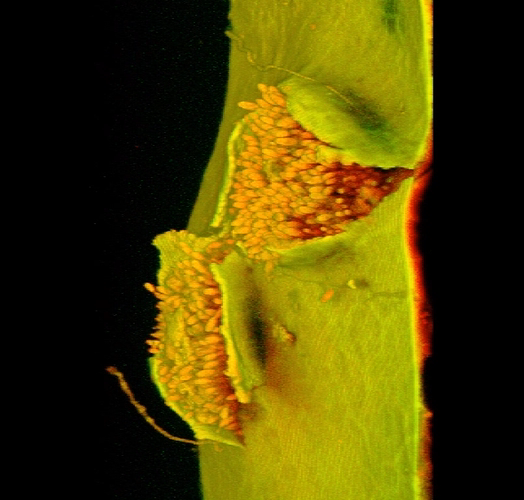
Dr. Phillip Wharton
2004
Department of Plant Pathology, Michigan State University
East Lansing, MI, USA
Specimen: Fungus rupturing surface of blueberry, 32 composite images, each made by combining 90 optical sections
Technique: Confocal
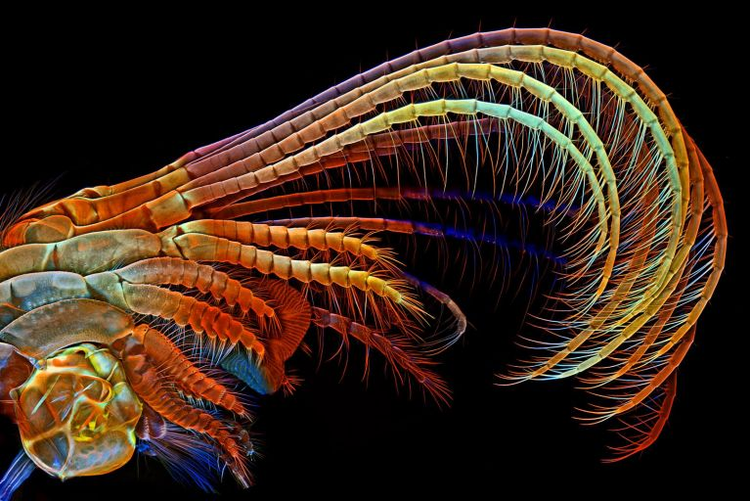
Dr. Igor Siwanowicz
2014
HHMI Janelia Research Campus
Ashburn, VA, USA
Specimen: Barnacle appendages that sweep plankton and other food into the barnacle's shell for consumption
Technique: Confocal microscopy, 100x
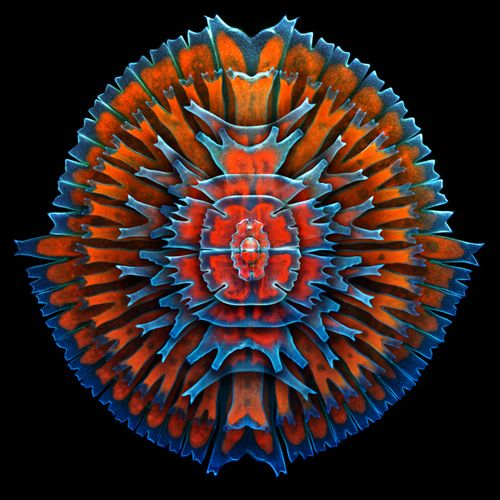
Dr. Igor Siwanowicz
2013
HHMI Janelia Farm Research Campus
Ashburn, Virginia, United States
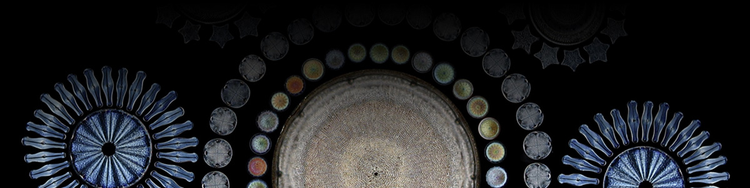
Specimen: Single-cell fresh water algae (desmids). Composite image including, concentric from the outside: Micrasterias rotata, Micrasterias sp., M. furcata, M. americana, 2x M. truncata, Euastrum sp. and Cosmarium sp.
Technique: Confocal imaging, 400x
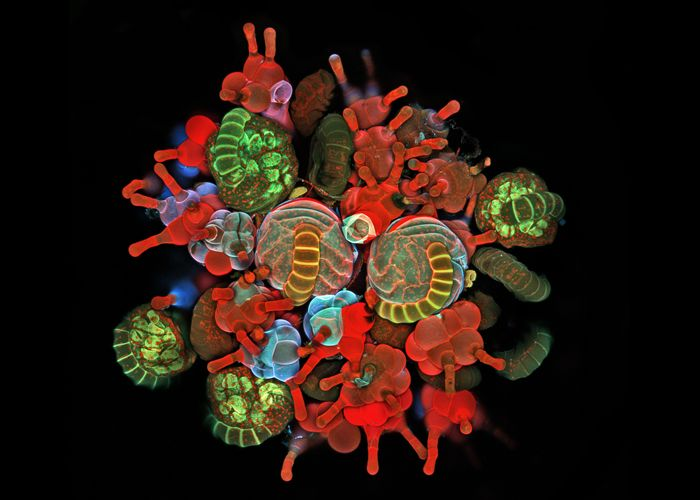
Dr. Igor Siwanowicz
2012
HHMI Janelia Farm Research Campus
Ashburn, Virginia, USA
Specimen: East-coast US fern, Polypodium virginianum, showing a cluster of spore-filled sporangia and specialized protective hairs called paraphyses.
Technique: Confocal microscopy
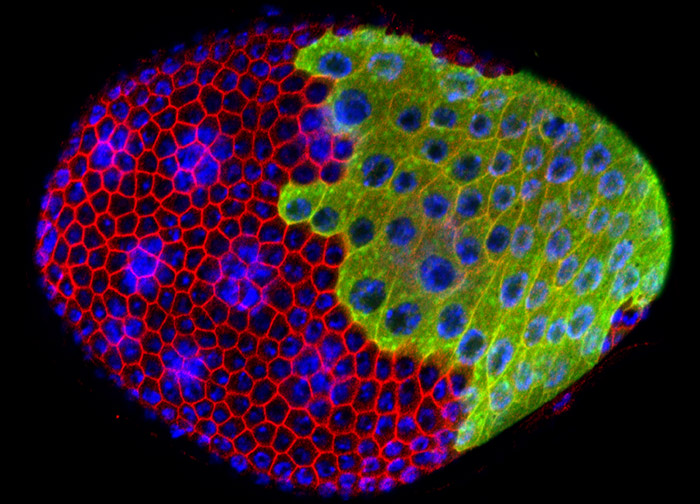
Dr. Daniel Kirilly
2004
Stowers Institute for Medical Research
Kansas City, MO, USA
Specimen: Mutant follicle cells (green) expanding on the surface of fruit fly egg chamber
Technique: Confocal, 100x Objective
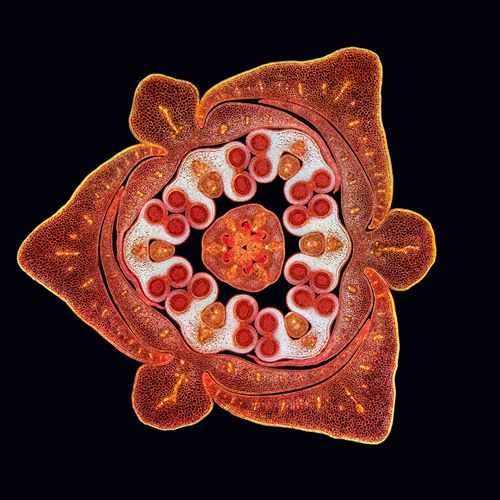
Mr. Spike Walker
2013
Staffordshire, United Kingdom
Specimen: Lily flower bud, transverse section.
Technique: Darkfield illumination, stitched images
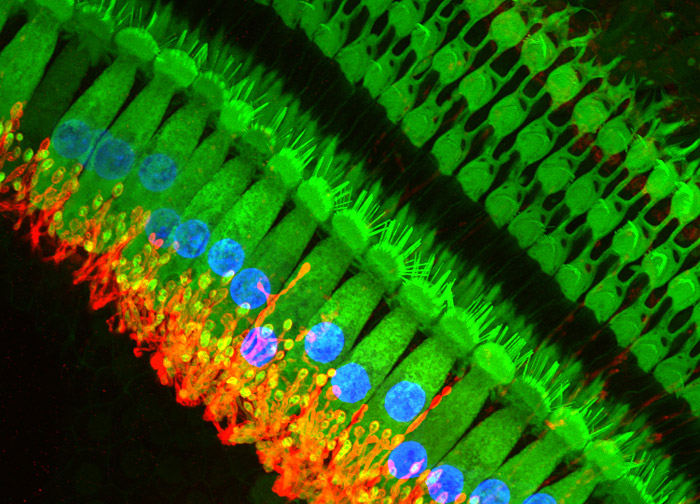
Dr. Sonja Pyott
2007
Department of Biology and Marine Biology, University of North Carolina, Wilmington
Wilmington, NC, USA
Specimen: Cochlea and Hair Cells
Technique: Confocal
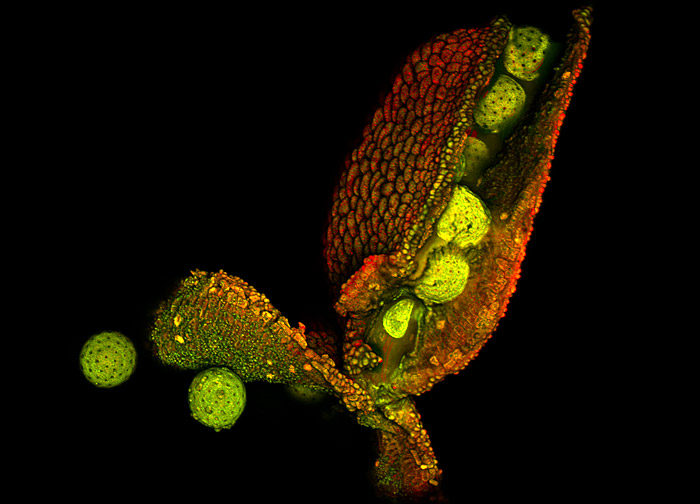
Dr. Robert Markus
2006
Biological Research Center of the Hungarian Academy of Sciences
Csongrád, Hungary
Specimen: Mirabilis jalapa Stamen
Technique: Confocal
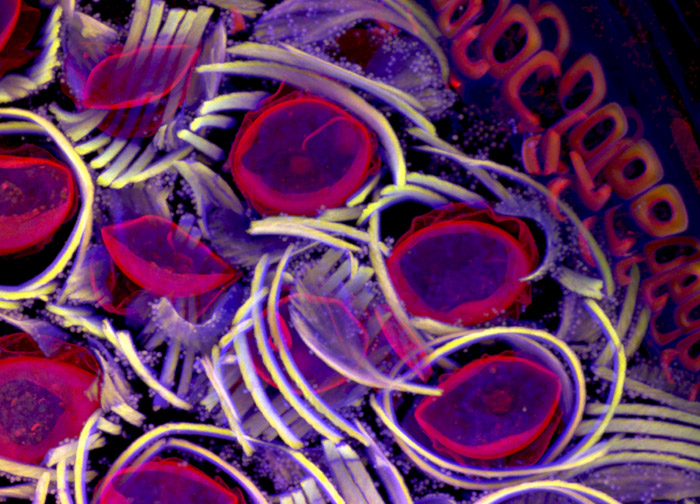
Dr. Jim Haseloff
2004
Department of Plant Sciences, University of Cambridge
Cambridge, UK
Specimen: Horsetail fern sporangia
Technique: Confocal
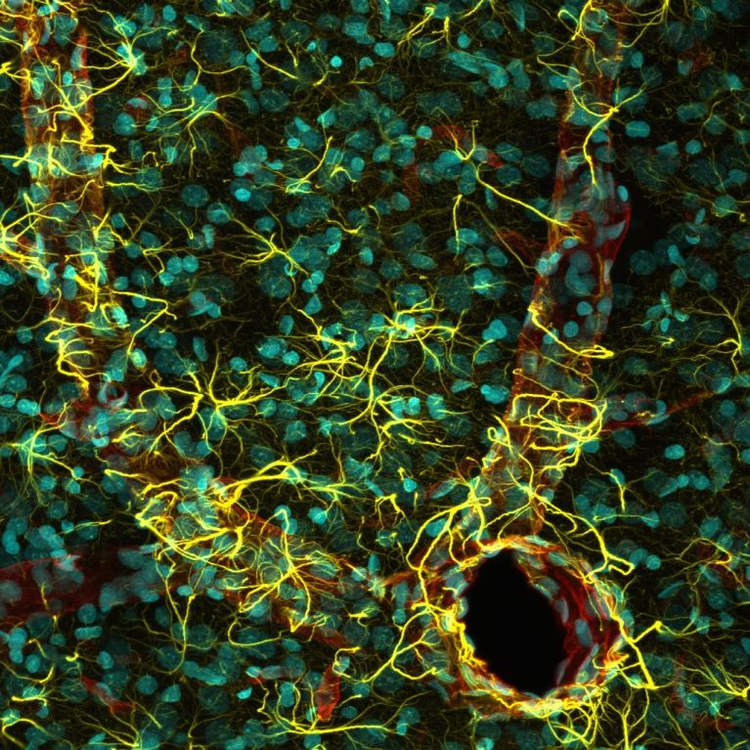
Miss Madelyn May
2014
Hanover, NH, USA
Specimen: Rat brain cerebral cortex depicting cell nuclei (cyan), astrocytes (GFAP, yellow), and blood vessels (EBA, red)
Technique: Confocal microscopy
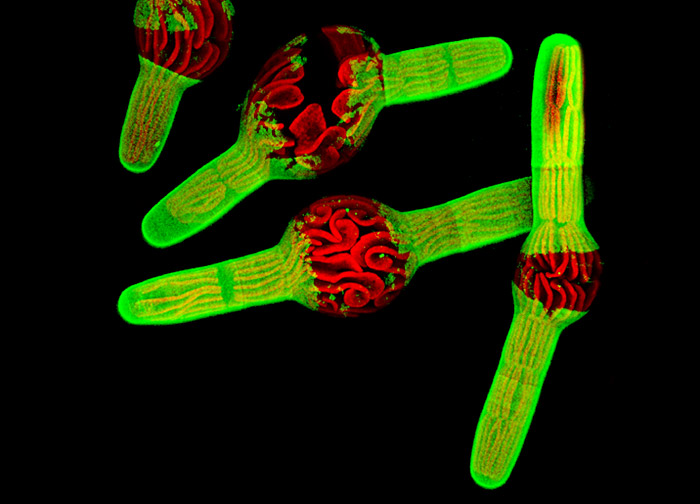
Dr. David Domozych
2009
Skidmore College, Department of Biology
Saratoga Springs, NY, USA
Specimen: Penium
Technique: Confocal
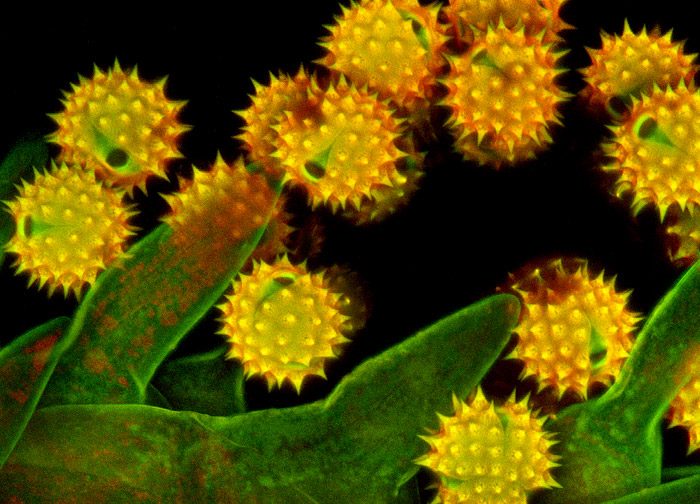
Dr. Shirley Owens
2008
Flushing, MI, USA
Specimen: Silphium perfoliatum
Technique: Laser Scanning Confocal
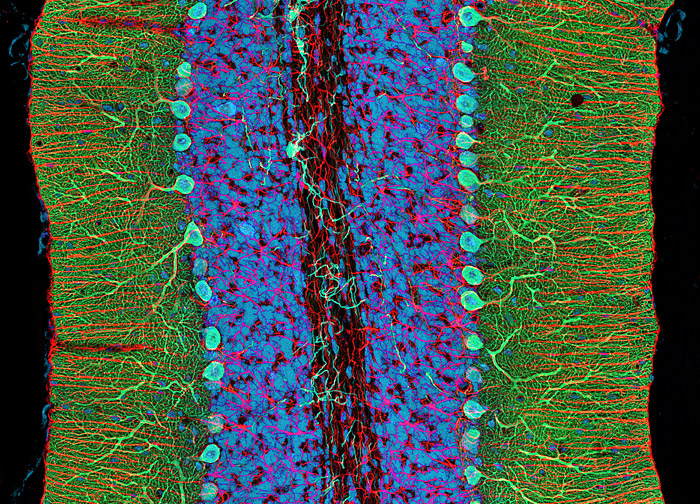
Mr. Thomas Deerinck
2007
University of California, San Diego
La Jolla, CA, USA
Specimen: Midsaggital Section of Rat Cerebellum
Technique: Confocal
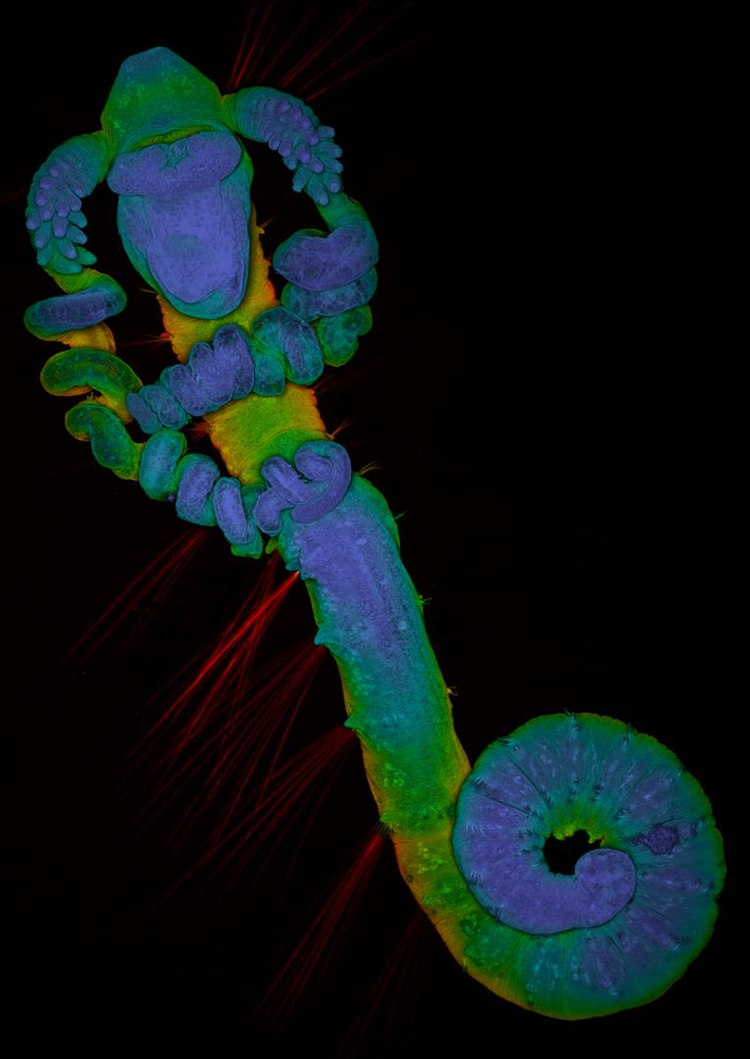
Dr. David Johnston
2014
Southampton General Hospital Biomedical Imaging Unit
Southampton, UK
Specimen: Magelonid polychaete worm larva from a plankton sample collected in Southampton Water off the south coast of the UK. Actual specimen size approx 2mm
Technique: Confocal microscopy using a 10x objective
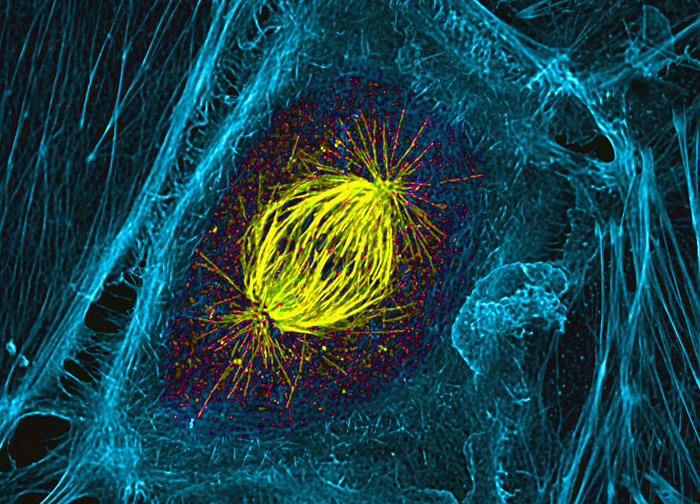
Dr. Patricia Wadsworth
2007
University of Massachusetts
Amherst, MA, USA
Specimen: Mitotic Spindle
Technique: Confocal
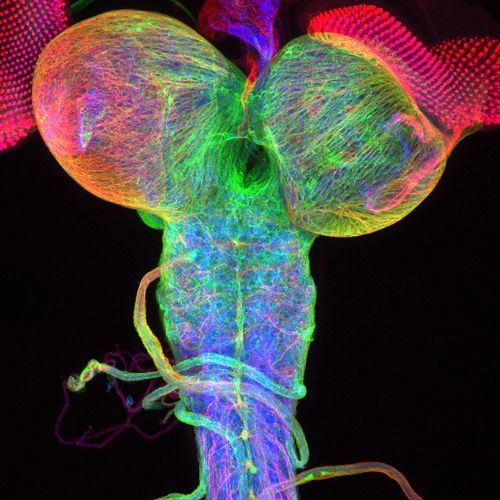
Dr. Christian Klämbt
2012
University of Münster,
Münster, Germany
Specimen: Beta-tubulin expression of a Drosophila third instar larval brain, with attached eye imaginal discs.
Technique: Confocal microscopy
Co-prizewinners: Imke Schmidt
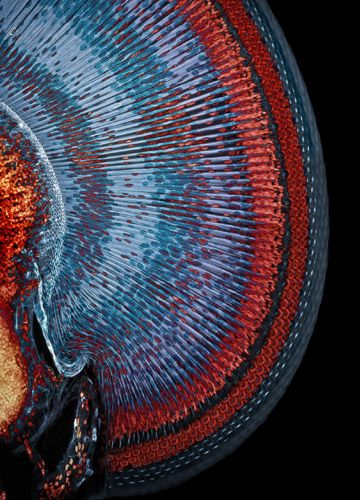
Dr. Igor Siwanowicz
2010
Max Planck Institute for Neurobiology
Munich, Germany
Specimen: Eye of a common blue damselfly (Enallagma cyathigerum)
Technique: Confocal, series projection
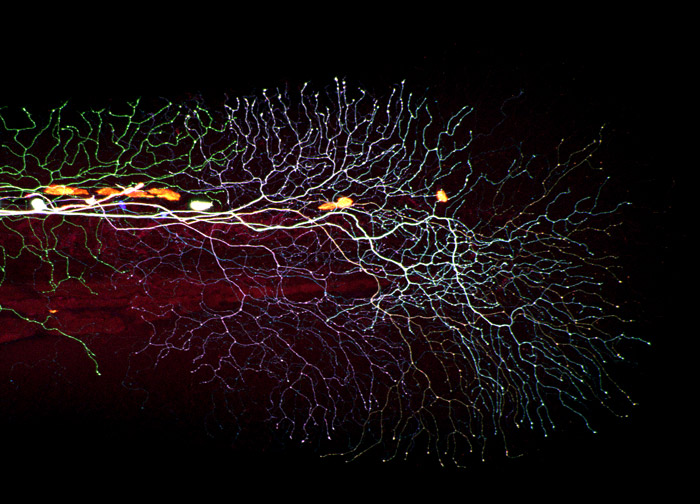
Dr. Albert Pan
2009
Cambridge, MA, USA
Specimen: Zebrafish tail sensory axons
Technique: Confocal
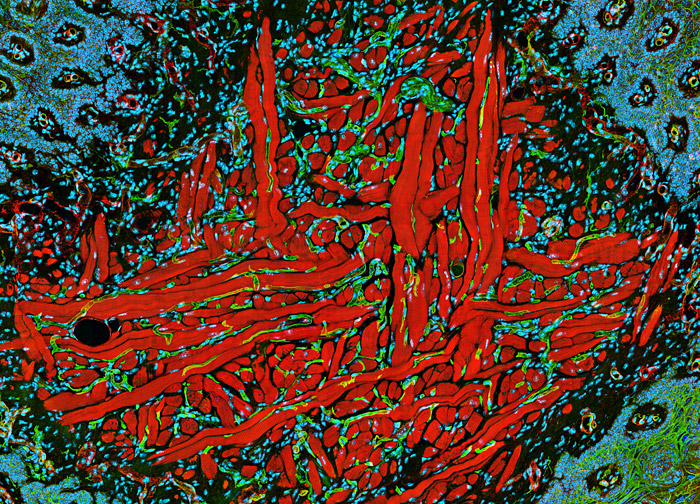
Mr. Thomas Deerinck
2007
University of California, San Diego
La Jolla, CA, USA
Specimen: Rat Tongue
Technique: Confocal
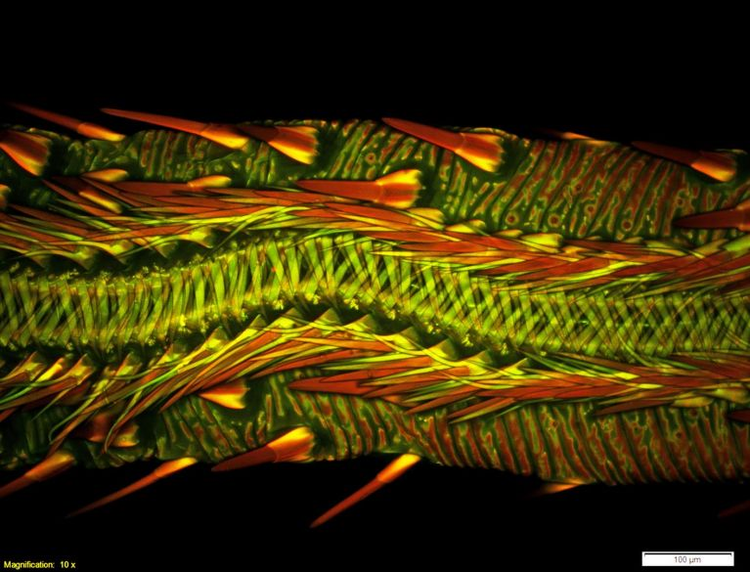
Dr. Matthew S. Lehnert
2014
Kent State University at Stark
North Canton, OH, USA
Specimen: Proboscis (mouthparts) of a vampire moth (Calyptra thalictri). The moth was captured by Jennifer Zaspel in Russia. The proboscis was imaged at 10x and shows the dorsal legulae, tearing hooks, and erectile barbs that facilitate the acquisition of fruit juices and mammalian blood when feeding
Technique: Confocal microscopy
Co-prizewinners: Ashley L. Lash
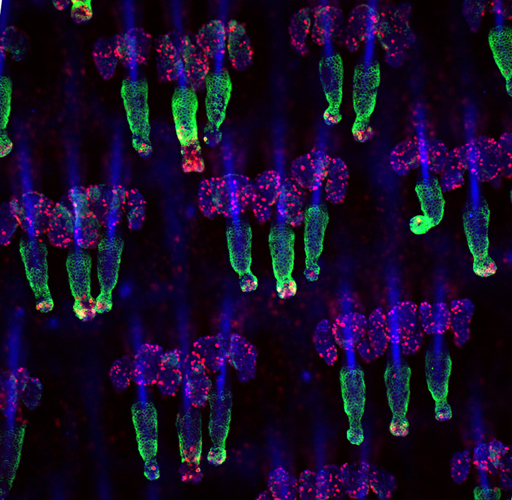
Dr. Yaron Fuchs
2013
Howard Hughes Medical Institute/The Rockefeller University
New York, NY USA
Specimen: Mouse tail whole mounts showing hair follicle stem cells and proliferating cells.
Technique: Confocal imaging
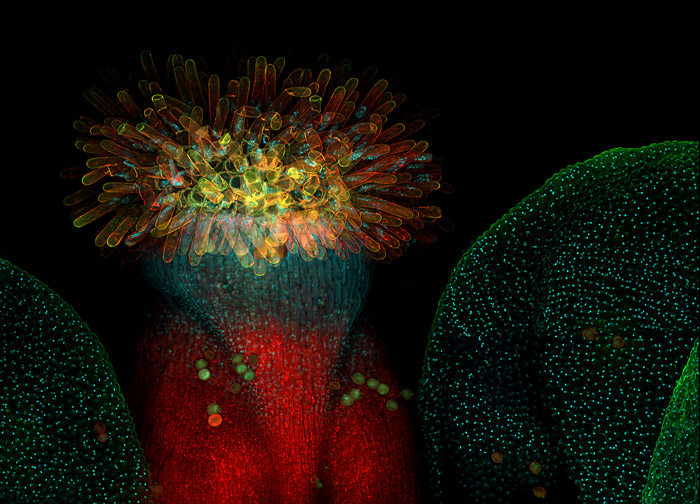
Dr. Heiti Paves
2009
Tallinn, Estonia
Specimen: Arabidopsis thaliana
Technique: Confocal
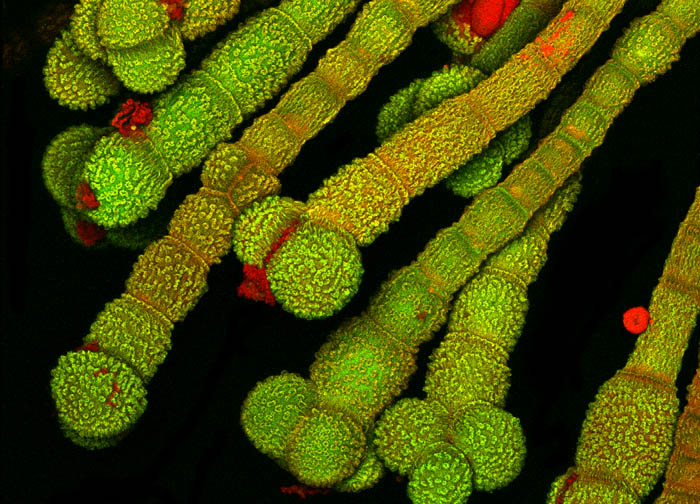
Dr. Shirley Owens
2005
Center for Advanced Microscopy, Michigan State University
East Lansing, MI, USA
Specimen: Thunbergia
Technique: Confocal, 20x Objective
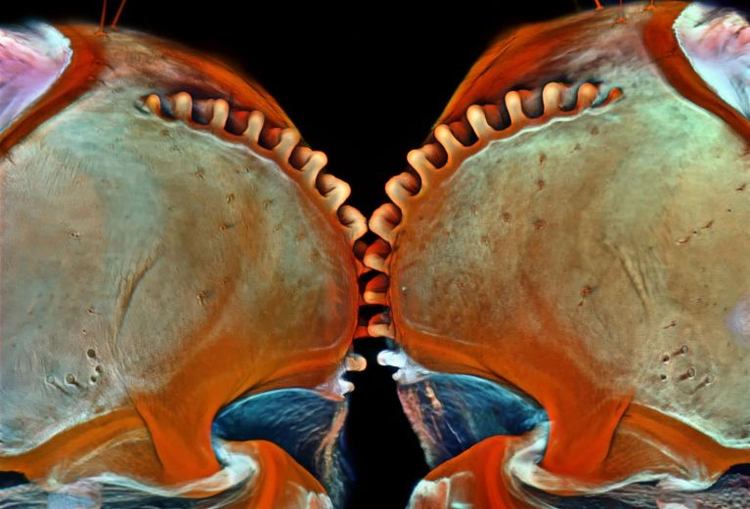
Dr. Igor Siwanowicz
2014
HHMI Janelia Research Campus
Ashburn, VA, USA
Specimen: Green coneheaded planthopper (Acanalonia conica) nymph with its gears. The insects are accomplished jumpers, able to accelerate at staggering 500 times the force of gravity (500xg); to synchronize the movement of their hind legs, their trochanters are coupled with a pair of cogs. Image shows dorsal view of these trochanteral gears. The insect demonstrates that gears, which until recently were thought to be a human invention, exist in the natural world
Technique: Confocal microscopy, magnification ca. 200x
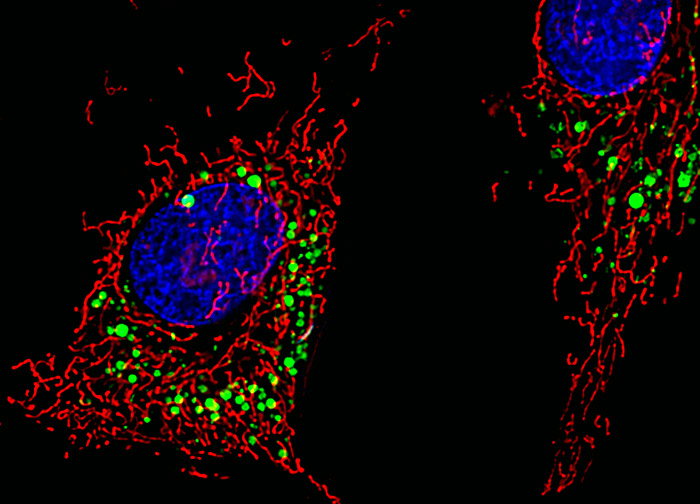
Mr. Michael Janes
2006
Eugene, OR, USA
Specimen: Endothelial Cells
Technique: Confocal
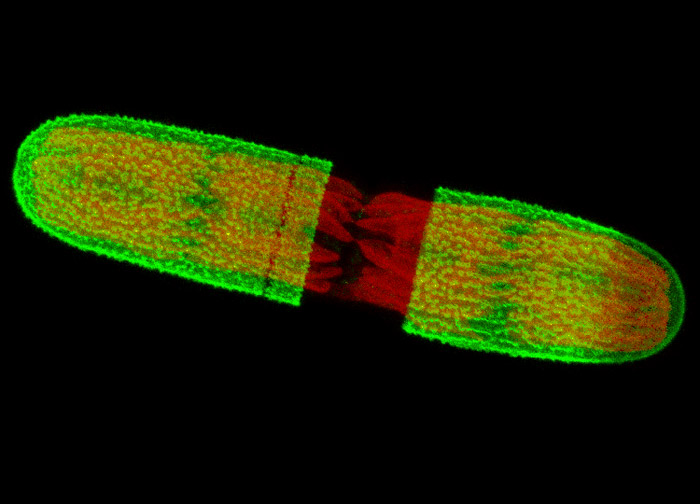
Dr. David Domozych
2005
Department of Biology, Skidmore Microscopy Imaging Center, Skidmore College
Saratoga Springs, NY, USA
Specimen: Green Alga
Technique: Confocal
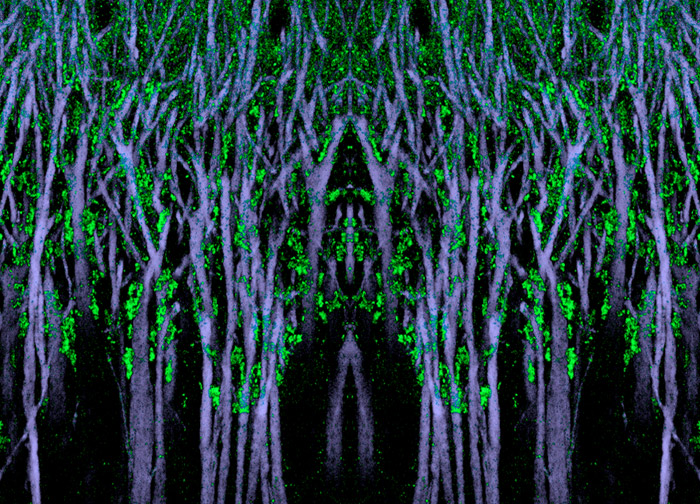
Mr. Werner Zuschratter
2004
Leibniz Institute for Neurobiology
Magdeburg, Germany
Specimen: Hippocampal neurons
Technique: Confocal, 40x Objective