Application Notes
Shape Evaluation of Photomask Lens Arrays Molded with a Gray-Scale Mask/Noncontact 3D surface profile measurement using a laser microscope
1. Application
Gray-scale masks is a technology used to fabricate molds for complex-shaped micro lenses or other products that are comprised of high-quality 3D microstructures. The gray-scale mask is used for 3D patterning; a resist coating is irradiated with a multiple-gradation laser to create the 3D pattern (Figure 1). Measuring the 3D shape of the resist after irradiation is essential for quality control. Since the 3D pattern is easily damaged, noncontact measurement is required to verify its integrity.
2. Evident' solution
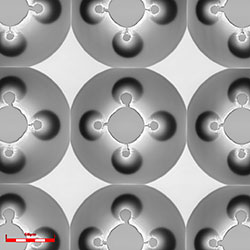
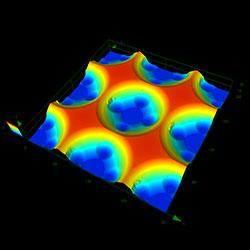
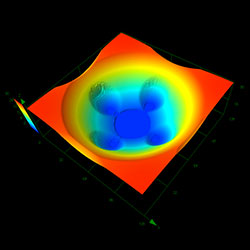
Evident' LEXT 3D laser scanning microscope enables noncontact, three-dimensional imaging of the concave or convex shape of a gray-scale mask with high resolution and high contrast. Thanks to objective lenses with high numerical apertures and an optical system designed to obtain maximum performance from the 405 nm laser, the LEXT microscope can capture the profile of irregular slopes accurately, leading to reproducible, reliable 3D profiles (Figure 1). In addition to measuring the shape of samples, users can also clearly visualize minor irregularities using laser differential interference.
Concave pattern
Convex pattern
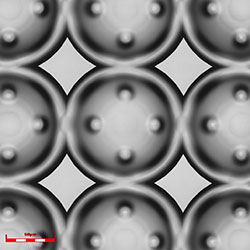
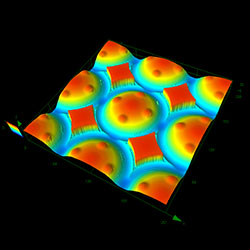
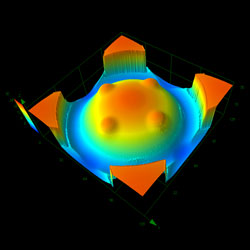
Figure 1. Imaging concave and convex patterns using the LEXT microscope
Figure 2. The lens fabrication process using a gray-scale mask.
Step 1
-
Resist coating
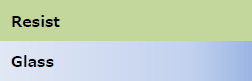
-
Drawing (laser irradiation)
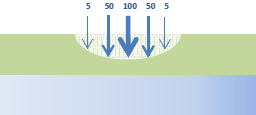
The irradiated area is exposed and softened.
-
Soak in the developer

Step 2
-
Electroplating

-
Etching

Step 3
-
Use thermo-compression to bond the film to the metal mold.

-
Imprint

-
Resin molding

-
Finish

Products Used for This Application
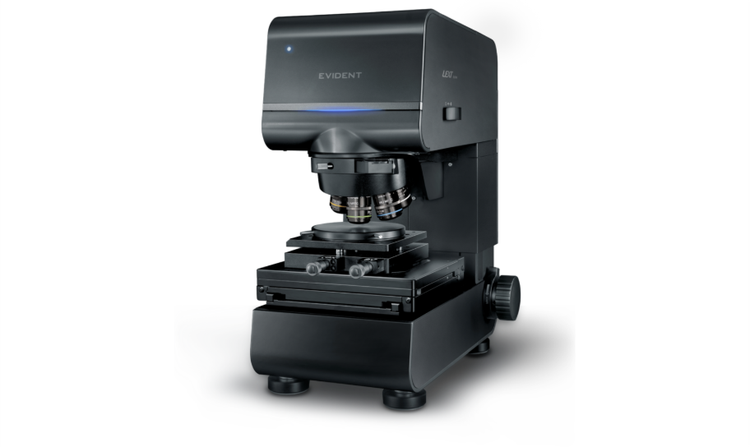
LEXT OLS5500
Hybrid 3D Optical Profilometer
- Traceable surface measurements from the nanometer to micrometer scale
- Laser scanning microscopy (LSM), white light interferometry (WLI), and focus variation microscopy (FVM) in one award-winning platform
- First 3D optical profilometer to offer guaranteed accuracy and repeatability* for both LSM and WLI measurements
- WLI mode delivers up to 40x faster measurement throughput than conventional LSM
- Exceptional precision across surfaces with in-house engineered optics
- Intuitive interface and smart automation streamline operation for users of all levels
- AI-enhanced and high-throughput workflows with PRECiV™ software integration
*Based on Evident’s internal research as of October 2025. The guaranteed accuracy and repeatability apply only if the device has been calibrated according to the manufacturer’s specifications and is in defect free condition. Calibration must be performed by an Evident technician or an Evident-authorized specialist.
LEXT OLS5100
The LEXT™ OLS5100 laser scanning microscope combines exceptional accuracy and optical performance with smart tools that make the system easy to use. The tasks of precisely measuring shape and surface roughness at the submicron level are fast and efficient, simplifying your workflow and delivering high-quality data you can trust.