How Spatial Biology Is Transforming and Innovating Research
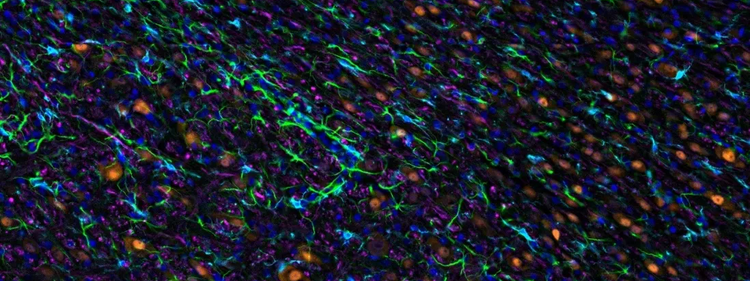
Rat brain stained with Hoechst 405, CPCA-GFAP 488, FOX3/NeuN 594, RPCA-Iba1 647, and NF-H conjugate 750.

Spatial biology has transformed biomedical research by enabling detailed study of the quantity and spatial information of every cell within a tissue. Unlike traditional sequencing methods that analyze cells in isolation, spatial biology integrates multiomics approaches, including spatial transcriptomics, proteomics, and metabolomics, along with advanced imaging techniques to preserve tissue architecture.
These innovations facilitate a deeper understanding of cellular interactions, disease pathology, and tissue heterogeneity. The integration of multiomics with spatial imaging has significantly advanced fields such as oncology, neuroscience, and immunology by enabling the identification of novel biomarkers, characterization of complex microenvironments, and tracking of disease progression.
As technological advancements continue, spatial biology is expected to play a pivotal role in enhancing precision medicine through improved diagnostics and personalized therapeutic interventions.
In this interview, we chatted with our own Dr. Laura Lleras to learn more about the role of advanced imaging in spatial biology. Read on to explore how high-throughput imaging tools are shaping the future of the field in research, drug discovery, and clinical applications.
Rebecca: Today, we’re diving into spatial biology—a field that’s revolutionizing how we understand diseases at the cellular level. We’ll also explore the critical role of high-throughput imaging technologies, such as the SLIDEVIEW™ VS200 slide scanner, in this transformation. Joining us is Dr. Laura Lleras, a product marketing manager at Evident. Dr. Lleras, welcome! Let’s start with the big picture: What is spatial biology, and why is it so groundbreaking?
Dr. Lleras: Thank you! I’m excited to discuss this because spatial biology is one of the most exciting and recent breakthroughs in life sciences. For decades, molecular and cellular biology focused on analyzing cells in isolation—studying one gene or one protein at a time without considering their spatial organization within tissues. While this approach has led to major discoveries, it overlooks a crucial aspect of biology: where things happen matters just as much as what happens.
This is where spatial biology comes in. It allows researchers to visualize and analyze biomolecules within their native tissue environments, preserving the positional context of cells. This is especially important in diseases like cancer, neurodegenerative disorders, metabolic diseases, cardiovascular diseases, and autoimmune diseases, where cell-to-cell interactions and tissue architecture play a vital role in disease progression. It is also important in regeneration—take, for example, the publication by Van Beijnum et al. in 20231, where using spatial transcriptomics regenerative processes could be pinpointed in space and time.
With spatial biology, we can now map gene expression, protein activity, and cellular interactions with high precision—helping researchers and clinicians uncover new biomarkers, predict disease progression, and develop targeted therapies.

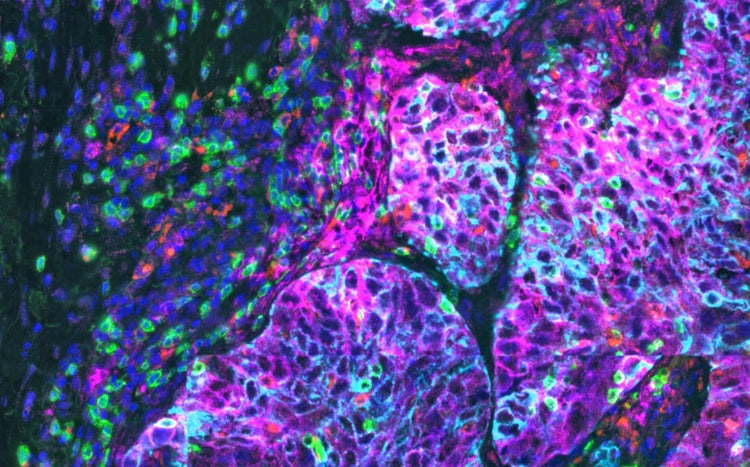
Mouse spleen. Sample provided by Kromnigon. Image captured using the SLIDEVIEW VS200 slide scanner using the SpectraSplit 7 filter set (Komnigon) and a Novem light source (Excelitas). Author: Eric Stellamans.
The Role of Imaging in Spatial Biology
Rebecca: That’s fascinating! But how does imaging fit into spatial biology?
Dr. Lleras: Imaging is the backbone of spatial biology. Without advanced imaging technologies, we wouldn’t be able to capture the high-resolution spatial maps needed to analyze tissue organization at the molecular level.
Traditional molecular techniques—such as RNA sequencing or Western blotting—provide information about gene and protein expression, but they lose all spatial context.
Imaging technologies, on the other hand, enable us to:
- Visualize molecular interactions in intact tissues.
- Preserve cellular relationships and microenvironments.
- Generate multiplexed images, revealing how multiple biomarkers interact within the same sample.
Challenges in High-Throughput Imaging for Spatial Biology
Rebecca: What are the biggest challenges in imaging for spatial biology, especially in high-throughput applications?
Dr. Lleras: Great question. As powerful as spatial biology is, it comes with significant challenges in data acquisition, processing, and analysis.
Key challenges include:
- Massive data volumes: High-resolution spatial imaging generates terabytes of data per experiment, requiring advanced storage and computing infrastructure.
- Standardization and reproducibility: Imaging conditions can vary between labs, making it hard to compare results. AI-driven automated scanning helps address this.
- Speed vs. resolution tradeoff: Researchers need fast imaging for large-scale studies without compromising image quality.
- Analysis of data: Collaborations with bioinformaticians need to be established to analyze or automate analysis for the big datasets generated by the imaging systems. That’s why high-throughput imaging solutions like the VS200 slide scanner are game-changers.
How the VS200 Optimizes Imaging for Spatial Biology
Rebecca: The SLIDEVIEW VS200 slide scanner is being widely adopted in spatial biology research. What makes it so effective for this field?
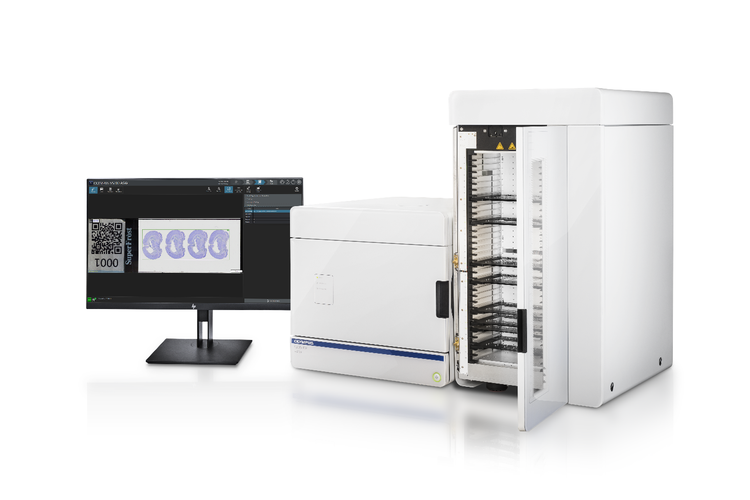
Dr. Lleras: The VS200 slide scanner is designed to meet the demands of high-throughput spatial biology by combining speed, quality, and automation.
Key advantages of the VS200 are:
- High-speed, high-throughput imaging: The system can acquire multiple channel images of a full tissue at 20X in a few minutes. Moreover, it can scan up to 210 slides in a single run, making it ideal for large-scale studies.
- Great experience at any user level: The system is equipped with an intuitive software where scanning workflows are highly automated. At the same time, it offers various options for customized imaging needs.
- Multiplex scan mode: The system can align multiple fluorescent channels from different imaging iterations with a reference channel, allowing for precise biomarker co-localization.
- Seamless data integration: Supports multiple formats that can be used with a wide range of analysis tools.
The Future of Spatial Biology in Research and Medicine
Rebecca: Where do you see spatial biology heading in the next few years?
Dr. Lleras: Spatial biology is rapidly moving from research to clinical applications. While it’s currently used in research labs and drug discovery, we’re already seeing early steps toward clinical adoption.
The future of spatial biology includes:
- Clinical diagnostics: Spatial insights will soon become part of routine cancer diagnostics and precision medicine. This will allow for a more targeted and effective therapy.
- AI-driven analysis: Self-learning algorithms will automate biomarker detection for faster, more accurate disease classification.
- Multiomics integration: Combining spatial transcriptomics, proteomics, and metabolomics for a holistic view of disease mechanisms.
As spatial biology continues to evolve, tools like the SLIDEVIEW VS200 slide scanner will play a key role in turning complex imaging data into actionable insights.
Check out our webinar on Investigating Tumor Dissemination by Spatial Transcriptomics to see an example of how Dr. Amin El-Heliebi uses spatial transcriptomics and the SLIDEVIEW VS200 slide scanner to understand metastasis in colon cancer.
Rebecca: Dr. Lleras, this has been incredibly insightful. Thank you for sharing your expertise on spatial biology and imaging!
Dr. Lleras: My pleasure! I’m excited to see how spatial biology continues to reshape biomedical research and medicine in the years ahead.
Key Takeaways
- Spatial biology is transforming life sciences by revealing how cells interact within tissues.
- Advanced imaging is crucial for capturing spatial relationships at the molecular level.
- High-throughput imaging solutions like the SLIDEVIEW VS200 slide scanner optimize speed, accuracy, and automation in spatial biology research.
- The future is bright! Spatial biology will soon be integrated into clinical workflows, improving diagnostics and personalized medicine.
Interested in learning more about our most advanced slide scanner? Explore our SLIDEVIEW VS200 page and request a demo to see it in action.
About the Interviewee

Product Marketing Manager, Life Science Research, EMEA
Dr. Laura Lleras Forero is an accomplished product marketing manager for the EMEA region at Evident, with a strong academic background in biology and a PhD from King’s College London. With more than 10 years of professional experience, she has been with Evident since 2021, where she plays a key role in supporting advanced cell culture microscopy solutions, including the SLIDEVIEW™ VS200 slide scanner and the APEXVIEW™ APX100 benchtop fluorescence microscope.
References
- Van Beijnum, H., et al. 2023. "Spatial Transcriptomics Reveals Asymmetric Cellular Responses to Injury in the Regenerating Spiny Mouse (Acomys) Ear." Genome Research 33: 1424–1437.
Featured Products
SLIDEVIEW VS200
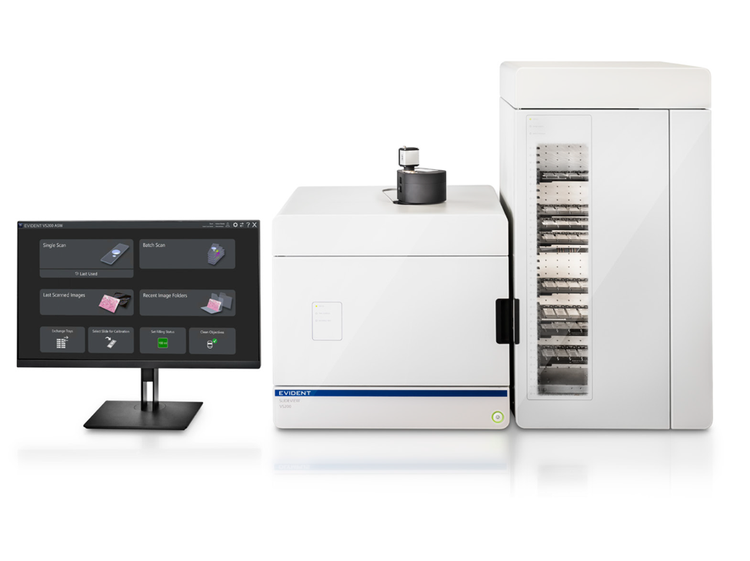
Combining high-quality multiplex imaging, accurate color reproduction in brightfield, optical clarity in thick samples, and the broadest range of imaging modalities in one slide scanner, the SLIDEVIEW™ VS200 system enables researchers to capture more meaningful data from every sample—without complexity, manual intervention, or the need for multiple instruments. Designed to deliver consistent, repeatable results across users and workflows, the VS200 system helps you unlock more insights from your slides while supporting scalable imaging needs.