Primary Cilia Imaging Reveals New Advances in Psychiatric Disease Research
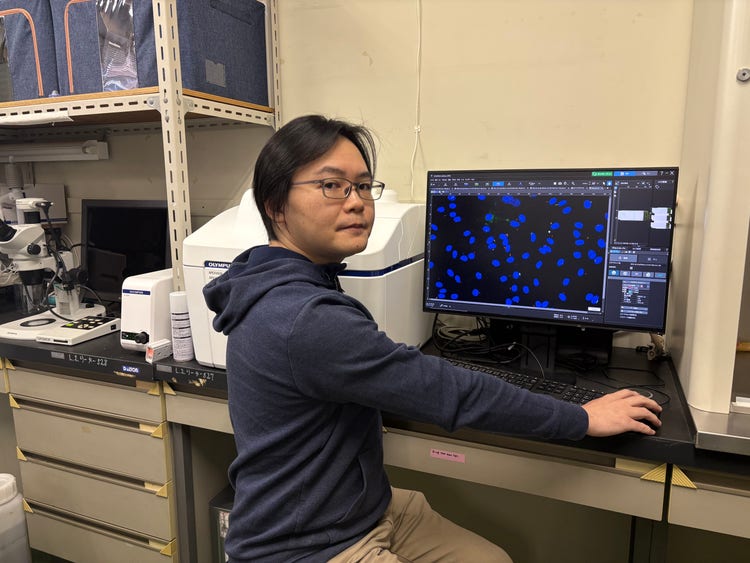

New research is beginning to uncover how chronic stress influences the brain at the cellular level, opening new directions in psychiatric disease research.
One emerging area of focus is the role of neuronal primary cilia, which are gaining recognition as critical hubs for cellular signal transduction. Professor Yuki Kobayashi of Hiroshima University is investigating the relationship between primary cilia and G protein-coupled receptors (GPCRs), aiming to clarify the underlying mechanisms of the stress response and various psychiatric disorders.
In this study, the team used advanced imaging techniques to capture minuscule structural changes in primary cilia, and analyzed intracerebral dynamics associated with the stress response.
The results represent a meaningful step toward the development of new diagnostic and therapeutic methods for psychiatric disorders. Professor Kobayashi shares the imaging techniques that enabled these insights.
About Professor Yuki Kobayashi
Associate Professor, Graduate School of Integrated Sciences for Life, Hiroshima University
Professor Kobayashi specializes in cell biology and neuroscience, focusing on primary cilia, which carry receptors involved in feeding, emotion, and sleep. This research extends from the cellular level to the entire body, helping to elucidate the mechanisms of biological phenomena and create new perspectives.
What is the focus of your current research on primary cilia and GPCR signaling?
Professor Kobayashi: Currently, we aim to elucidate the relationship between the neuronal primary cilia and G protein-coupled receptors (GPCRs).1 Primary cilia are non-motile protrusions that act as environmental sensors, detecting extracellular information.
Recent studies have identified that 10 to 20 different types of GPCRs are localized in the ciliary membrane. These primary cilia are believed to be involved in emotional, appetite, and sleep regulation. Notably, melanin-concentrating hormone receptor 1 (MCHR1)2 is uniquely localized to primary cilia, and it has been linked to stress and emotional regulation.
Traditionally, GPCRs were understood to function at the cell membrane, but signal transduction within the confined space of the primary cilia represents an important topic that points to new possibilities in biological phenomena.
1 G protein-coupled receptor (GPCR): A receptor located in the cell membrane mediating transmission of external stimuli (such as hormones and neurotransmitters) into the cell. They are involved in many physiological functions and are considered important targets for pharmaceutical development.
2 Melanin-concentrating hormone receptor 1 (MCHR1): A type of GPCR that binds to melanin-concentrating hormone (MCH) and is specifically localized in primary cilia. It is known to stimulate appetite, but it is now clear that it is involved in the regulation of stress and emotional behavior.
Could you describe how you investigated the effects of stress on primary cilia in the brain?
Professor Kobayashi: Mice were subjected to short-term (3 days) and long-term (21 days) restraint stress, and the primary cilia in the prefrontal association area (FrA)3 of the brains of these mice were observed and analyzed (Figure 1). Under short-term stress, temporary shortening of cilia and a decrease in ciliated cells were observed.
However, both normalized after the mice were freed from stress, and no behavioral abnormalities were observed. On the other hand, when the mice were exposed to long-term stress, the shortening of cilia and the decrease in cilia-bearing cells persisted even after the stress was relieved, and pronounced depressive behavior was observed. Therefore, the loss of the ability to recover from ciliary changes may trigger the onset of depressive behavior.
Furthermore, the stress-induced increase in melanin-concentrating hormone (MCH)4 acted on MCHR1, which is located on the primary ciliary membrane, altering ciliary structure via intracellular signaling pathways. These findings were confirmed during ex vivo experiments.
These results indicate that the length and presence of primary cilia are intimately involved in neuronal health and behavior and may serve as new biomarkers for psychiatric disorders.
3 Cerebral prefrontal association area (FrA): This region is located in the anterior cerebral cortex and is responsible for higher-order functions, such as decision-making and emotional regulation. It is reportedly associated with stress responses and depressive behaviors, making it an important target region for psychiatric research.
4 Melanin-concentrating hormone (MCH): A neurotransmitter synthesized in hypothalamic neurons of the brain, involved in modulating appetite, sleep, and emotional regulation.
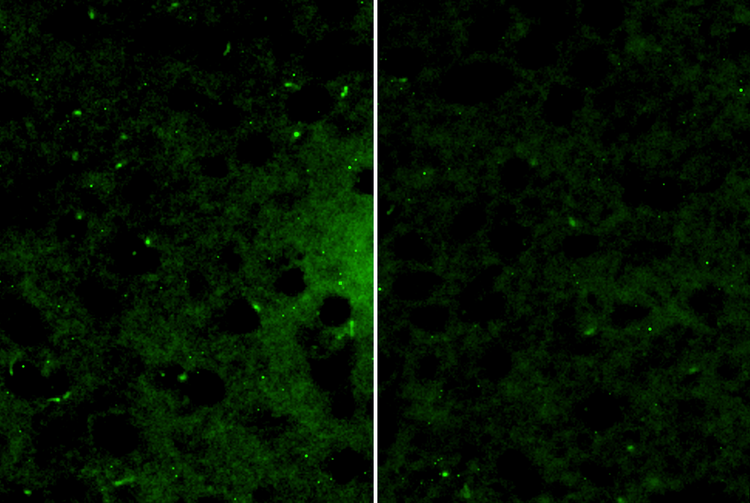
Figure 1. Comparative images of primary cilia in the brains of control mice and mice subjected to 21 days of stress. Marked shortening of the primary cilia and a significant decrease in ciliated cells were observed in the stress group (Figure 1b, right image). Green indicates neuronal primary cilia stained with the cilia marker (AC3).
Left: a) Control group mice. Imaging conditions: vessel: glass slide; objective lens: LUCPLFLN20XPH.
Right: b) Mice in the stress group (restrained for 21 days). Imaging conditions: vessel: glass slide; objective lens: LUCPLFLN20XPH.
Images courtesy of Professor Yuki Kobayashi, Hiroshima University.
How has advanced imaging supported your ability to capture and analyze primary cilia dynamics?
Professor Kobayashi: We need a microscope capable of accurately imaging extremely fine details to capture structural changes in primary cilia. We use fluorescence imaging to quantify the length and prevalence of primary cilia and to evaluate their correlation with various biological phenomena, including stress. Among the observation tools that we have used, the APX100 microscope has performed exceptionally and reliably.
First, the superior autofocus performance is a notable advantage. Cilia are elongated structures less than 10 μm in length, and even slight shifts in focus can reduce measurement accuracy. Using the APX100 enabled us to achieve stable focusing at multiple points, facilitating accurate observation and measurement of ciliary dynamics during stressful states, as shown in Figure 1.
Furthermore, for time-lapse imaging, we used high magnification (100X oil immersion objective lens) and performed imaging at 10-second intervals with Z-axis focus steps of less than 1 μm. High-magnification live-cell imaging requires stable focus and reliability. By using the APX100, we could achieve stable long-term observation while minimizing positional shifts and photobleaching.
This enabled us to capture live-cell time-lapse imaging of the previously overlooked phenomenon of ciliary tip release (the “flight” phenomenon) induced by endogenous ligands5 (Figure 2). This phenomenon suggests that there is extracellular release of GPCRs present at the ciliary tip, indicating its potential as a new mechanism of signal transduction (receptor delivery).
The acquired images are also based on raw data and automatically saved in their original raw data format, which is important for ensuring research reliability. Since signal adjustment is performed on the acquired data during analysis, it is challenging to transfer or re-verify research topics without the unmodified raw data.
The APX100 is designed with this consideration in mind. It is capable of meeting the diverse needs of laboratories with many students, such as ours, as well as those of experienced researchers (Figure 3). The APX100, which meets the stability and reliability requirements for advanced imaging, is the ideal partner for researching microstructures, including primary cilia.
5 Endogenous ligand: A molecule that exists naturally in the body and binds to specific receptors to regulate signal transduction. Examples include hormones and neurotransmitters, which regulate cellular functions and responses.
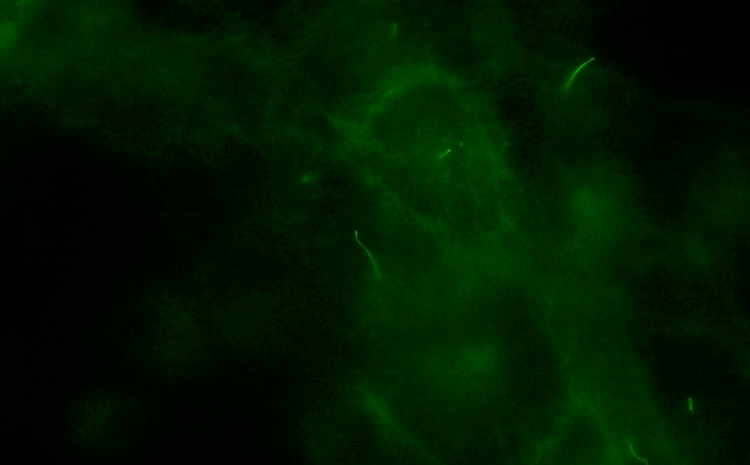
Figure 2. The dynamics of primary cilia using time-lapse imaging. This video captures the dynamic changes of primary cilia in real time and successfully visualizes the ciliary tip release phenomenon. A cell line of human retinal pigment epithelial cells stably expressing MCHR1-EGFP (green) was used.
Imaging conditions:
Vessel: Glass-bottom dish.
Objective lens: UPLXAPO100XO.
Time: Imaged for approximately 20 minutes at 10-second intervals.
Video courtesy of Professor Yuki Kobayashi, Hiroshima University.
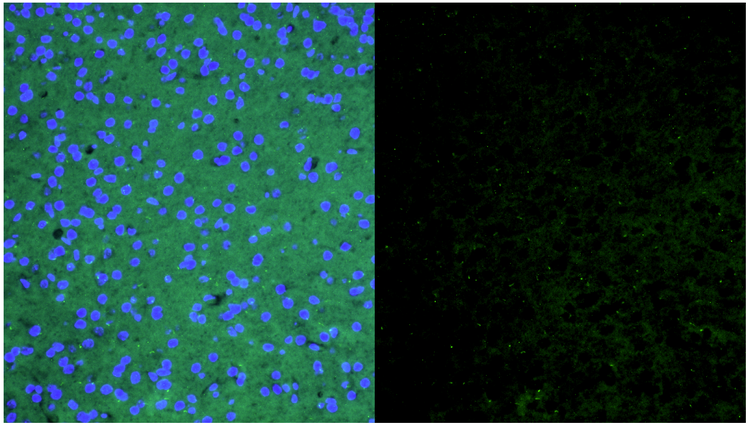
Figure 3. The fluorescence images of the stress group in Figure 1b present both the raw data and the data after signal adjustment. First, the cell nuclei (DAPI: blue) were evaluated using raw data (left image) to determine cell number and morphology. Then, signal adjustment was applied to enable the observation and analysis of primary cilia (right image: the ciliary marker (AC3): green). To ensure the reproducibility of research, it is essential to retain both raw data and adjusted data.
Imaging conditions:
Vessel: Glass slide
Objective lens: LUCPLFLN20XPH
Images courtesy of Professor Yuki Kobayashi, Hiroshima University.
What are your next research priorities in studying primary cilia and psychiatric disorders?
Professor Kobayashi: Going forward, we aim to elucidate new mechanisms of psychiatric disorders and metabolic disorders, focusing on the relationship between primary cilia and GPCRs. In particular, we aim to establish a technology to detect changes in the length and presence of cilia as serum markers, which we hope will facilitate noninvasive diagnostics for depression.
We will continue to make full use of imaging technology to deepen our understanding of primary cilia dynamics and signal transduction, as well as contribute to the development of new treatments for psychiatric disorders.
Supporting Advanced Live-Cell Imaging Workflows
As highlighted by Professor Kobayashi, capturing subtle structural changes and live-cell behaviors requires both stability and accuracy at high magnification. Advanced imaging, such as with the APX100 microscope, plays a critical role in enabling precise observation and analysis of primary cilia dynamics.
1. Consistent, high-precision focus for live-cell imaging.
The APX100 system incorporates a proprietary autofocus (AF) algorithm to ensure stable focus and precise positioning—both essential for live-cell imaging. Focus accuracy is ensured by optimizing the AF search range and the calculation coefficients for the focal position according to conditions such as the objective lens and observation method.
2. Stability and positioning accuracy during time-lapse imaging.
The APX100 incorporates a high-precision motorized stage and a vibration isolation mechanism, enabling a space-saving design while maintaining the repeatable positioning accuracy and vibration compensation required for time-lapse imaging (Figure 4).
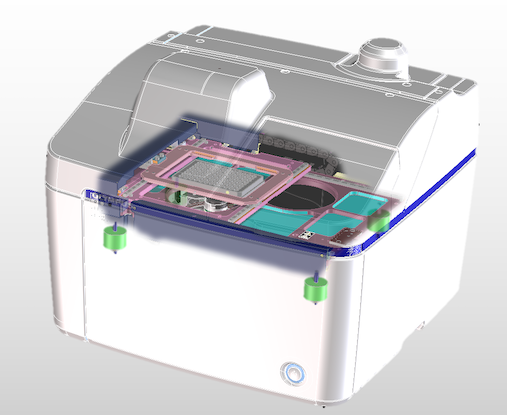
Figure 4. Motorized stage and vibration isolation mechanism support time-lapse imaging.
3. Controls to protect sample integrity during long-term live-cell observation.
Various APX100 features help minimize sample damage during long-term live-cell imaging while enabling reliable capture of subtle structural changes and cell dynamics. This includes a photobleaching prevention function (Figure 5) that automatically turns off fluorescence illumination when imaging is not in progress, as well as a dedicated incubator with excellent environmental stability.
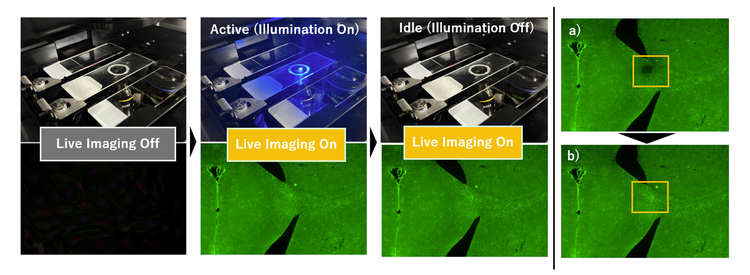
Figure 5. Unlike the conventional method, the photobleaching prevention function turns off fluorescence illumination when imaging is not in progress.
a) Conventional method: image uniformity is reduced due to fading during high‑magnification observation.
b) Photobleaching prevention function: minimizes fluorescence fading and maintains clear, uniform images.
4. Data formats and image processing workflows that support research reliability.
In life science research, managing and operating reliable data is essential and a process that researchers cannot afford to neglect. Acquired images on the APX100 are saved in their raw data format.
Even after image processing—such as signal adjustment to improve visibility or deconvolution to remove blur from fluorescence images—reproducibility and verifiability are maintained because the original raw data is preserved (see Figure 3). As a result, researchers can confidently analyze and reevaluate long-term data.
References
For detailed information on this study, please refer to the publications below:
- Takahashi, R., Hamamoto, A., Saito, Y., Mizuno, A., and Kobayashi, Y. 2025. “Correlation Between Persistent Changes in Ciliary Dynamics in the FrA and Depressive-Like Behavior.” Biochemical and Biophysical Research Communications.
- Kobayashi, Y., Hamamoto, A., and Saito, Y. 2024. “Ciliary Length Variations Impact Cilia-Mediated Signaling and Biological Responses.” The Journal of Biochemistry.
Disclaimer: The opinions and statements expressed in this interview are those of the individual researcher and do not necessarily reflect the views or claims of Evident. The products and technologies mentioned are intended for research use only and are not designed for clinical or diagnostic applications.
Featured Products
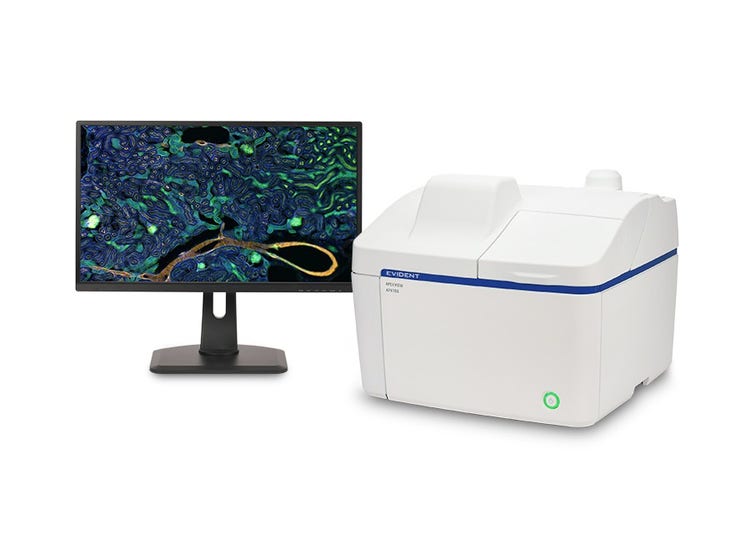
APX100
Benchtop Fluorescence Microscope
- Easy-to-use, all-in-one microscope system
- Publication-quality images in a few clicks
- Fast, efficient data management