VS-SILA
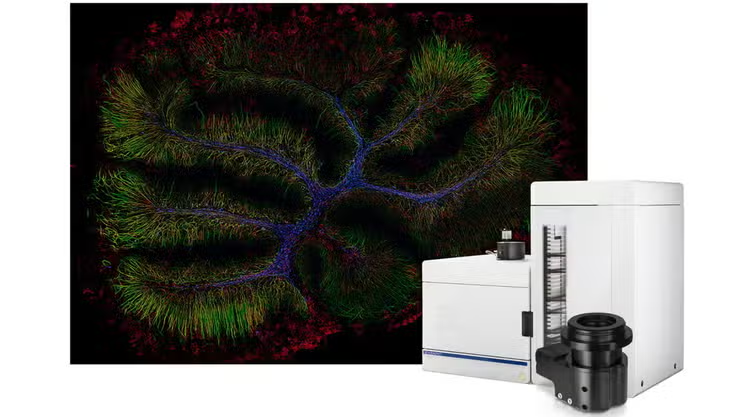
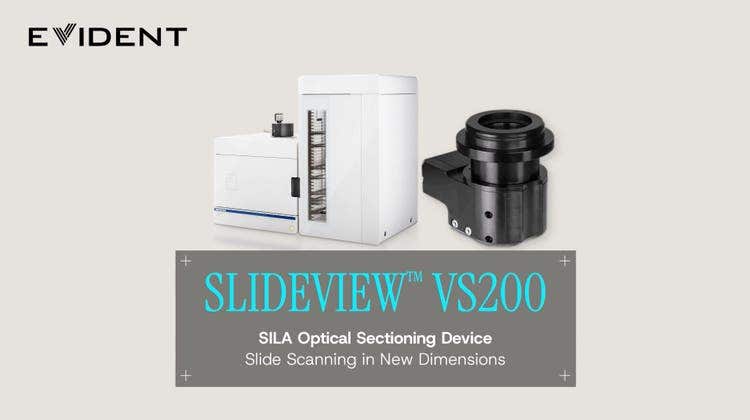
The SILA (speckle illumination acquisition) optical sectioning device easily integrates into your VS200 system and software. Speckles are used to obtain high-contrast images, removing out-of-focus light to deliver sharp images, especially from thick samples. The image is computed during the scan, and there’s no need for post-processing, so the device has a minimal impact on acquisition speed.
VS-SILA
High-Contrast Optical Sectioning Images
The VS-SILA (speckle illumination acquisition) optical sectioning device easily integrates into your VS200 system and software. Speckles are used to obtain high-contrast images, removing out-of-focus light to deliver sharp images, especially from thick samples. The image is computed during the scan, and there’s no need for post-processing, so the device has a minimal impact on acquisition speed.
Optical Sectioning Technology
The VS-SILA device—developed by Bliq Photonics—is a camera-based optical sectioning technology used to bring high-contrast, blur-free images to your VS200 system.
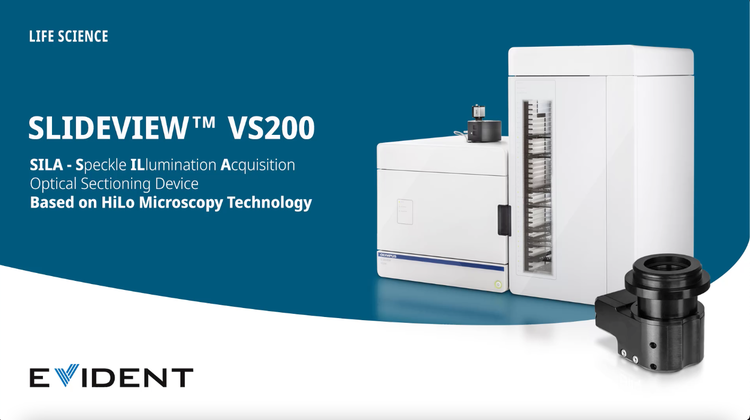
Watch our VS-SILA video to learn more about slide scanning in new dimensions.
https://adobeassets.evidentscientific.com/content/dam/mis/vs200/videos/SILA-2025-Product-Video.mp4
Easy to Use
The VS-SILA device is easy to use with samples of any thickness and independent of the magnification. No special calibration is required, and it’s compatible with a variety of existing Evident objectives. Just insert the slide manually or use the loader, load the software, and acquire the images with the VS-SILA option enabled.
Compact and Easy to Install
The VS-SILA module is compact. It can be used with any manual or loader VS200 system, and existing VS200 scanners can be upgraded on-site.
Versatile for Many Applications
The device works with most sample types, including cleared and fixed cells/tissues. Using optical sectioning, it is possible to image thick samples well beyond the limit of a regular widefield microscope and at any magnification.
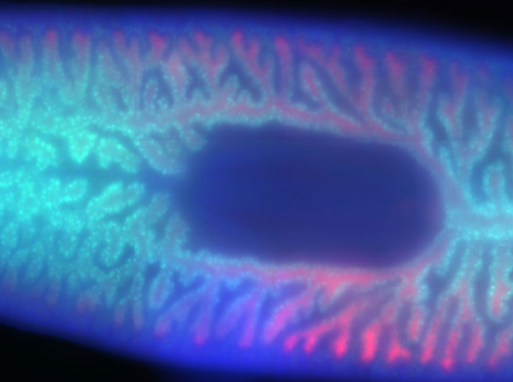
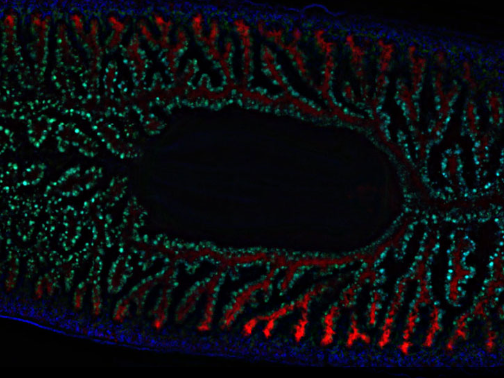
Widefield (left) and VS-SILA (right) images of a whole planarian flatworm Schmidtea mediterranea at 20X, showing the intestines. Blue: DAPI. Green: inner intestine cells. Red: outer intestine cells. Samples provided by Amrutha Palavalli, Department for Tissue Dynamics and Regeneration, Max Planck Institute for Multidisciplinary Sciences, Goettingen, Germany.
Applied Technologies
Sharp Images from Deep Samples
The technology offers a high penetration depth. Since the speckles remain sharp at depth, you retain the same optical sectioning capabilities as you go deeper.
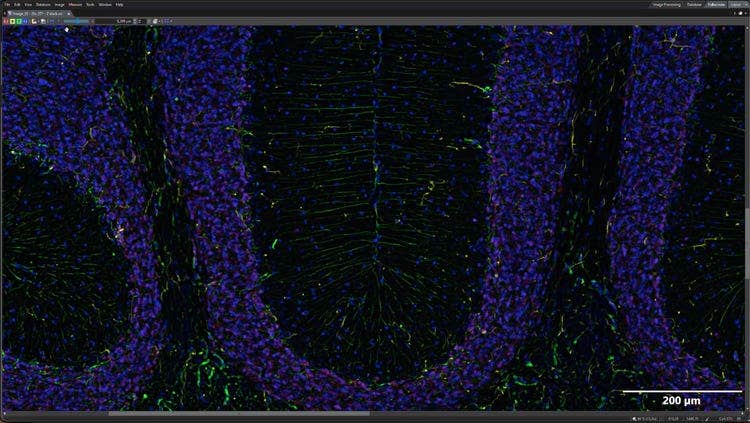
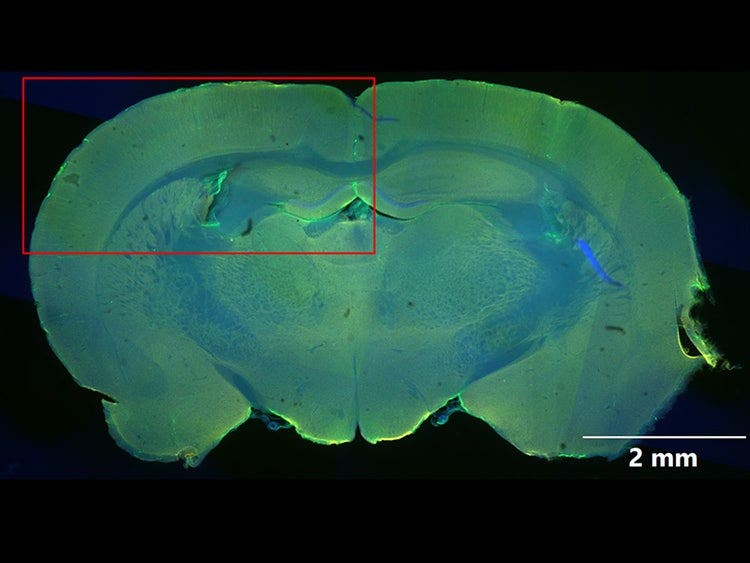
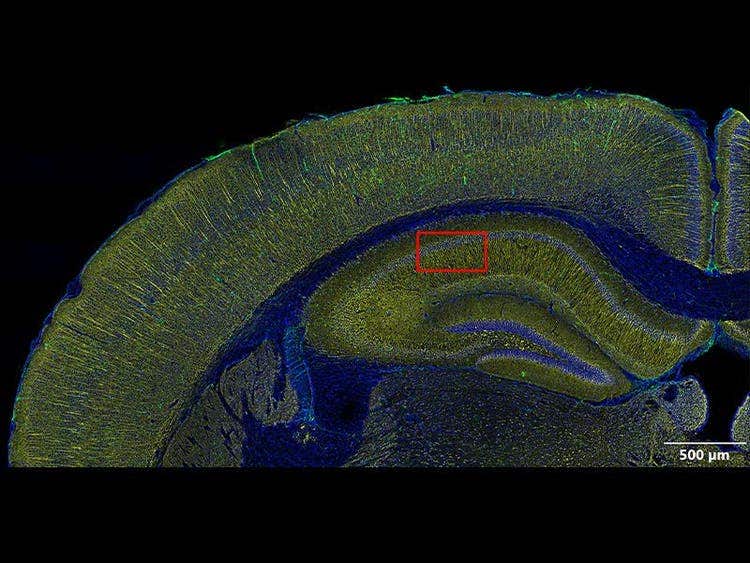
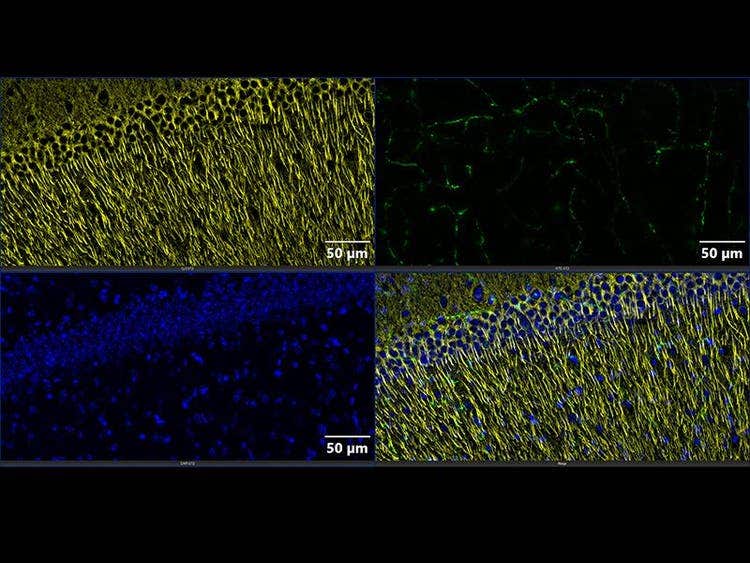
Overview acquired at 4X, detailed scan is an extended focal image (EFI) of a 19 µm Z-series acquired at 20X. Blue: DAPI, Green: GFAP (astrocytes). Yellow: Iba1 (microglia). Red: NeuN (neurons). Samples provided by the Institute of Experimental Neuroregeneration, Spinal Cord Injury and Tissue Regeneration Center Salzburg (SCI-TReCS), Paracelsus Medical University, Austria.
Easy to Adjust
The VS-SILA optical sectioning device scans over a large field of view in a short amount of time.
Fast Processing with the Ability to Visualize Optically Sectioned Images in Live View
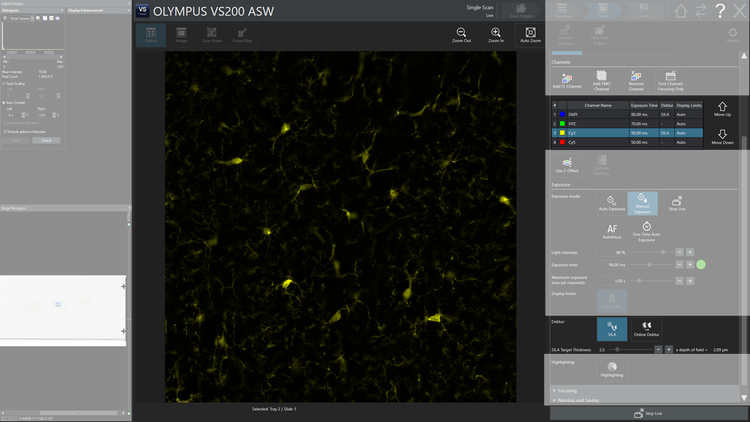
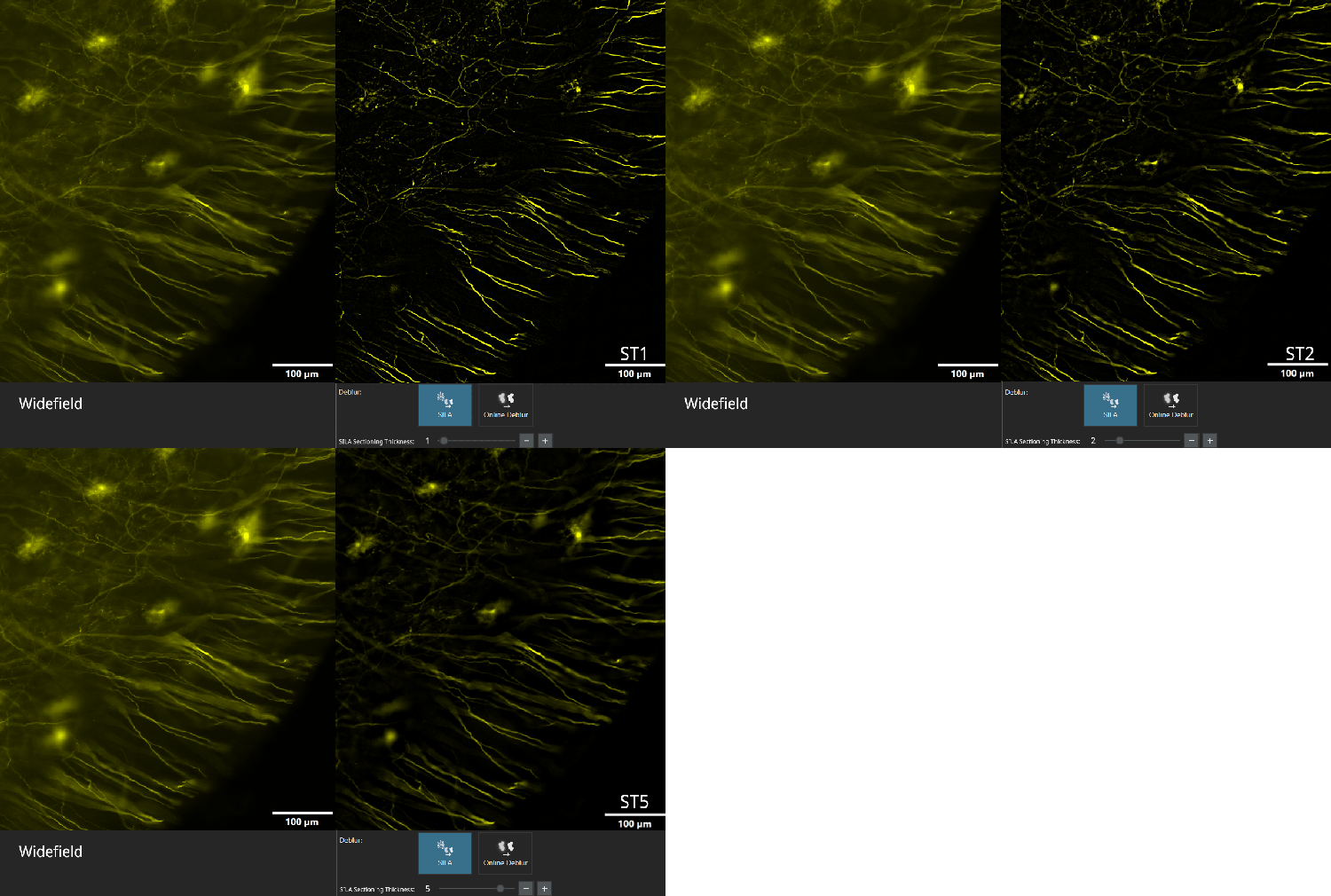
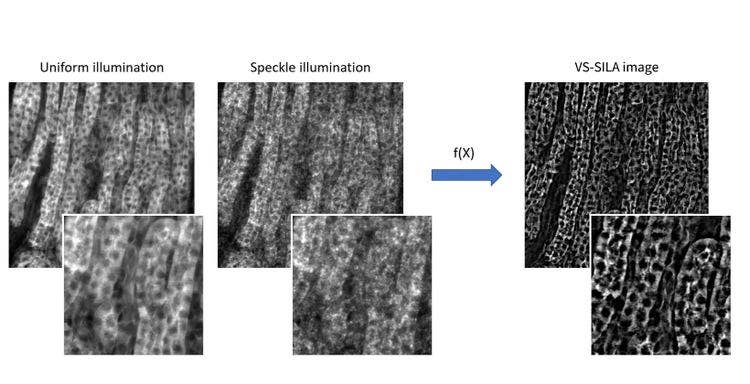
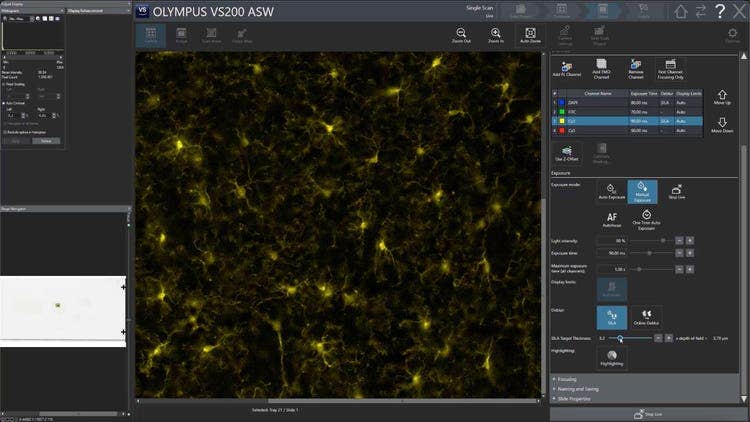
The VS-SILA optical sectioning device rapidly removes out-of-focus elements using two illuminated images that are mathematically processed. Based on HiLo microscopy technology, the image is obtained using a combination of hardware and software. The VS-SILA calculations run on a GPU during image acquisition, so it is also possible to preview the optical sectioning capabilities directly on the live image. Use one parameter to remove out-of-focus light above and below the focus plane, similar to adjusting a confocal pinhole.
Simple for Anyone to Use
Only one parameter needs to be adjusted to obtain the sectioned images: the sectioning thickness. There’s no need to post-process the images like in deconvolution and no need to calculate the point spread function (PSF) of the objects.
Easily Upgrade Your Existing VS200 Slide Scanner
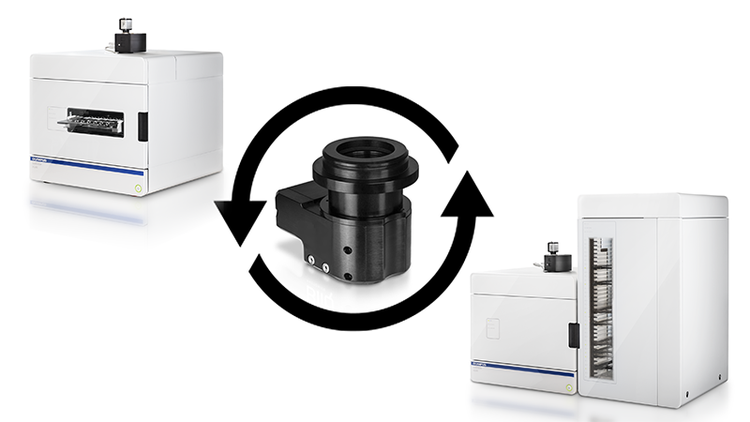
The VS-SILA module can be ordered as an upgrade kit and easily installed by our service personnel to any VS200 base unit or loader system, making it possible to obtain optically sectioned images without buying a new system.
Applications
Works in a Range of Applications
Use the VS-SILA optical sectioning device to image cleared, fixed samples of different thicknesses. It is especially useful for neurobiology, botany, organoid research, entomology, developmental biology, and tissue regeneration.
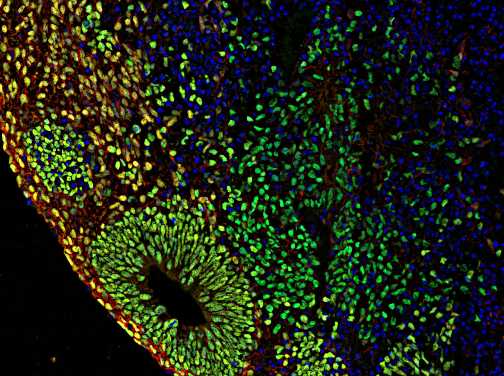
Organoid
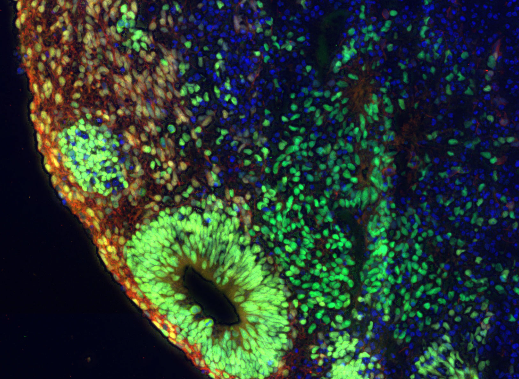
Widefield (left) and VS-SILA (right) images of an organoid sample acquired at 20X. A Z-series of 20 µm thickness is acquired and processed with extended focus imaging (EFI). The organoid was imaged with 405 nm, 488 nm, 561 nm, and 638 nm excitation. Samples provided by a customer in Europe.
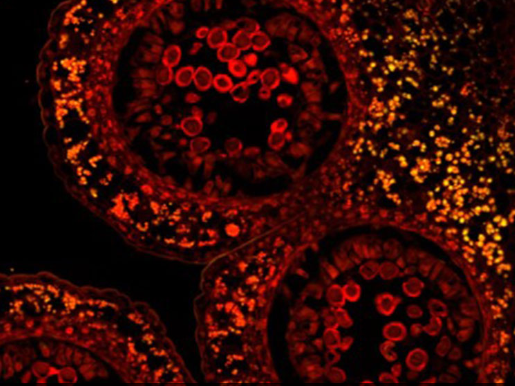
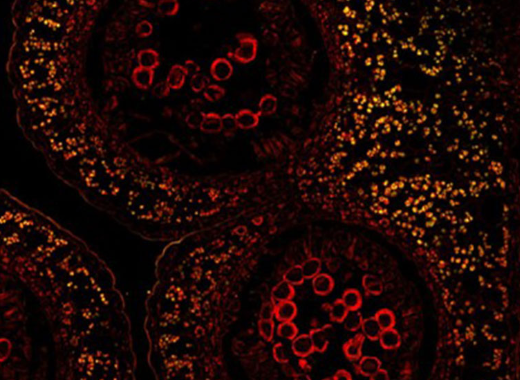
Lily Flowers
Widefield (left) and VS-SILA (right) images of a VS-SILA extended focus image (EFI) of a 12 µm lily flower bud acquired at 20X, showing both the whole and enlarged view. Yellow and red: autofluorescence signal at 561 nm and 638 nm excitation.
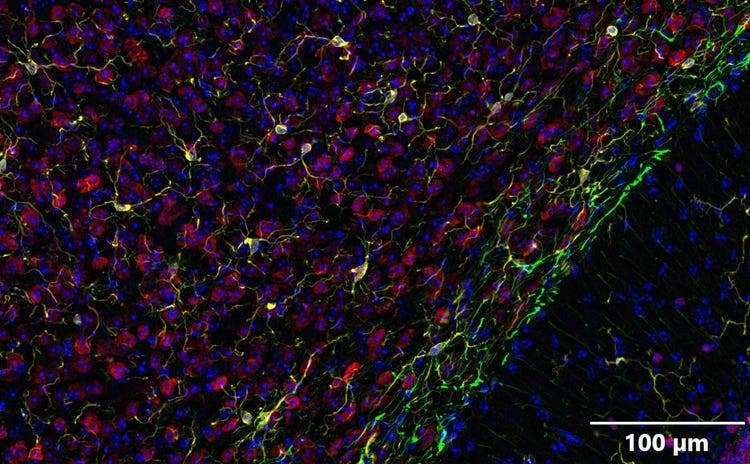
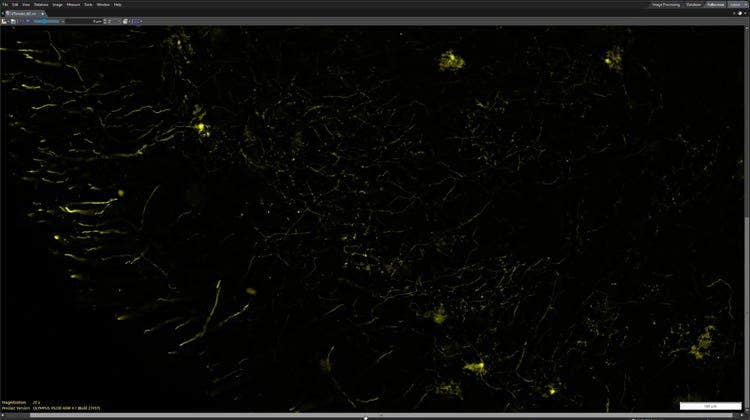
VS-SILA image of a 40 µm mouse brain sagittal section. Overview acquired at 4X, detailed scan is an extended focus image (EFI) of a 19 µm Z-series acquired at 20X. Blue: DAPI. Green: GFAP (astrocytes). Yellow: Iba1 (microglia). Red: NeuN (neurons). Samples provided by the Institute of Experimental Neuroregeneration, Spinal Cord Injury and Tissue Regeneration Center Salzburg (SCI-TReCS), Paracelsus Medical University, Austria.
Flexible Fixed Cell Imaging
Acquire 2D and 3D images: (live VS-SILA image to set up the conditions), Z-stacks, stitching, and EFI.
Multichannel acquisition: can be used with up to four channels (405, 488, 561, and 638 nm excitation wavelengths).
Optimized for Thick Samples
Obtain a high penetration depth as the speckles remain sharp the deeper you go.
Specifications
Intended Specimen
Rowspan=3
Imaging
Rowspan=5
(including selected oil immersion and silicon oil immersion objectives)
(20X objective scan area, 15 mm × 15 mm, 4 channels, 50 ms exposure each)
Light Source
Rowspan=3
375 nm: 70 mW
730 nm: 50 mW
Other wavelengths: 100 mW
AC adapter: 15 VDC, 7A
SILA Hardware
Rowspan=4
(H × W × D)
Weight: 520 g (1.1 lb)
Humidity: up to 80% (31 °C or 87.8 °F)
Altitude: 2000 m (6561.7 ft)
Threshold: 3.0 V
Resources
Insights
Videos
https://adobeassets.evidentscientific.com/content/dam/mis/vs200/videos/SILA-2025-Product-Video.mp4
Introducing the VS200 Slide Scanner’s SILA Optical Sectioning Device