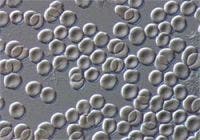
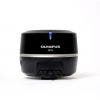
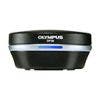
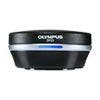
Pour pouvoir déceler les légères différences dans une coloration de Giemsa, il est important que votre caméra offre une excellente reproduction des couleurs. Puisque 100x est le grossissement habituel pour cette application, le nombre de mégapixels ne revêt pas une grande importance.
*1 La fréquence d’images peut diminuer en fonction de l’état de votre ordinateur, de la résolution de votre moniteur et/ou du logiciel. *5 Compatible avec un port USB 3.1 1re gén. (5 Go/s), mais la fréquence d’images sera inférieure. Non disponible avec le logiciel cellSens Entry ou DP2TWAIN.
Assistant manuel d’intensification de la mise au point Technologie de réduction active du bruit ESIA (Evident Smart Image Averaging) * La norme USB 3.1 Gen1 est compatible avec les périphériques USB 3.0.
Assistant manuel d’intensification de la mise au point Technologie de réduction active du bruit ESIA (Evident Smart Image Averaging) * La norme USB 3.1 Gen1 est compatible avec les périphériques USB 3.0.
Observation Method
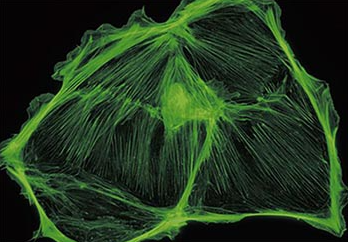
Flourescence
Fluorescence
Cameras must have good sensitivity and low noise because strong excitation light can damage the sample. Although the signal yield is determined by simple physics (i.e., sensitivity × number of photons), some cameras, like the DP74, have a dedicated feature to shorten and simplify the fluorescence imaging process.
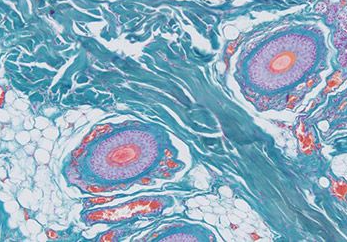
Brightfield
Brightfield
Accurate color reproduction is essential. Since modern microscope illumination is very bright, it’s rare to struggle with noise in brightfield images.
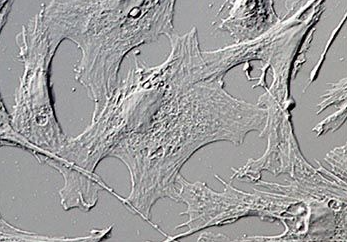
Phase Contrast/DIC
Phase Contrast/DIC
For phase contrast or differential interference contrast (DIC), the DP22 and DP27 have a color mode dedicated to imaging cultured cells.
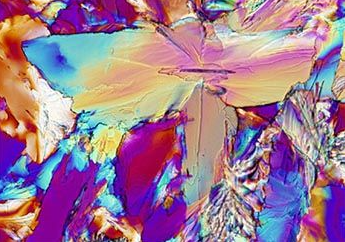
Polarization
Polarization
Many cameras designed for brightfield observation also work well for polarization due to their accurate color reproduction, such as the DP27 and SC50.
Darkfield
Darkfield
Darkfield is the second darkest microscope observation method, so cameras with high sensitivity and low noise are essential. Many of our cameras, including the DP74, UC90, and SC50, feature special noise reduction image processing for excellent darkfield images.
Vous cherchez les caractéristiques techniques des caméras?
Comparez les caractéristiques techniques au moyen de notre outil de recherche de caméras.