FLUOVIEW FV5000MPE Multiphoton Laser Scanning Microscope
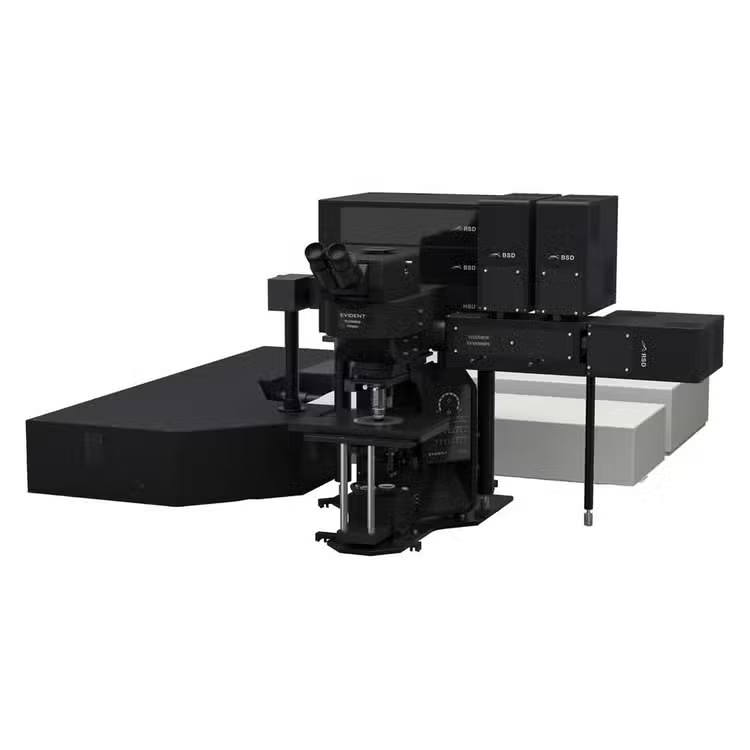
Experience exceptional clarity far beneath the surface with the FLUOVIEW™ FV5000MPE multiphoton laser scanning microscope. Combining Evident’s advanced optics with high-speed scanning and photon-efficient detection, the FV5000MPE is designed for precise, consistent deep-tissue imaging and live-cell observation.
Groundbreaking SilVIR™ detectors enable sensitive photon counting for quantitative data acquisition, while 2K resonant and 8K galvo scanners capture fast, dynamic biological processes in real time. Optimized excitation pathways and dispersion compensation maximize penetration depth with minimal photodamage, preserving sample integrity during extended imaging sessions.
Built for stability and precision, the FV5000MPE supports life science research ranging from long-term in vivo studies to high-resolution 3D reconstructions—making deep imaging easier, faster, and more reproducible than ever.
- Product Status: This product is a replacement for the FV4000MPE, FVMPE-RS, and earlier FV series systems.
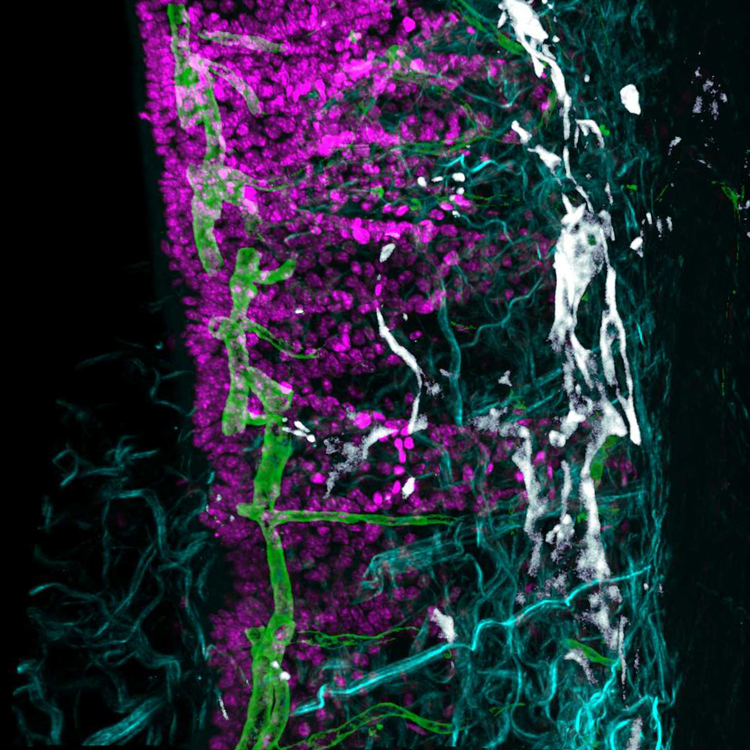
2K x 2K resonant volumetric imaging. High SNR with the SilVIR detector enables high-quality results with minimal averaging. Four-channel multiphoton dataset of cleared mouse intestine.
Deeper Discoveries and Advanced Multiphoton
The FV5000MPE enables quantitative imaging deep within thick, scattering samples, combining SilVIR detectors, TruSight™ deconvolution, and TruAI noise reduction for outstanding signal-to-noise and clarity. MPE-optimized objectives, TruResolution auto correction collar, and automated IR laser alignment maintain sharp focus throughout the imaging volume.
The compact fiber-pigtailed laser system offers an affordable, easily deployed solution for routine multiphoton imaging and rapid installation. For advanced applications, the fully tunable MPE laser configuration provides broad excitation flexibility and precise wavelength control for demanding experiments.
One-, two-, or three-line simultaneous MPE laser excitation delivers clarity and reproducibility millimeters deep.
From Compact to Advanced MPE Setups
Convenient Multiphoton Imaging
The FV5000MPE addresses some of the primary challenges associated with multiphoton excitation (MPE)—costly traditional pulsed tunable IR lasers and strict environmental conditions—with a new generation of compact single wavelength fiber-pigtailed IR lasers that are cost-effective, easy to handle, and designed to bring MPE within reach of a broader range of users.
Tunable Infrared Laser Solutions for Advanced Multiphoton Studies
For more advanced applications, the FV5000MPE supports the latest tunable infrared pulsed lasers for deep multiphoton imaging across 680–1300 nm. These IR lasers provide two laser lines—one tunable and one fixed at 1040/1045 nm—for efficient excitation of far-red fluorophores.
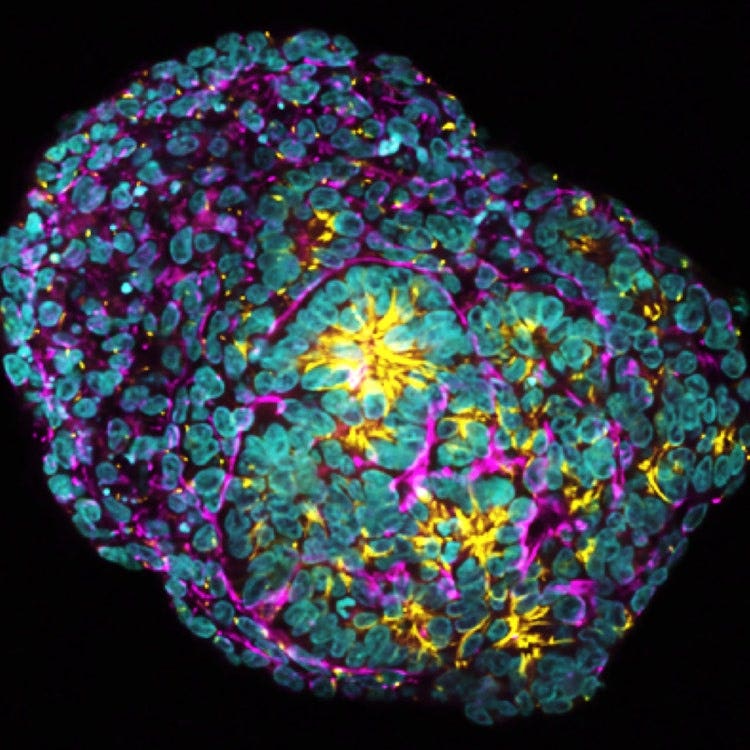
Human kidney organoid. Captured with single wavelength fiber-pigtailed IR lasers at 920 nm and 1064 nm for simultaneous 3CH multiphoton imaging with a LUPLAPO25XO objective lens. Sample courtesy of: Dr Robert Turnbull and Prof. Katja Röper, Department of Physiology, Development and Neuroscience, University of Cambridge.
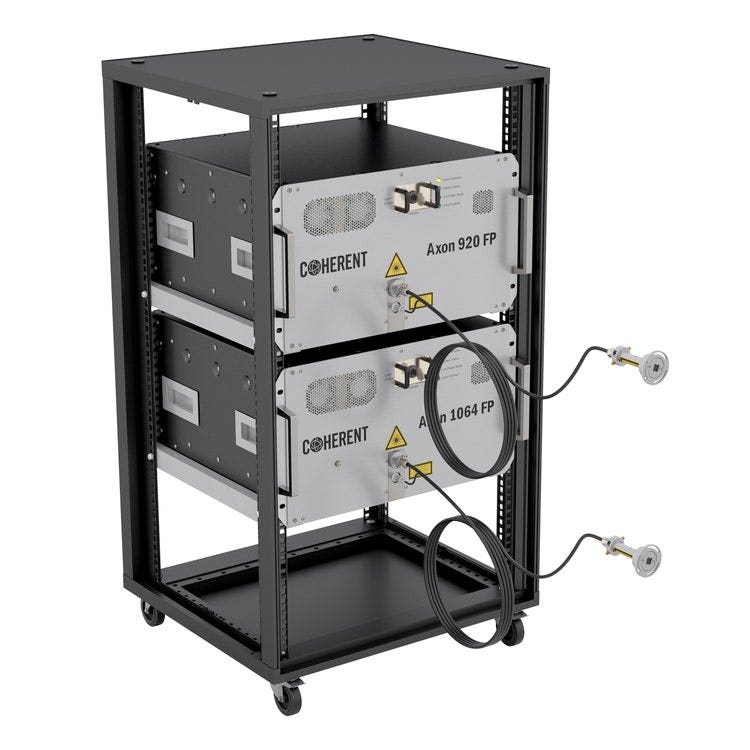
Axon FP lasers at 920 nm and 1064 nm installed in a 19-inch rack.
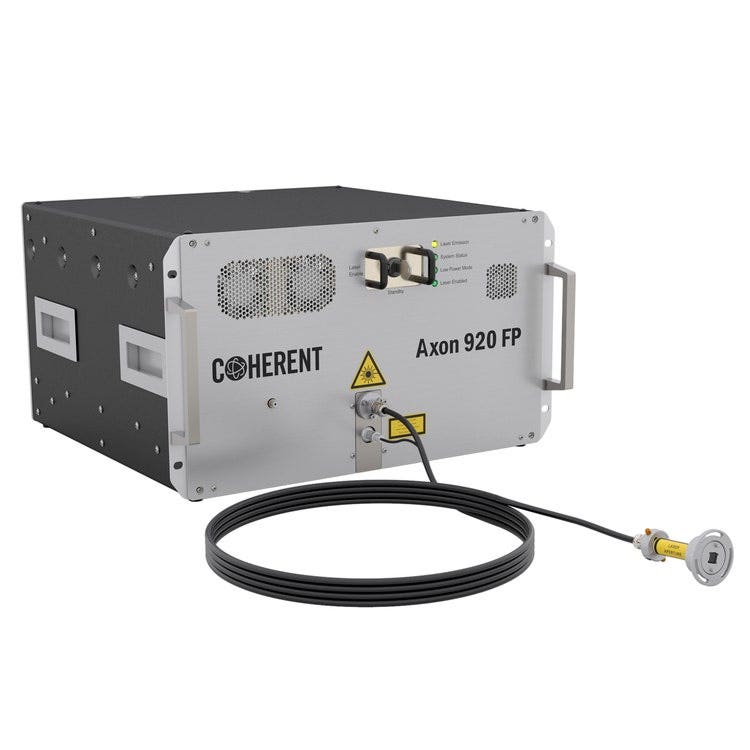
Single-wavelength fiber-pigtailed laser (Axon FP).
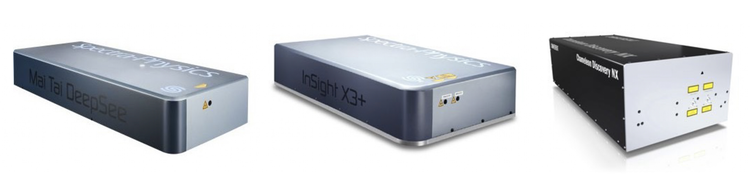
Tunable infrared laser solutions for advanced multiphoton studies from SpectraPhysics and Coherent.
More Colors and More Information
Capture more colors and more information in one image with the FV5000MPE’s advanced multiplexing features. The FV5000MPE offers simultaneous multicolor imaging with up to six channels at once to capture more information in less time. Make the most of the SilVIR detector’s high sensitivity to quickly produce outstanding images at depth.
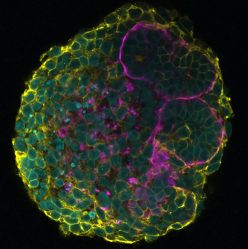
Human iPSC-derived kidney organoids with membrane-GFP. Captured with single-wavelength fiber-pigtailed IR lasers at 920 nm and 1064 nm for simultaneous 3CH multiphoton imaging at 2K resonant imaging. Sample courtesy of: Dr Robert Turnbull and Prof. Katja Röper, Department of Physiology, Development and Neuroscience, University of Cambridge.
Optimized Performance
Optimized Performance and Results
Auto Laser Alignment
The FV5000MPE’s four-axis auto laser alignment system simplifies maintenance by keeping the excitation beam precisely aligned within the scanner unit, even when wavelength tuning, temperature changes, or other factors cause drift. The system adjusts beam position and angle to maintain optimal laser power and consistent pixel registration.
In dual-laser configurations, auto alignment also preserves beam co-alignment, minimizing channel co-registration errors for accurate multi-line imaging. When needed, users can perform manual fine-tuning directly through the software interface.
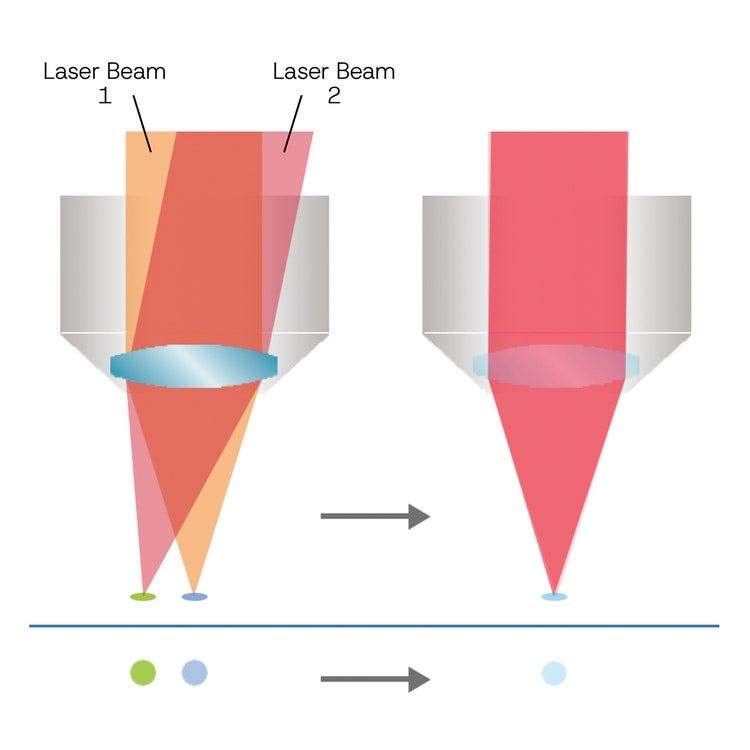
Left: Pixel shift. Right: Correction of pixel shift.
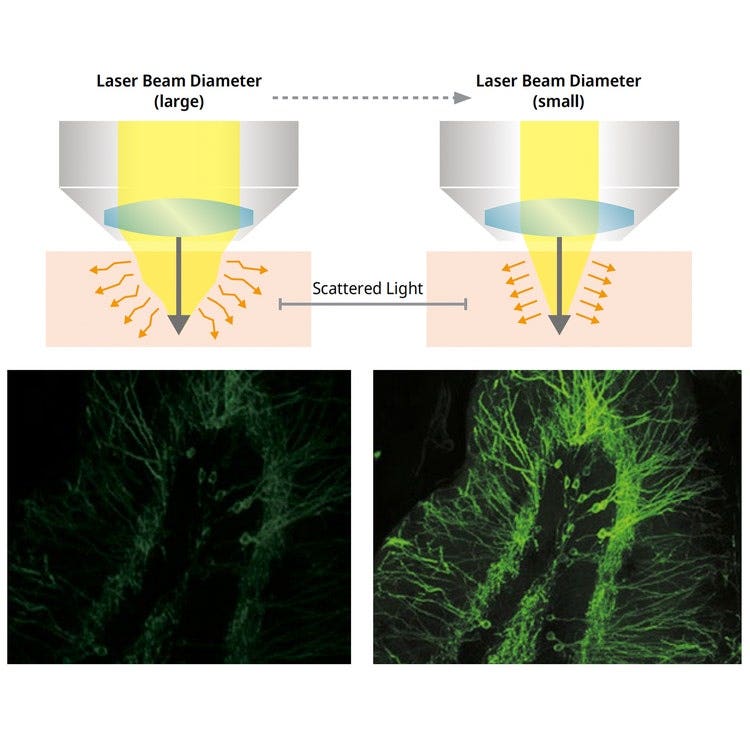
Left: Normal image. Right: Deep Focus mode image.
Maximize Signal with Deep Focus Mode
Deep Focus mode adjusts the laser beam diameter according to the sample’s scattering properties. In highly scattering in vivo specimens, the beam can be narrowed to allow more excitation photons to penetrate deeper into the tissue, resulting in bright high-resolution images even at greater depths.
TruResolution™ MPE Objectives
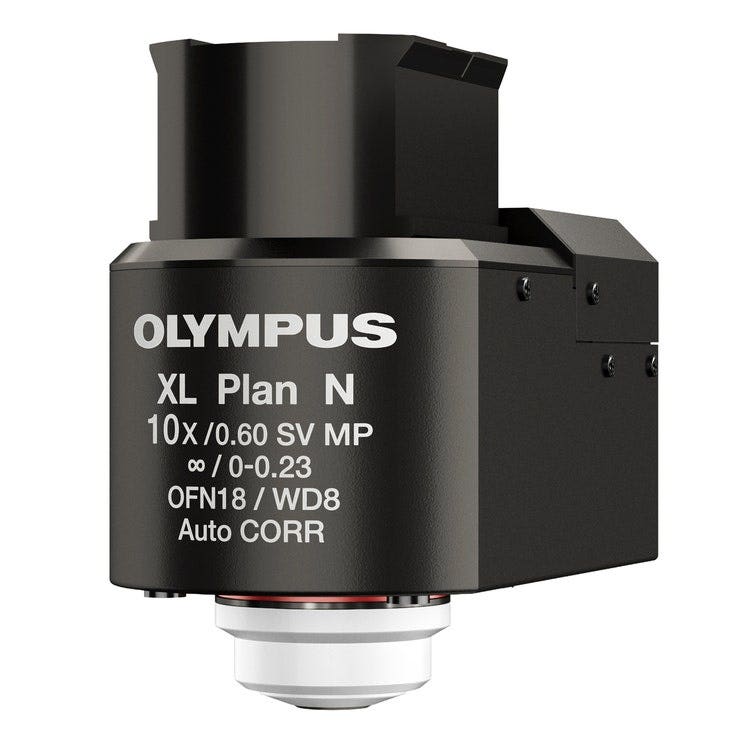
FV30-AC10SV Objective Lens
10X multi-immersion, NA 0.60, WD 8.0 mm
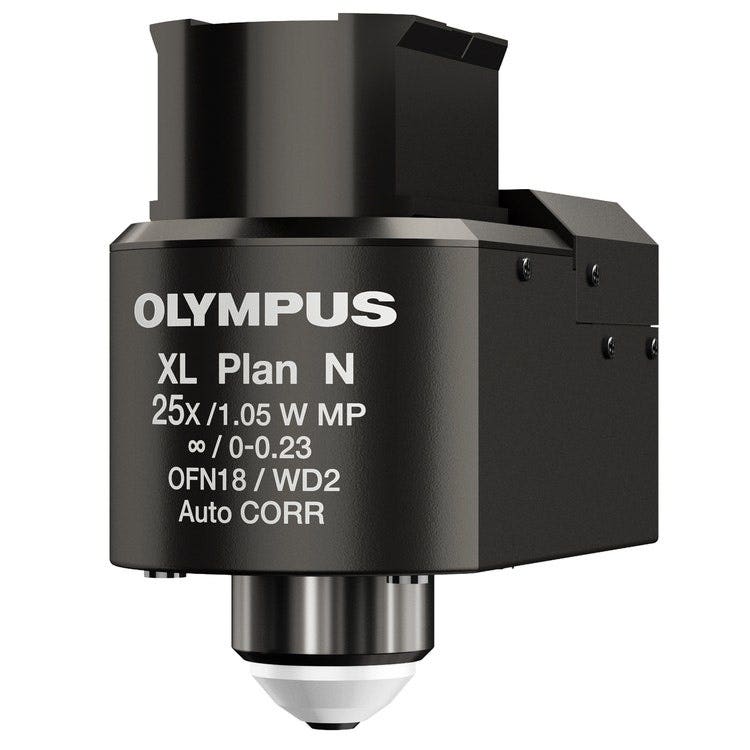
FV30-AC25W Objective Lens
25X water-immersion, NA 1.05, WD 2.0 mm
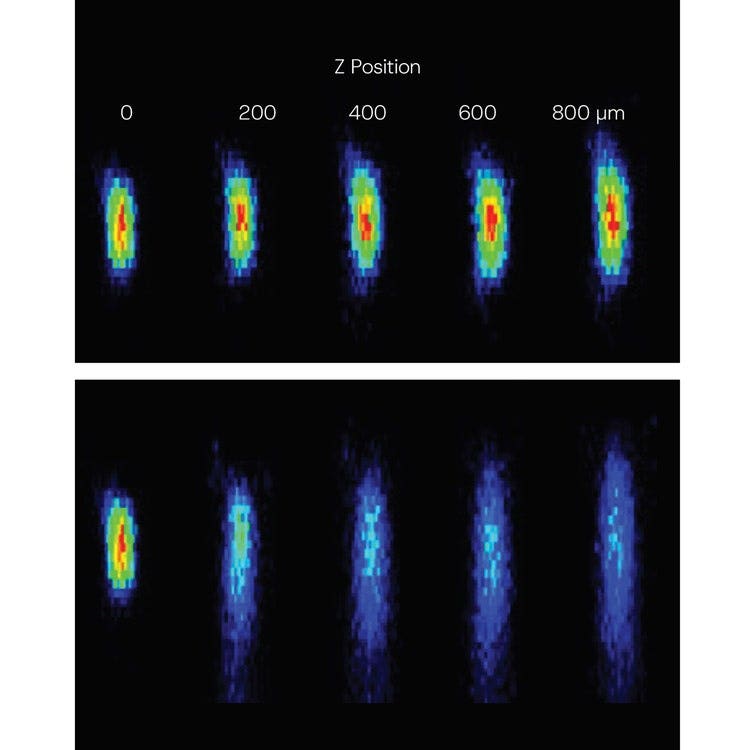
Top: With TruResolution. Bottom: Without TruResolution. XZ images of 0.2 μm fluorescent microspheres in scattering gel (RI=1.36) at various depths acquired using the FV30-AC25W objective lens.
MPE Objectives
Objectives Designed for Depth
Sharper Imaging, Deeper Insights
Engineered for multiphoton excitation, A Line™ MPE objectives deliver high-precision imaging of biological specimens at depths of up to 8 mm, supporting both in vivo and transparent samples.
These objectives are optimized for performance and versatility, offering:
- A diverse selection of models to match varied research needs
- Optical designs combining a high numerical aperture, long working distance, and wide field of view
- Compatibility with multiple immersion media and tissue-clearing agents
- Built-in correction collars to compensate for refractive index mismatch and coverslip variations
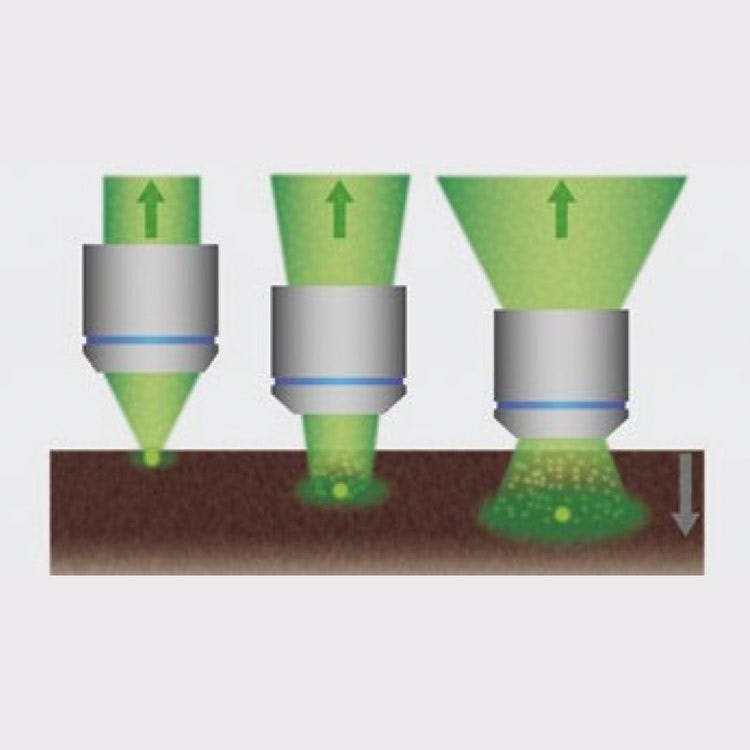
Wide fields of view enable these objectives to efficiently collect scattered fluorescence photons and generate brighter images from deep within specimens.
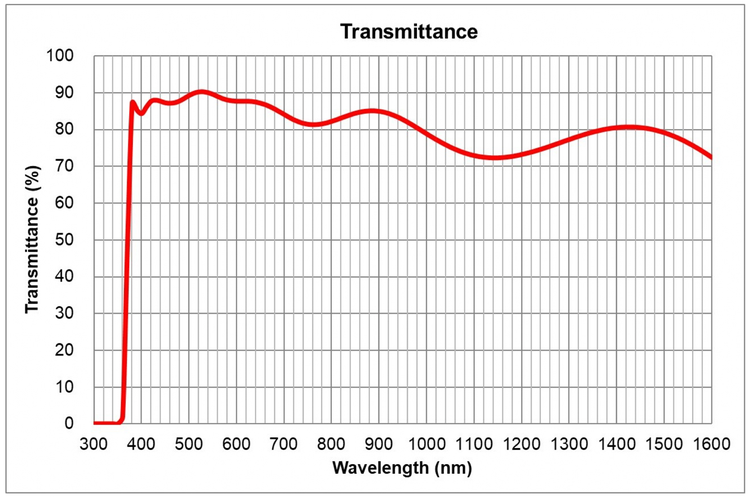
Example of 1600 coating technology with the XLPLN25XWMP2 objective lens.
Optics with Outperforming IR Coating
Our innovative IR coating (1600 coating) for multiphoton objectives and scanner optics further refines deep observation quality.
Reliable Tissue Imaging
For upright microscope systems, our newly developed 16X multi-immersion objective (NA 0.8, WD 3.0 mm) offers an excellent balance between resolution and field of view—an ideal choice for broad tissue imaging applications. It has high transmittance from the VIS to NIR range, and enables seamless switching between multiphoton and confocal imaging.
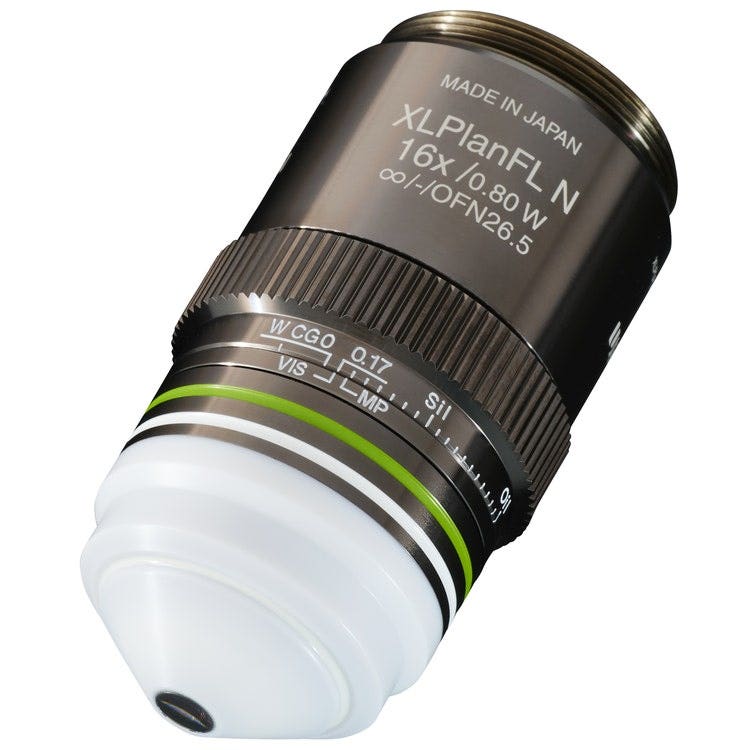
XLPLFLN16XW / NA 0.80
Working Distance: 3.0 mm
Immersion Index: 1.33–1.52
Configurations
Built on the Versatile Platform
The FV5000MPE is part of the modular FV5000 family—engineered to cover every imaging need, from single-cell dynamics to deep-tissue and small-animal studies.
It can be configured as a dedicated multiphoton (MPE) system or as a combined confocal + multiphoton setup for seamless multimodal imaging.
Optimized designs support thick-tissue, organoid, and in vivo applications, while up to six SilVIR detector channels can be assigned to confocal and six to multiphoton detection—enabling up to 12 simultaneous SilVIR detector channels across modalities.
Learn more about the FV5000 confocal configuration here.
Multiple Frame Options
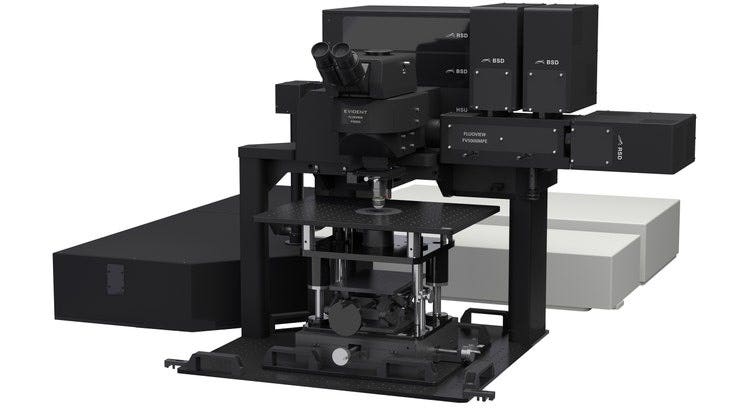
Depending on your application, you can choose between upright, gantry, or inverted microscope frames.
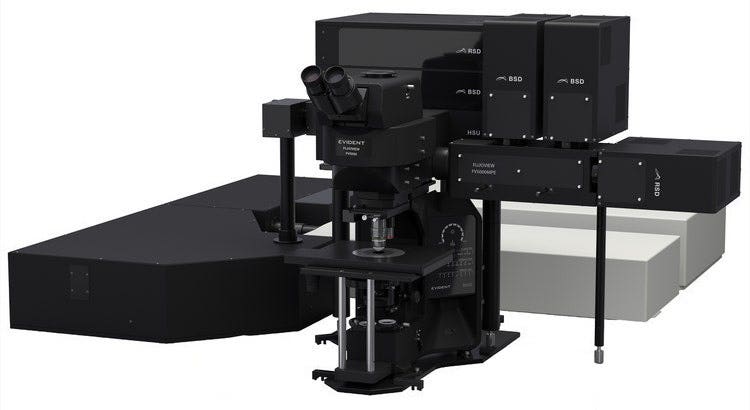
Upright Microscope System
A large focus stroke accommodates a range of specimens, from tissue slices to live mice and other small animals.
Gantry Microscope System
The frame maintains a large working space below the objective, making it easier to position experiment equipment.
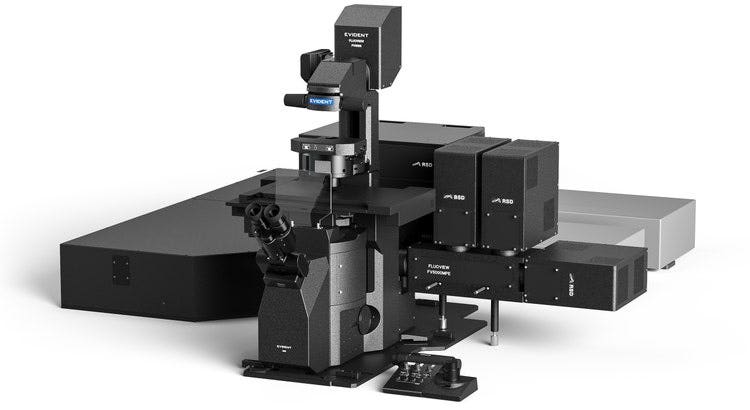
Inverted Microscope System
The frame supports observation of 3D cultures and multicellular clusters that are difficult to image using an upright frame.
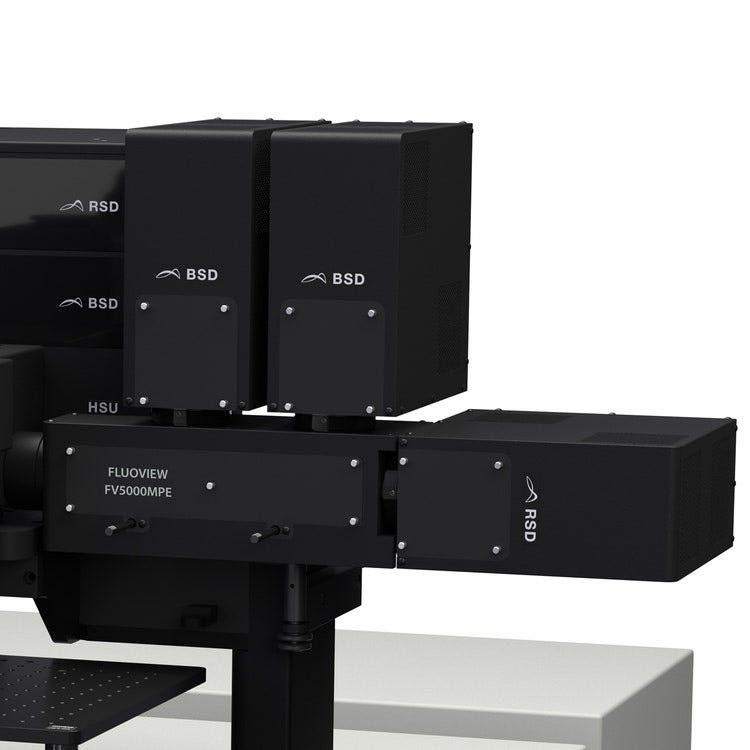
Six-channel non-descanned detection (NDD) module of the FLUOVIEW FV5000MPE. The modular SilVIR detector units enable simultaneous multicolor imaging and deep-tissue acquisition with exceptional sensitivity and unmatched dynamic range.
Create Your Own Custom Configuration
Take system customization to the next level by integrating your own optical components. For example, you can add a custom laser to an available port to enable advanced techniques such as three-photon or specialized imaging methods.
As your research evolves, your imaging system should evolve with it. The FV5000MPE platform supports specialized solutions* that extend the capabilities of standard configurations, helping you adapt to new applications and experimental requirements.
*Not available in some countries or regions.
Service
Support and Service You Can Count On
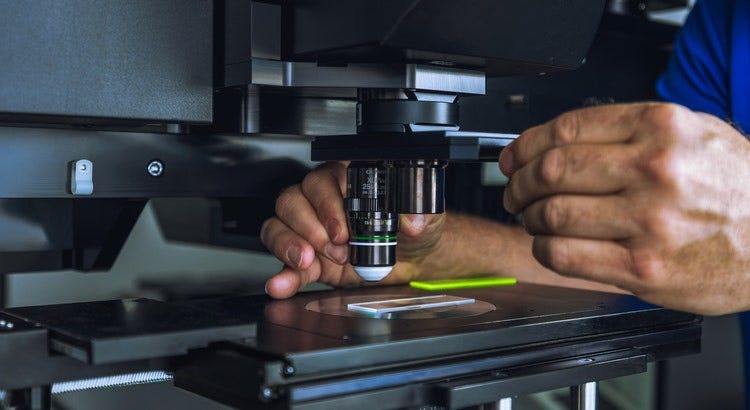
When it comes to protecting your investment and the integrity of your research, your needs come first. We stand behind our products with a commitment to prompt service and technical support to help you achieve your goals.
Available in three convenient tiers—Maintenance, Protection, and Performance Plus—our FV5000MPE Service Plans* include priority support to help minimize downtime, regular scheduled maintenance to keep your equipment in peak condition, predictable repair costs to eliminate unplanned expenses, and direct, efficient solutions when you need them most.
*Regional variations in service offerings may apply.
FV5000MPE Service Plans
Repair coverage
(parts, labor, travel)
Specifications
FV5000MPE / FV5000MPE-RS Specifications
| SPECIFICATIONS | FV5000MPE | FV5000MPE-RS | |
| Scanner | Galvanometer Scanner | 64 × 64 – 8192 × 8192 pixels, 0.2 μs/pixel – 1000 μs/pixel | |
| Resonant Scanner | 512 × 512 pixels, 1024 × 1024 pixels, 2048 × 2048 pixels | ||
| Field Number | 20 (for both scanner types) | ||
|
Spectral Confocal Detector |
Detector | SilVIR detector (cooled SiPM, broadband type/red-shifted type) | |
| Maximum Channels | Six channels | ||
| Spectral Method | VPH, detectable wavelength range 400-900 nm | ||
|
Non- Descanned Detector |
Detector | SilVIR detector (cooled SiPM, broadband type/red-shifted type) | |
| Maximum Channels | Six channels | ||
| CW Laser | VIS Laser | 405 nm, 445 nm, 488 nm, 514 nm, 561 nm, 594 nm, 640 nm | |
| NIR Laser | 685 nm, 730 nm, 785 nm | ||
| IR Pulsed Laser | Tunable Laser |
One-laser system, dual-laser-line system, two-laser system Excitation wavelength: 680-1300 nm Four-axis auto alignment, auto beam expander |
|
|
Single Wavelength Fiber Pigtailed Laser |
920nm, 1064nm | ||
| Image | High dynamic range photon counting (1G cps, 16-bit) | ||
Resources
Application Notes
Insights
Videos
https://adobeassets.evidentscientific.com/content/dam/video/video/library/jRGECI1a_BOCC_movie.mp4
In vivo Ca2+ imaging in mouse cortical neurons using jRGECO1a.Courtesy of Katsuya Ozawa and Akiko Hayashi-Takagi, Multi-Scale Biological Psychiatry, RIKEN CBS.
https://adobeassets.evidentscientific.com/content/dam/video/video/library/iGluSnFR_BOCC_movie.mp4