DSX1000 Microscope
Be confident in your results. DSX1000 microscopes enable faster failure analysis with accuracy and repeatability. Streamline your inspection workflow with fast macro-to-micro viewing, multiple observation methods at the push of a button, and a large selection of lenses that are easy to change.
This product has been discontinued, check out our current product >>
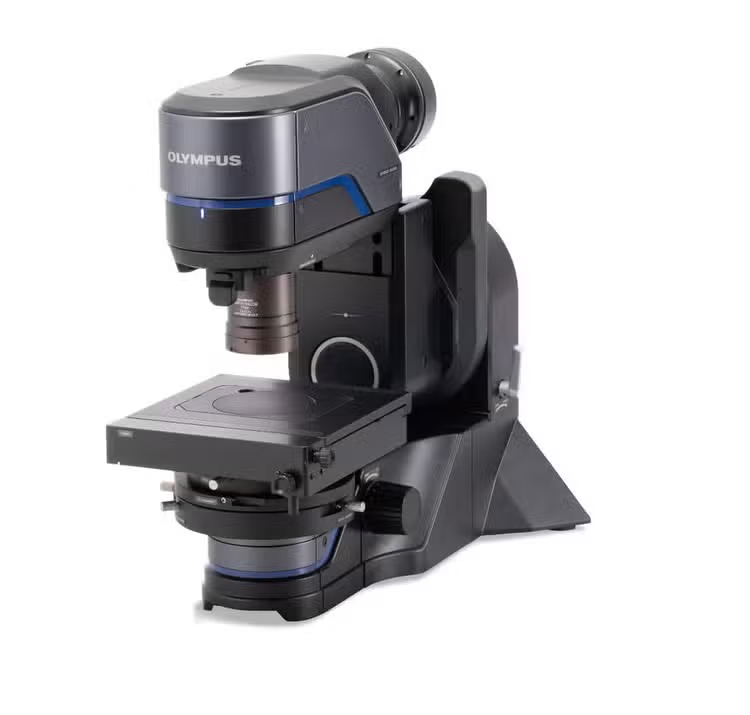
DSX1000 – Microscope
DSX1000 Microscope
Powerful Analysis, Dynamic Imaging. The DSX1000 microscope combines ease of use with advanced features to streamline your inspection workflow.
- Large selection of lenses that are easy to change
- Switch between 6 different observation methods by pushing a button
- Fast macro to micro viewing
- Accurate measurements with a telecentric optical system
- Advanced measurements are fast and easy to obtain
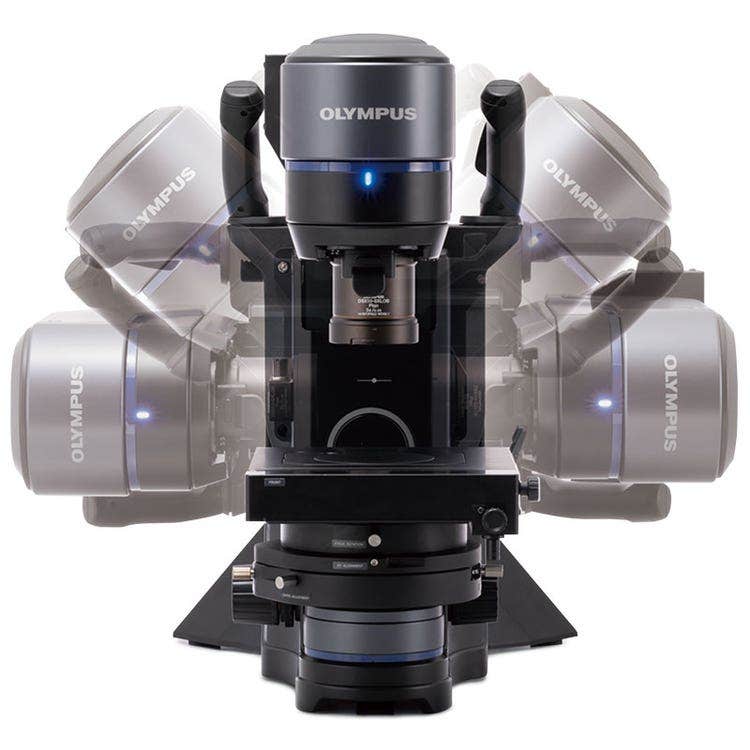
DSX1000 Microscope Models
Choose the DSX1000 microscope that best suits your needs.
Entry Model
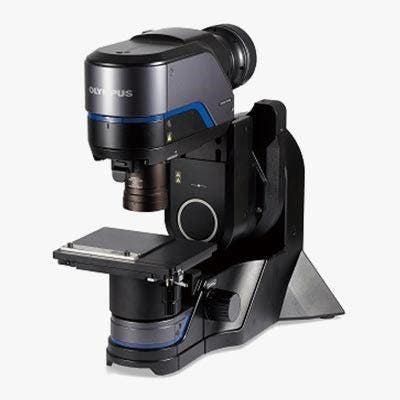
Easy to Use with Basic Functionality
Standard zoom head, offering 5 observation methods.
Tilt Model
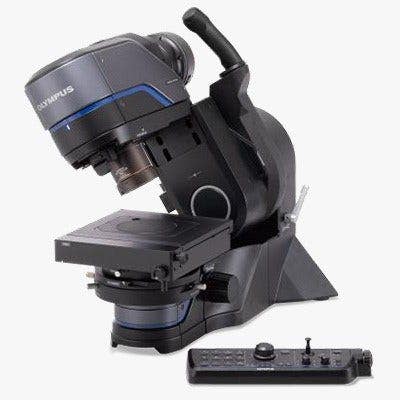
See Your Sample from Many Angles
Offers all the features of the Entry model and adds a tilting frame, motorized XY stage, and console.
High-Resolution Model
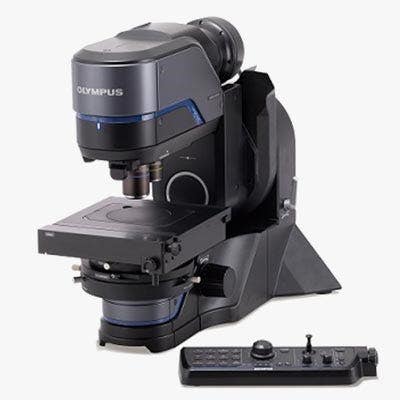
High-Resolution Images for Advanced Analysis
Universal zoom head adds differential interference contrast imaging, enhanced depth of focus, and high-resolution 3CMOS mode.
High-End Model
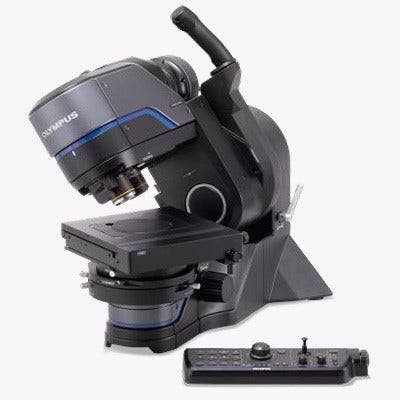
6 Observation Methods and Advanced Measurement Functions
Packed with advanced features, this model features the universal zoom head and adds a tilting frame and motorized XY stage with rotation (+ 90°).
DSX1000 Objective Lenses
Our lineup of 17 objective lenses, including super long working distance and high numerical aperture options, offers flexibility to obtain a wide range of images.
Super Long Working Distance Objective Lens
Provides a long working distance between the lens and sample.
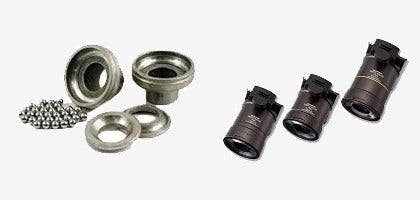
High-Resolution, Long Working Distance Objective Lens
Delivers both high resolution and a long working distance.
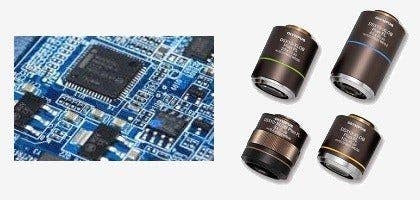
High-Performance, High Numerical Aperture Objective Lens
Delivers high performance at the nano scale.
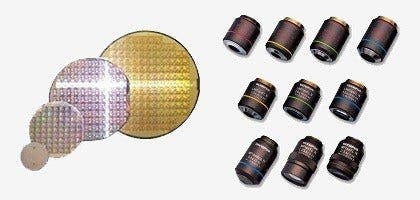
Microscope for Failure Analysis
Speed combined with guaranteed accuracy and repeatability make the DSX1000 microscope the right tool for fast failure analysis.
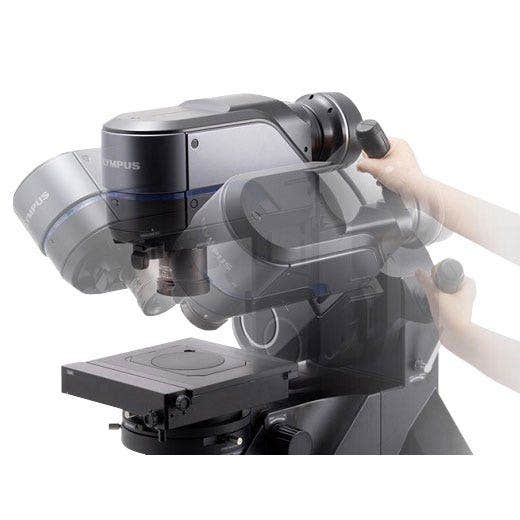
Macro to Micro Versatility
Preliminary Inspection and Micron-Level Analysis with One System
- See the whole picture: 27X to 9637X magnification range
- Minimize the chance of crashing into your sample
- See your sample from many angles
Supported models

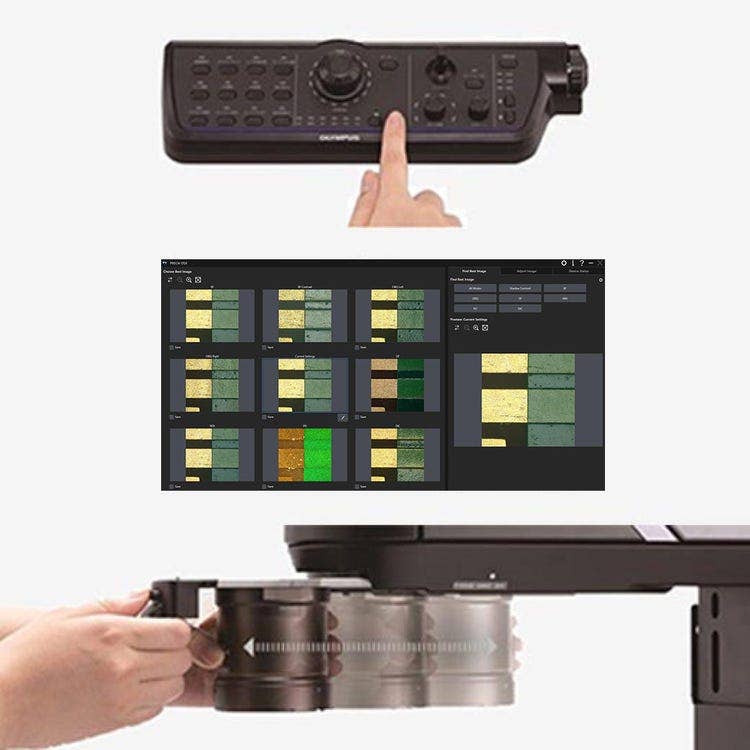
Multiple Observations with a Single Click
Instant Switching Saves Time
- All observation methods are available at all magnifications
- Choose from 6 observation methods, and switch between them with a single click
Supported models

Be Confident in Your Results
Guaranteed* Measurement Accuracy and Precision
- You can be confident in your measurement results with guaranteed* measurement precision
- Reliable measurement with on-site calibration
Supported models

*To guarantee XY accuracy, calibration work must be undertaken by an Evident service technician.
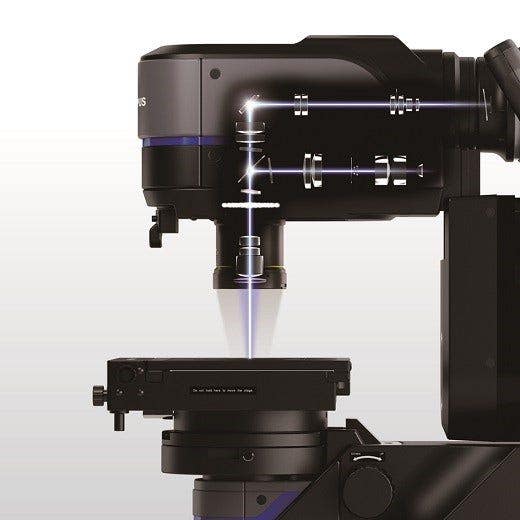
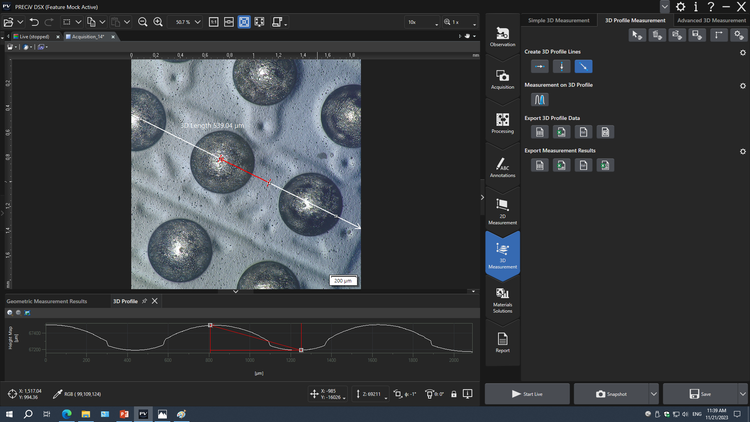
Advanced Measurements Are Fast and Easy to Obtain
Improved analysis functions make the DSX1000 microscope a powerful and versatile inspection tool
- Supports complex measurement, including profile, inter-surface step, surface roughness, and more.
- Faster analyses with advanced easy-to-use functions
Supported models
5 Advantages of the DSX1000 Series Microscope Over Conventional Microscopes
With the DSX1000 microscope:
Complete your inspection using one easy-to-use system
With a conventional microscope:
Two microscopes, a low-magnification and a high-magnification model, are needed to complete an inspection
With the DSX1000 microscope:
High resolution and long working distance in one objective
With a conventional microscope:
Resolution decreases as magnification increases
With the DSX1000 microscope:
Observe uneven samples without bumping into them
With a conventional microscope:
The objective can crash into the sample, potentially damaging it
With the DSX1000 microscope:
All 6 observation methods are available at all magnifications
With a conventional microscope:
Only one or two observation methods are available, limiting what can be seen in the sample
With the DSX1000 microscope:
Both accuracy and repeatability are guaranteed at all magnifications
With a conventional microscope:
The measurement precision is not guaranteed
Service and Support You Can Trust
From calibration to training, we offer a broad portfolio of services to help you maintain optimal device performance. Evident service contracts are:
- Straightforward—so you can focus on the core of your business
- Efficient—we can schedule preventative maintenance, including calibrations, on your behalf
- Cost-effective—providing you savings throughout the life of the contract
Improve the Speed, Efficiency, and Security of Your Inspections
PRECiV DSX
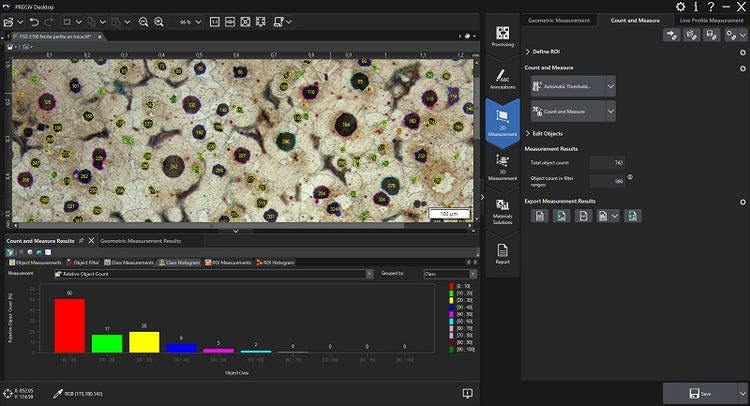
PRECiV is our unified imaging software for controlling all of our industrial microscopes and accessories. The simple-to-use software enables fast, efficient inspection workflows for quantitative 2D/3D measurement and image analysis as well as advanced materials solutions.
Specifications
| DSX10-SZH | DSX10-UZH | |||
| Optical System | Optical system | Telecentric optical system | ||
| Zoom ratio | 10X (motorized) | |||
| Zoom magnification method | Motorized | |||
| Calibration | Automatic | |||
| Lens attachment | Quick-switch, coded lens attachments automatically update magnification and visual field information | |||
| Maximum total magnification (on a 27-inch monitor, 1:1 display, at 100% image magnification) |
9637X | |||
| Working distance (W.D.), | 66.1 mm – 0.35 mm | |||
| Accuracy and repeatability (X-Y plane) | Accuracy*1 | ±3% | ||
| Repeatability 3σn-1 | 2% | |||
| Repeatability (Z axis)*2 | Repeatabilty σn-1 | 1 μm | ||
| Camera | Image sensor | 1 / 1.2 inch, 2.35 million pixel color CMOS | ||
| Cooling | Peltier cooling | |||
| Frame rate | 60 fps (maximum) | |||
| Low | 960 × 600 (16:10) | |||
| Medium | 1600 × 1200 (4:3) 1920 × 1080 (16:9) 1920 × 1200 (16:10) 1200 × 1200 (1:1) |
|||
| High (pixel shift mode) | 2880 × 1800 (16:10) | |||
| Super high (pixel shift mode) | 5760 × 3600 (16:10) | |||
| 3CMOS mode (high quality) | Not available | Available (high and super high modes only) | ||
| Illumination | Color light source | LED | ||
| Lifetime | 60,000 h (design value) | |||
| Observation | BF (brightfield) | Standard | ||
| OBQ (oblique) | Standard | |||
| DF (darkfield) | Standard LED ring divided into four divisions |
|||
| MIX (brightfield + darkfield) | Standard Simultaneous observation of BF + DF |
|||
| PO (polarization) | Standard | |||
| DIC (differential interference) | Not available | Standard | ||
| Contrast up | Standard | |||
| Depth of focus up function | Not available | Standard | ||
| Transmitted lighting | Standard*3 | |||
| Focus | Focusing | Motorized | ||
| Stroke | 101 mm (motorized) | |||
*1 Calibration by an Evident or a dealer service technician is necessary. To guarantee the accuracy of XY, calibration with DSX-CALS-HR (calibration sample) is required. To issue certificates, calibration work must be undertaken by an Evident calibration service technician.
*2 When using a 20X or higher objective.
*3 The optional DSX10-ILT is required.
| Objective | DSX10-SXLOB | DSX10-XLOB | UIS2 | |
| Objective lens | Maximum sample height | 50 mm | 115 mm | 145 mm |
| Maximum sample height (free angle observation) |
50 mm | |||
| Parfocal distance | 140 mm | 75 mm | 45 mm | |
| Lens attachment | Integrated with lens | Available | ||
| Total magnification (on a 27-inch monitor, 1:1 display, at 100% image magnification) |
27 – 1927X | 58 – 7710X | 34*4 – 9637X | |
| Actual F.O.V. (μm) | 19,200 µm – 270 µm | 9,100 µm – 70 µm | 17,100 µm – 50 µm | |
| Adaptor | Diffusion adaptor (optional) | Available | Not Available | |
| Eliminate reflection adaptor (optional) | Available | Not Available | ||
| Lens attachment | Number of objectives that can be attached | Up to 1 piece (attachment is integrated with lens) |
Up to 2 pieces | |
| Objective lens case | Three lens attachments can be stored | |||
*4 Total (maximum) magnification when using MPLFLN1.25X
| Stage | DSX10-RMTS | DSX10-MTS | U-SIC4R2 |
| XY stage: motorized / manual | Motorized (with rotation function) | Motorized | Manual |
| XY stroke | Stroke priority mode: 100 mm × 100 mm Rotation priority mode: 50 mm × 50 mm |
100 mm × 100 mm | 100 mm × 105 mm |
| Rotation angle | Stroke priority mode : ±20° Rotation priority mode : ±90° |
Not available | |
| Display rotation angle | GUI | Not available | |
| Load-resistance | 5 kg (11 lb) | 1 kg (2.2 lb) | |
| Frame | DSX-UF | DSX-TF |
| Z-axis stroke | 50 mm (manual) | |
| Tilt observation | Not available | ±90° |
| Tilt angle display | Not available | GUI |
| Tilt angle method | Not available | Manual, fix / release handle |
| Measurement | Standard | Basic interactive measurements |
| 3D Line profile measurement and simple 3D measurements | ||
| 2D Line profile measurements | ||
| Advanced interactive measurement, including auto-edge detection and auxiliary lines | ||
| Neural Network Labelling | ||
| Live AI | ||
| Offline EFI, Offline Panorama | ||
| Image enhancement filters | ||
| Optional | 3D Analysis Application* | |
| Count and Measure | ||
| Neural Network Training | ||
| Material Solutions | ||
| Auto edge measurement | ||
| Particle analysis | ||
| Sphere/cylinder surface angle analysis | ||
| Multi-data analysis** |
*Requires PV-3DAA.
**Requires Experimental total assist application software (OLS51-S-ETA).
| Display | 27-inch flat panel display |
| Resolution | 1920 (H) × 1080 (V) |
| System total | Upright frame system | Tilt frame system |
| Weight (frame, head, motorized stage, display, and console) | 43.7 kg (96.3 lb) | 46.7 kg (103 lb) |
| Power consumption | 100 – 120 V / 220 – 240 V, 1.1 / 0 .54 A, 50 / 60 Hz | |
Applications
DSX1000 Applications
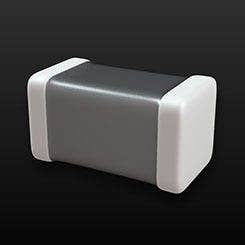
Perform Highly Accurate Thickness Measurements of the Internal Layer of a Multilayer Ceramic Condenser
Multilayer ceramic condensers (MCLLs) have been attracting attention and it has found widespread use in applications ranging from mobile terminals to automobiles. Moreover, it is expected that large quantities of MCLLs will be incorporated into 5G devices. The DSX1000 is easy to measure thickness of the Internal layer of MCLLs with high resolution.
Electronics IC/Wafer
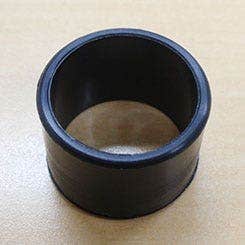
Using a Microscope for Precise Burr Measurement on Injection-Molded Products
Evident's DSX1000 digital microscope makes it easier to obtain optimal images that facilitate the quality control of burrs on injection-molded components. It comes equipped with various functions that enable you to acquire images at the desired magnification, observation method, illumination angle, and an image-processing function.
Metal
Fabrication/Mold
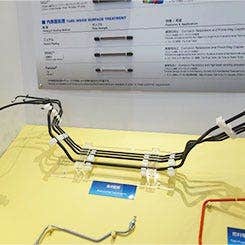
Measuring the Thickness of Automotive Pipe Coatings Using a Microscope
In the quality control process, inspectors must assess coating thicknesses to make sure they meet specifications and check for thickness variations. DSX1000 provides pattern matching and shading correction algorithms that enable you to stitch images together.
Automotive
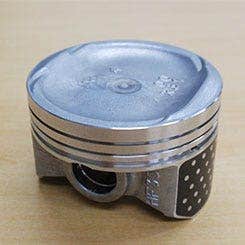
Inspecting Burrs on Pistons Using a Microscope
If there are burrs in the piston’s grooves, it can lead to serious engine issues. DSX1000 offers "Observe small burrs with clear images at low magnification", "Instantly switch to a higher magnification objective to analyze burrs" and " See the piston ring groove from different angles with a tilting frame" and provide efficient workflow.
Automotive
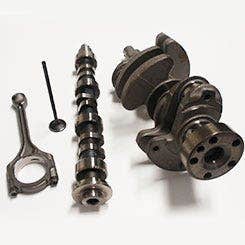
Observing the Metal Flow in Forged Products Using a Microscope
There are many parts that are forged, such as gears, valves, and connecting rods used in automobiles. DSX1000 can observe the metal flow that affects toughness using the auto-stitching function.
Metal
Fabrication/Mold
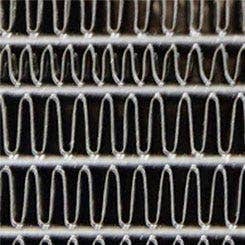
Inspecting the Brazed Joints of Radiator Fins Using a Microscope
Radiators are important role in engine cooling and it is essential to confirm the brazing of pipes and fins for quality control. DSX1000's multi-preview function makes it simple to view the sample using multiple observation methods to find the right one and makes inspections more efficient.
Automotive
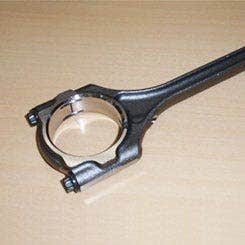
Measuring a Connecting Rod’s Slit Width Using a Microscope
Connecting rods are required to be strong enough to withstand tens of millions of revolutions per minute, and the slit width is strictly controlled. With the DSX1000, the slit width that could not be clearly observed with a conventional microscope can be observed with high accuracy.
Automotive
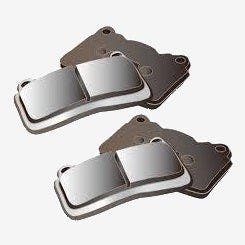
Inspecting a Brake Pad’s Surface using a Microscope
A brake pad's surface impacts its performance, including braking force, heat stability, noise, and heat generation. microscopes are used to check that the compounds used to create the brake pad are mixed properly.
Automotive
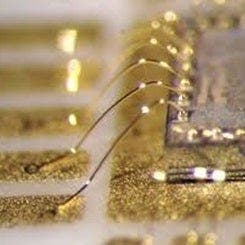
Inspecting Bonding Wires Using a Microscope
Microscopes are effective tools for analyzing defects, such as wire breakage, wire pitch deviation, bonding peeling, and migration that can occur during the bonding process.
Electronics
IC/Wafer
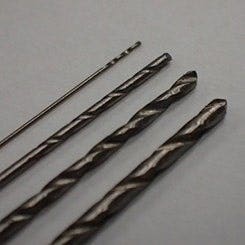
Detecting Damage on a Drill Bit Edge Using a Microscope
Drill bits are widely used in industrial fields as a cutting tool. If the edge is damaged, inaccuracies may arise during hole positioning, or the drill may break. Conventional microscope is commonly used to perform drill inspection, but there are challenges. The DSX1000 offers advantages of detecting damage on a drill bit edge.
Metal
Fabrication/Mold
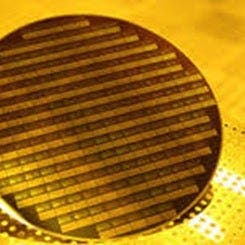
Detecting Manufacturing Defects on Semiconductor Wafers Using a Microscope
Semiconductors are essential components in many electronic devices. Defects can be introduced into the circuit during manufacturing process, and visual inspection using a microscope is a preferred option to inspect defects. The DSX1000 simplifies semiconductor visual inspection.
Electronics
IC/Wafer
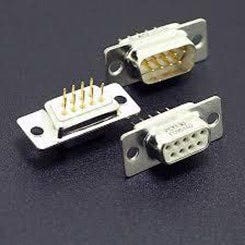
How a Microscope’s Deep Focal Depth Enables the Complete Inspection of Connector Pins
Manufacturers use strict quality control measures to minimize failures of electrical connector pins, and microscopes play an essential role. The DSX1000 microscope’s objective lenses offer the depth of focus and resolution required to focus an entire connector pin at the same time, greatly simplifying and speeding up the inspection process.
Electronics
IC/Wafer
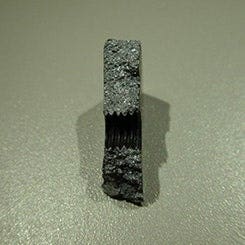
Analyzing Fractured Metal Surfaces with a Microscope
Fractography has become increasingly important as infrastructure continues to age and quality control issues cause problems. Optical or microscopes are essential fractography tools that are used to capture high-quality images for analysis. See details of advantages which DSX1000 can offer to analyze factured metal surfaces.
Metal
Fabrication/Mold

Measuring the Volume of Integrated Circuit Chipping After the Dicing Process Using a Microscope
During the dicing process of integrated circuit (IC) manufacturing, amount of allowable roughness of wafer surface is carefully controlled. Amount of roughness is checked with a microscope, but the physical properties of IC chips can be challenging. The DSX1000 objective lenses offer high resolution at low magnification to reduce shading and flare, enabling inspectors to more easily see chipping during low-magnification observations.
Electronics
IC/Wafer

Inspecting Glass Fiber Peeling in a Printed Wiring Board’s Glass Epoxy Substrate—Clear Images Are Essential for Quality Control
Inspection of resin peeling defects is critical as these defects can cause a completed PWB to have lower insulation and heat resistance, making them more susceptible to failure. PWBs are challenging to inspect with a microscope. The DSX1000 microscope has advanced telecentric optics and high-resolution objectives that offer an excellent depth of focus, which enable you to observe an etched PWB to investigate the cause of a defect.
Electronics
IC/Wafer
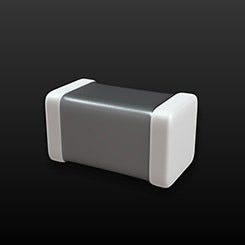
Acquiring Clear Images and Accurate Dimension Measurements of a Laminated Ceramic Capacitor Using a Microscope
Manufacturers measure the laminated ceramic capacitors’ dimensions and visually inspect them to look for cracks in the ceramic. Microscopes or microscopes is used to supplement the automated inspection system, but poses challenges. The DSX1000 offers multiple advantages to inspect capacitors.
Electronics
IC/Wafer
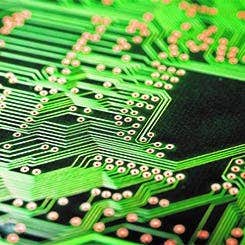
Measuring the Circuit Shape of a Printed Wiring Board Using a Microscope
During the manufacturing process of PWBs, a microscopic inspection is necessary to analyze circuit shape precisely. There are multiple advantages of measuring circuit shape with the DSX1000.
Electronics
IC/Wafer