Educational and Student Microscopes
Educational Microscopes Designed for University Teaching and Research
From undergraduate biology courses to advanced graduate research, our solutions bring research‑grade optics into educational environments, enabling instructors to create dynamic, hands‑on learning experiences while giving students direct access to the imaging technologies that will shape their future careers in science.
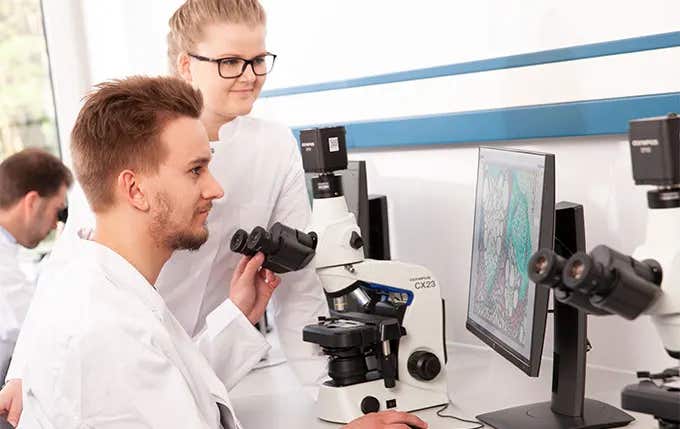
Educational Microscopy Solutions
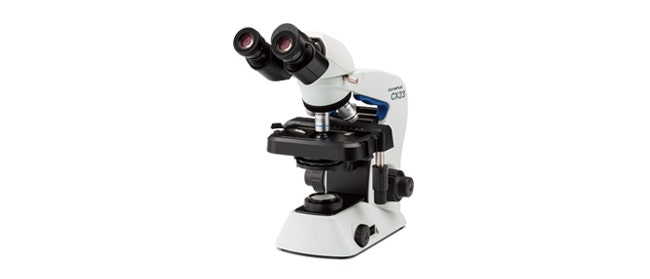
CX23
Student Microscope
The CX23 student microscope offers easy operation and dependable optical performance for classroom and introductory laboratory use.
- Diverse, user-friendly design
- Outstanding optical performance
- Long-lasting LED illumination
- Accessible darkfield via a condenser
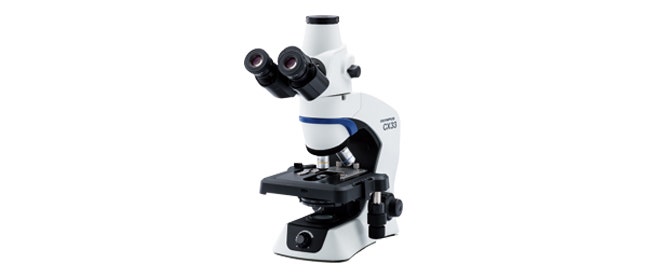
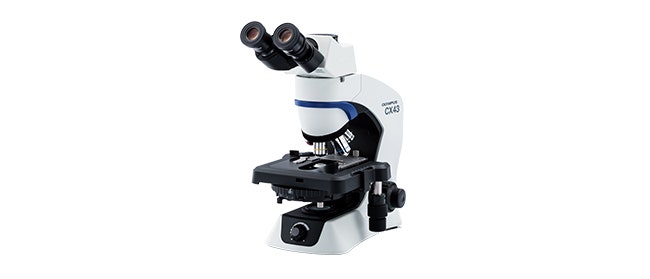
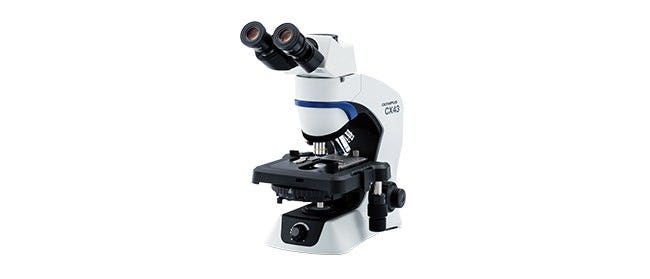
CX43
Biological Microscope
The CX43 biological microscope combines ergonomic operation and versatile imaging capabilities for routine laboratory and educational applications.
-
Ergonomic design
-
Long-lasting LED illumination
-
Accessible darkfield via a condenser
-
Optional single-line LED light source for fluorescence
* Optional single line LED light source for fluorescence (peak excitation wavelength 470 nm only)
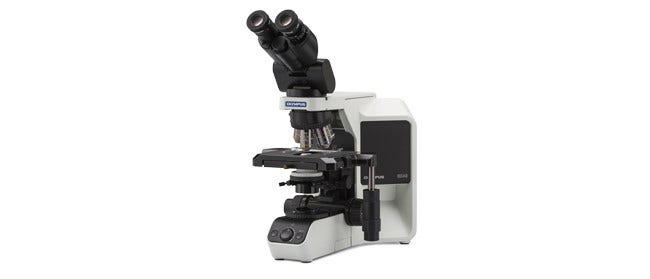
BX43
Standard Microscope
The BX43 upright microscope provides reliable optical performance and intuitive contrast control for routine life science imaging, including brightfield and darkfield observation.
- True Color LED illumination
- Light intensity manager
- Allows easy contrast management
- Full condenser compatibility for darkfield illumination
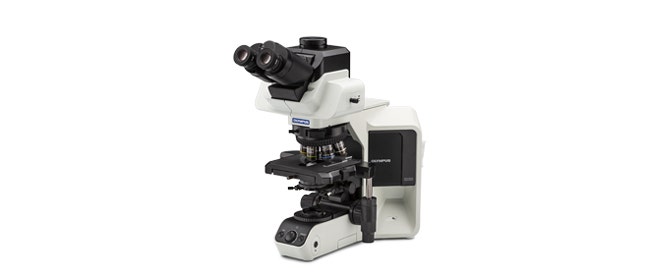
BX53
Semi-Motorized Microscope
The BX53 microscope offers flexible imaging performance for routine and advanced applications, featuring modular motorization options and support for brightfield, fluorescence, and darkfield.
- High-luminosity True Color LED illumination
- Modular concept enables individual components to be motorized
- Easily acquire multi-color fluorescence images
- Full condenser compatibility for darkfield illumination
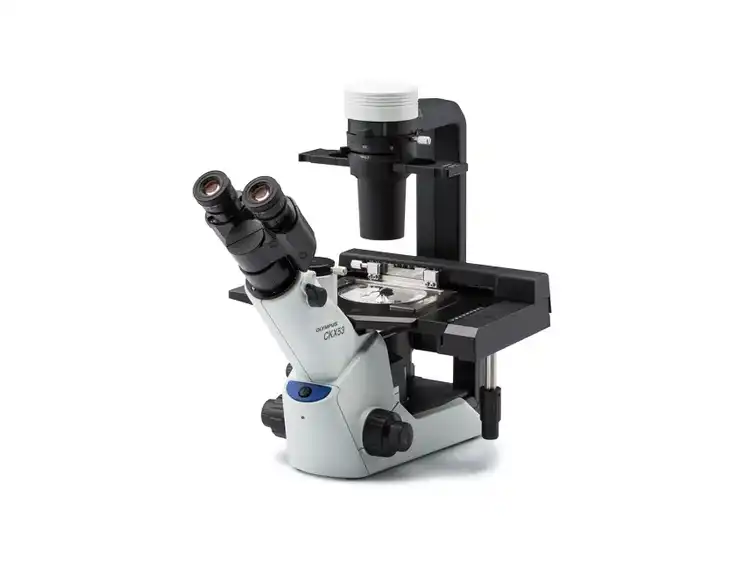
CKX53
Compact Cell Culture Microscope
The CKX53 microscope eases the cell and tissue culture workflow, simplifying steps such as live cell observation, cell sampling and handling, image capture, and fluorescence observation. Its integrated phase contrast system, compact, ergonomic design, and stable performance enable simple, efficient cell observation in bright field and fluorescence. The universal sample holder and expandable stage accommodate a wide variety of cell culture container types and sizes.
- Precentered phase contrast that can be used from 4x to 40x without changing the phase plate
- Inversion contrast (IVC) technique provides clear three-dimensional views
- Fluorescence with a 3-position slider
- View multilayer tissue flasks up to 190 mm (7.5 in.) tall thanks to the easily detachable condenser
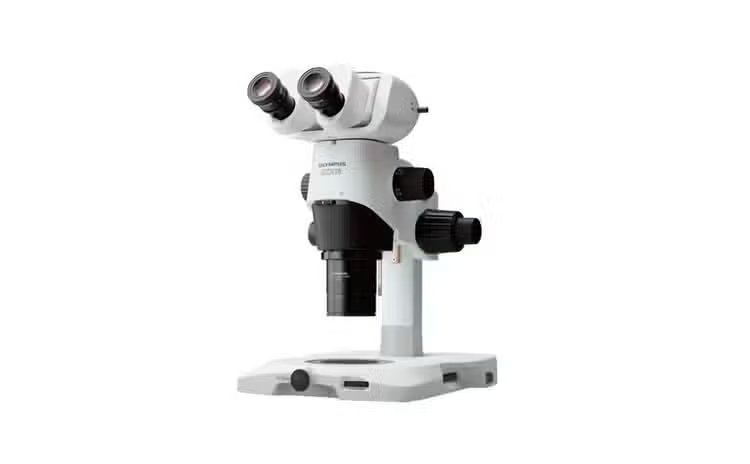
SZX16
Advanced Stereo Microscope
The SZX16 stereo microscope delivers exceptional optical clarity, enabling labs to detect, document, and identify the smallest details.
- Outstanding resolution of 900 line pairs per mm (0.3 NA)
- Darkfield, fluorescence, and polarization capabilities
- Ultra-wide zoom ratio of 16.4:1
- Full zoom range of 0.7x–11.5x with our dual turret
- Ergonomic solutions for comfortable observation
SZ61
Stereo Microscope
These stereo microscopes help you remain comfortable with eyepieces that reduce eyestrain, a universal LED stand that provides easy access to your sample, and a Greenough optical system that delivers excellent flatness. High color fidelity and antistatic materials and coatings make these microscopes suitable for routine or advanced life science applications.
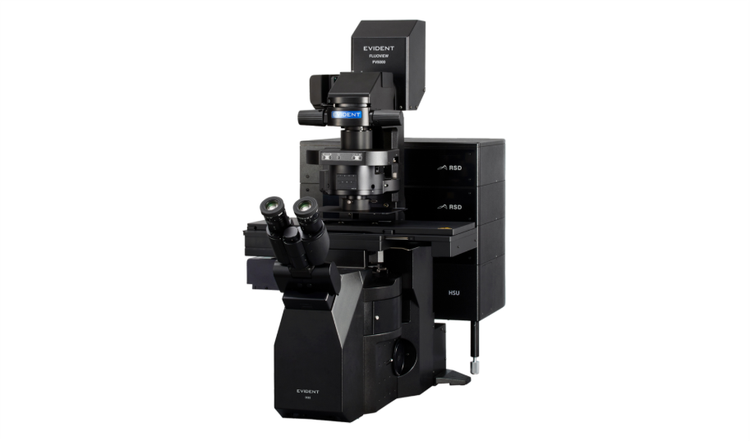
FLUOVIEW™ FV5000
Confocal Laser Scanning Microscope
- Extraordinary clarity, speed, and reliability driven by groundbreaking innovations
- SilVIR™ detectors deliver photon-level quantitation, exceptional sensitivity, and ultra-high signal-to-noise
- Unmatched dynamic range captures the full signal spectrum and prevents saturation
- High-speed 2K resonant scanning and high-density 8K galvo scanning in one platform
- FLUOVIEW Smart™ software simplifies operation with intuitive controls and AI-powered automation
- TruResolution™ auto correction collar optimizes focus for over 20 objectives
- Modular design supports up to 10 laser lines and future multiphoton upgrades
- Laser Power Monitor (LPM) ensures stable illumination and reproducible results over time
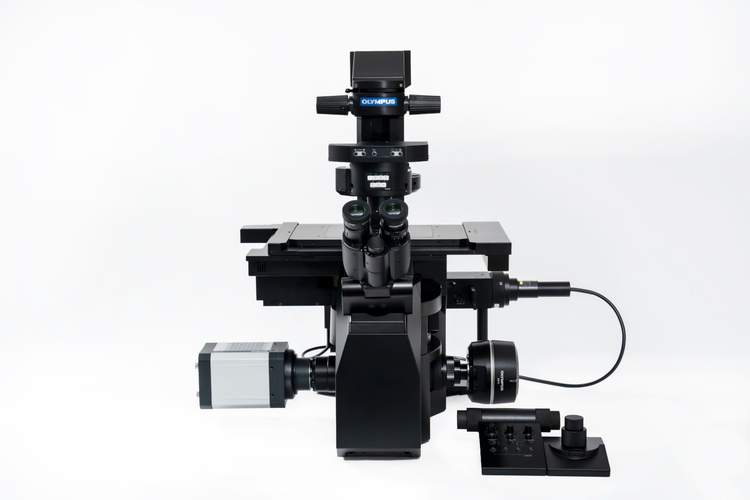
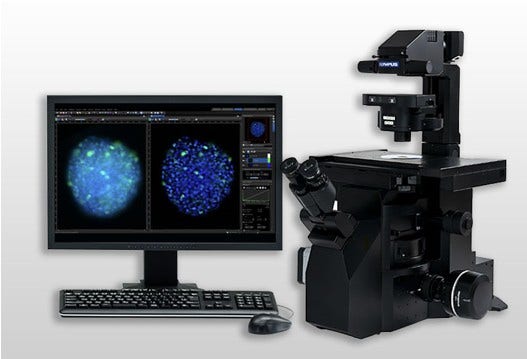
IXplore IX85
Motorized Inverted Microscope Platform
The IXplore™ IX85 platform delivers exceptional flexibility, enabling you to design and build a high-performance imaging system tailored to your specific research needs. With its modular architecture, industry-leading 26.5 mm field number (FN), and broad compatibility with advanced imaging modalities, it provides a powerful foundation that evolves with your applications.
Educational Microscopes by Course Level
Our microscopes offer versatile solutions for every microscope classroom. Designed to exceed teaching and training requirements, they feature high durability so they can endure tough use, high optical performance that provides clear images, and high image flatness over a wide field of view. Easy to operate, maintain, carry, and store, these systems are cost-effective and practical solutions for any science classroom. Discussions and lectures using a monitor or projector are supported and enhanced with our line of digital color cameras for microscopes.
| Level / Setting | What They Need | Recommended Solutions | Typical Courses and Applications |
| Community or Two-Year College | Reliable teaching optics with low upkeep | CX23 and CX33 upright microscopes; SZ51 stereo microscope | Introductory biology, anatomy and physiology, dissection |
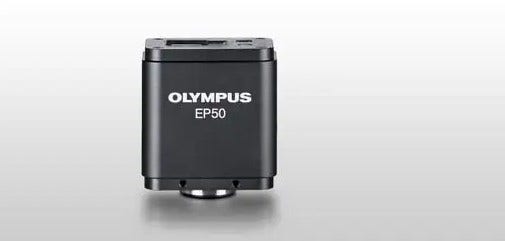
| University Undergraduate | Teaching optics plus documentation | CX33 and CX43 upright microscopes; SZ61 stereo microscope, EP50 camera | Histology, microbiology, genetics, zoology |
| Advanced or Graduate Teaching | Research-grade contrast, fluorescence, and polarization | Upright microscopes such as CX43 with fluorescence and polarization sets; BX43, BX53, CKX53, SZX16 microscopes | Pathology, cell biology, developmental biology, petrology |
| Teaching-to-Research Bridge | One platform from bench to research | BX53 and BX63 upright microscopes; IXplore IX85 inverted microscope platform; FLUOVIEW FV5000 confocal laser scanning microscope; cellSens software | Research method courses, capstone, and shared core imaging |
Microscopes by Academic Discipline
University teaching labs support scientific disciplines with unique imaging requirements. Selecting microscopes based on course applications ensures that a laboratory has the tools needed to support its curriculum. Evident designs microscopy solutions that adapt to diverse educational environments across life science and materials science.
Biology and Cell Biology
Reliable compound microscopes give students the confidence to master essential laboratory techniques. The CX23 and CX33 upright models provide clear, dependable imaging for introductory biology, supporting observation of common specimens with exceptional clarity. For advanced cell biology and tissue culture coursework, the CKX53 inverted microscope delivers the live‑cell imaging performance required in upper‑level undergraduate and graduate laboratories.
Histology and Pathology
Accurate visualization of tissue morphology is essential for developing diagnostic observation skills and supporting instructor‑led discussions. The CX43 upright microscope delivers high‑quality imaging for hematoxylin and eosin (H&E)‑stained tissue sections commonly used in teaching labs. Trinocular configurations paired with the EP50 digital camera enable instructors to present reference slides to entire classrooms and capture images for coursework and collaborative review.
Hematology
Students benefit from microscopes that deliver high-resolution images and facilitate routine brightfield observation. CX™ series microscopes enable the examination of blood smears with both 40X and 100X objectives. With its reliable optical performance, students can recognize normal and abnormal blood cell morphology through essential microscopy techniques.
Microbiology
Microscopes used in microbiology instruction must clearly reveal bacteria, fungi, and other microorganisms through modern fluorescence‑based techniques. The CX33 and CX43 upright microscopes provide high‑quality brightfield imaging to support routine microbiology coursework. For programs introducing fluorescence concepts, the optional plug‑in fluorescence illuminator enables educators to demonstrate key techniques without the need for a dedicated research microscope.
Zoology, Botany, and Developmental Biology
Courses involving whole organisms, plant structures, embryos, and dissections benefit from stereo microscopes that provide natural three-dimensional visualization. Students can use the SZ51 and SZ61 stereo microscopes to examine larger specimens, perform dissections, and observe developmental structures. Additionally, the trinocular SZ61 model supports image documentation for classroom presentations and laboratory reporting.
Earth Science and Geology
Geology programs use polarized light microscopy to identify specimens, and analyze minerals, thin sections, and crystalline structures. The CX43 and BX53-P upright microscopes support polarized light microscopy for teaching mineral identification, petrography, and other geological applications found in university earth science programs.
Materials Science and Forensics
Materials science and forensic labs examine metals, polymers, fibers, coatings, and other samples where surface characteristics and structural details are critical. These disciplines require multiple contrast techniques and reflected-light observation. Evident microscopes provide the optical quality needed to examine microscopic defects, material structures, and forensic evidence. These solutions introduce students to imaging techniques used in industrial and research laboratories.
Turn Any Compatible Microscope into a Connected Teaching Tool
The EP50 wireless camera transforms compatible Evident microscopes into connected classroom systems by streaming live microscope images to monitors, projectors, and other classroom displays.
Instead of students waiting for their turn at the eyepieces, instructors can guide the entire class through the same field of view in real time, supporting a more efficient and interactive learning environment.
Benefits of a Standardized Imaging Platform for Education
Many universities strive to create a consistent imaging environment for both teaching and research facilities. Standardizing the learning experience on one microscopy platform helps students become familiar with the equipment early in their education. It simplifies lab management, training, and future expansion.
Using compatible imaging systems across teaching and research laboratories helps institutions:
- Familiarize students with the same imaging ecosystem throughout their education.
- Simplify instructor training and laboratory management.
- Create consistent imaging workflows across departments.
- Expand imaging capabilities without replacing existing equipment.
- Maximize long-term investments as teaching and research programs grow.
Microscopy Solutions for Every Stage of Learning
Students' imaging needs change throughout their academic career. They begin with routine brightfield microscopy, then progress to fluorescence imaging, live-cell observation, and confocal microscopy. Evident's microscopy portfolio supports this progression through compatible imaging systems that help students build confidence as they move from foundational laboratory courses to independent research.
| Academic Stage | Typical Imaging Needs | Recommended Solutions |
| Introductory laboratory courses | Brightfield microscopy and foundational microscopy skills | CX series teaching microscopes |
| Advanced undergraduate and graduate instruction | Fluorescence imaging, live-cell observation, specialized contrast techniques | BX series research microscopes; CKX53 cell culture microscope |
| Independent research | Advanced imaging, confocal microscopy, image analysis | IXplore IX85 inverted microscope platform; FLUOVIEW FV5000 confocal laser scanning microscope; cellSens software |
Request a Quote or Schedule a Demo
Request a quote or schedule a demonstration today to learn how Evident can equip your teaching laboratories for the next generation of scientific discovery.