应用笔记
Measuring the Roughness of Lithium-Ion Battery Electrodes Using a Laser Microscope

Positive electrode(Left) Negative electrode(Right)
Application—Surface Roughness Checks of Electrode
Lithium-ion batteries charge and discharge because their lithium ions can move in both directions between positive and negative electrodes. Until recently, they had been mainly used in compact form in PCs, mobile phones, and digital cameras, but the demand is increasing for lithium-ion batteries with an electric capacity that is large enough for electric vehicles (EVs).
The basic process for manufacturing an electrode for lithium-ion batteries is as follows:
- Apply an electrode slurry material to a metal foil sheet called a collector.
- After the electrode slurry is dry, press the sheet.
- Using a slitter or cutter, cut the sheet into pieces of a specified size.
The electrode material on the sheet needs to have proper surface roughness to securely adhere to the separator. For this reason, surface roughness measurement using a roughness measuring instrument is necessary.
There are various types of surface roughness measuring instruments, but to accurately measure the surface roughness of electrodes, the options are limited. With contact-type roughness gages there is a risk of damaging the electrode surface, while interferometers are unreliable because the black electrodes absorb the light they use for measurement.
Evident’ Solution Using the LEXT OLS5100 Microscope
The noncontact measurement of the LEXT OLS5100 3D laser scanning microscope is well-suited for measuring surface roughness of large electrodes for several reasons:
- The noncontact measurement method eliminates the risk of damaging the electrodes as well as collateral data errors.
- Even though electrodes are black and have a very low light reflectivity, only a minute amount of reflected light needs to be captured to acquire the required data.
- Using an optical system exclusive to laser microscopes, the LEXT OLS5100 microscope enables you to acquire data that is accurate to the center of the field of view as well as the area around it.
- Various kinds of data can be stitched horizontally, enabling acquisition of surface roughness data for a wide area.
- Roughness measurement using Evident’ LEXT OLS5100 (formerly Olympus LEXT OLS5100) microscope system enables simultaneous observation of the pseudo color, 3D images, and height information of a laser microscope and real color images of an optical microscope. Inspectors are able to obtain a numerical value for the roughness and combine that data with their observation of images of the actual texture of the electrode for a better understanding of the state of the electrode’s surface.
Images
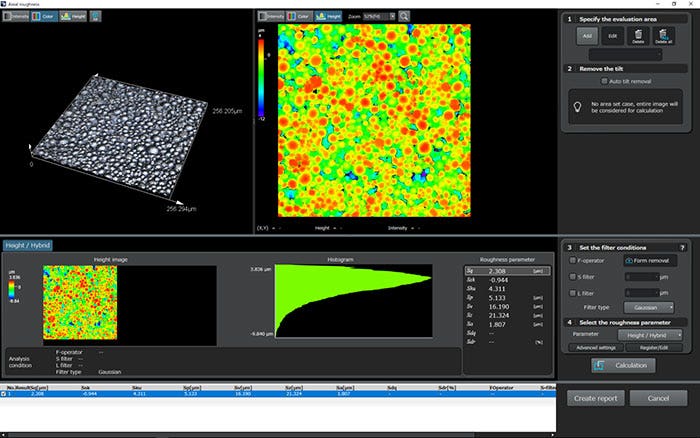
Example of roughness measurement of a positive electrode
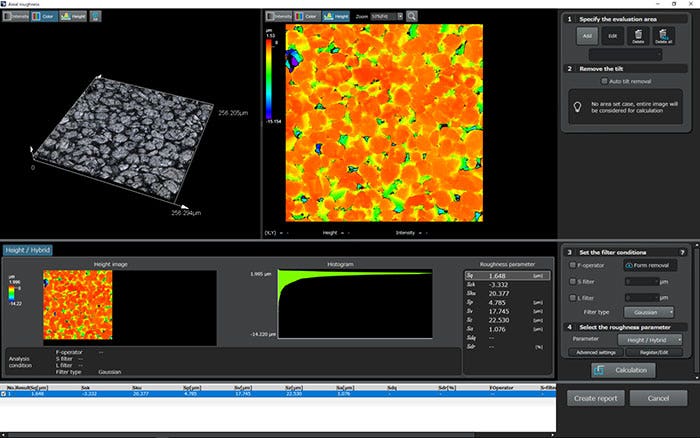
Example of roughness measurement of a negative electrode
相关产品
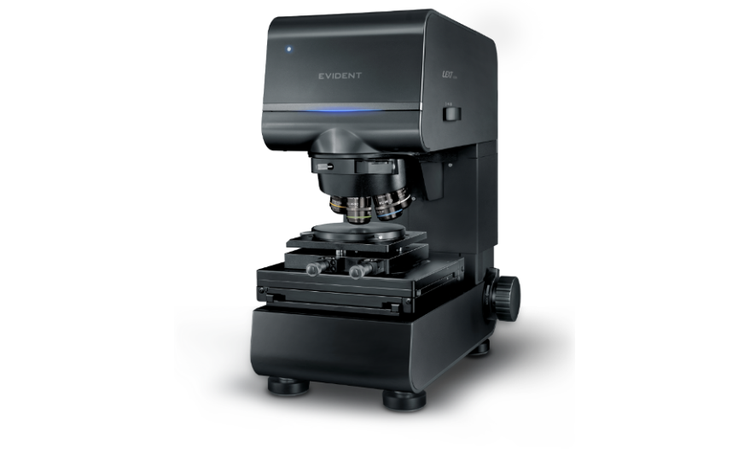
LEXT OLS5500
全新一代 精准测量 激光共聚焦显微镜
- 从纳米级至微米级的可追溯表面测量
- 一个获奖平台融合了激光扫描显微镜(LSM)、白光干涉仪(WLI)和焦点变化显微镜(FVM)技术
- 一款能够同时为 LSM 和 WLI 测量提供准确性和重复性* 保证的显微成像平台
- WLI 模式的测量通量比我们的传统 LSM 提高达 40 倍。
- 采用自主设计的光学系统,为表面测量提供卓越的测量精度
- 直观界面结合智能自动化,满足不同经验级别用户的操作需求
- 集成 PRECiV™ 软件的 AI 增强型高通量工作流程
* 根据 Evident 截至 2025 年 10 月的内部研究结果。设备必须按照制造商的规格进行校准并且不存在任何缺陷时,方可保证测量的准确性和可重复性。 校准必须由 Evident 的技术人员或 Evident 授权的专家执行。
LEXT OLS5100
具有出色精度和光学性能的LEXT™OLS5100激光扫描显微镜配备了让系统更加易于使用的智能工具。其能够快速高效完成亚微米级形貌和表面粗糙度的精确测量任务,既简化了工作流程又能让您获得可信赖的高质量数据。