How Plants Acquire Phosphorus in Extreme Environments: Insights on Cluster Roots
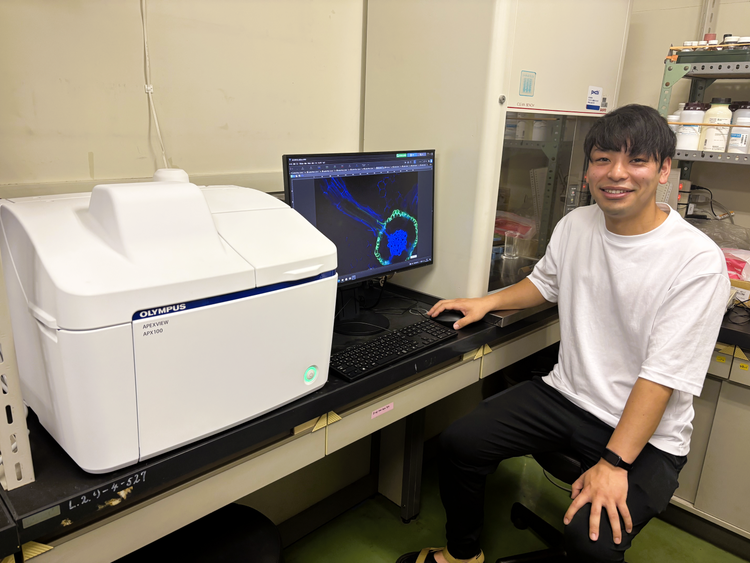
Insights from Dr. Hirotsuna Yamada on cluster root function and advanced imaging in plant nutrient research.

Plants need phosphorus to grow, but in many soils, it is locked away and hard to absorb.
Some plants solve this by forming cluster roots—dense groups of small roots that release natural compounds into the soil. These compounds free up phosphorus, allowing plants to take it in and survive in low-nutrient environments.
To better understand how plants apply these strategies in nutrient-poor soils, researchers are studying cluster root systems in detail.
Dr. Hirotsuna Yamada, Assistant Professor (Special Appointment) at the Graduate School of Integrated Sciences for Life, Hiroshima University, shares research insights on cluster roots and how advanced imaging supports his work.
About Dr. Hirotsuna Yamada
Drawing on research experience in Australia, Dr. Hirotsuna Yamada studies nutrient uptake mechanisms in plants adapted to extreme environments. His current focus is on the secretion of metabolites and enzymes in cluster roots involved in phosphorus acquisition, as well as the genes that regulate these processes.
What is your current research focus?
Dr. Yamada: My research aims to uncover how plants efficiently absorb phosphorus. I’m particularly interested in the structure known as “cluster roots,” which not only increase root surface area but are also known to release large amounts of organic acids and acid phosphatases.
Because I work with non-model species (see Figure 1), genetic manipulation is difficult. Instead, I combine various techniques such as histochemical staining, enzyme activity assays, and gene expression analysis to advance the research.
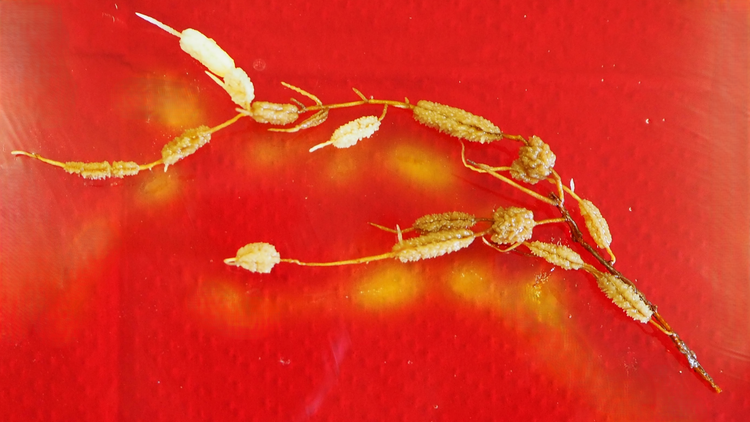
Figure 1. Cluster roots of Hakea laurina, a species native to southwestern Australia used in this study. Short determinate lateral roots are densely packed, forming a brush-like structure. Image courtesy of Dr. Hirotsuna Yamada, Hiroshima University.
Why did you choose to focus your research on cluster roots?
Dr. Yamada: Cluster roots represent a highly specialized adaptation that plants have evolved to cope with phosphorus, a nutrient that is often poorly available in soil. These roots are particularly unique in their ability to mobilize phosphorus from otherwise inaccessible sources.
One of the most intriguing aspects is that the key genes responsible for cluster root formation remain largely unidentified. Our research focuses on the development of individual rootlets—the small roots that make up the cluster structure—and we are working to identify the genes that regulate the formation of rootlet primordia.
This research not only deepens our understanding of plant nutrient acquisition strategies but also has potential applications in agriculture and environmental conservation by promoting more efficient use of phosphorus resources.
How has the APEXVIEW™ APX100 benchtop fluorescence microscope supported your research?
Dr. Yamada: Researching the mechanisms of nutrient uptake in plants involves a wide range of experimental steps—from plant cultivation and field sampling to elemental analysis, enzyme activity assays, metabolite profiling, and gene expression analysis. Among these, microscopy may account for only a small portion of the workflow—perhaps just a few percent—but the images obtained can significantly influence the reliability of the research.
Personally, becoming proficient in microscopy was one of the essential skills I had to acquire. In our study published in New Phytologist, we visualized the activity of acid phosphatase¹ and the localization of suberin² in cluster roots by staining root sections with ELF97 phosphate (for acid phosphatase) and Fluorol Yellow 088 (for suberin), followed by fluorescence imaging using the APX100 microscope (see Figure 2).
What impressed me about the APX100 was not only the image quality, but also the smooth and intuitive workflow. The system allows for simultaneous overview imaging of multiple samples arranged on a slide, and its operability enables quick access to specific regions of interest. These features have greatly improved the efficiency of our image acquisition process.
In addition to fluorescence imaging, I was also impressed by how naturally the system reproduces the color and texture of plant tissues. In this study, visualizing the structure of cluster roots and the corresponding suberin deposition sites was a critical aspect of understanding their function.
Using the APX100, we observed the same sections of cluster and non-cluster root regions under both fluorescence and brightfield modes (see Figure 3). This enabled us to confirm that suberin was absent in the outer layers of cluster roots (via fluorescence), as well as identify the structural features of cluster roots based on lignin³ distribution and anatomical traits (via brightfield).
As a result, we discovered a novel secretion pathway that supports the superior exudation capacity of cluster-rooted plants adapted to ultra-low phosphorus conditions. Specifically, the absence of a suberized exodermis, which typically acts as a barrier to external substances, enables smooth diffusion of exudates from the inner cell layers of the root into the surrounding soil.
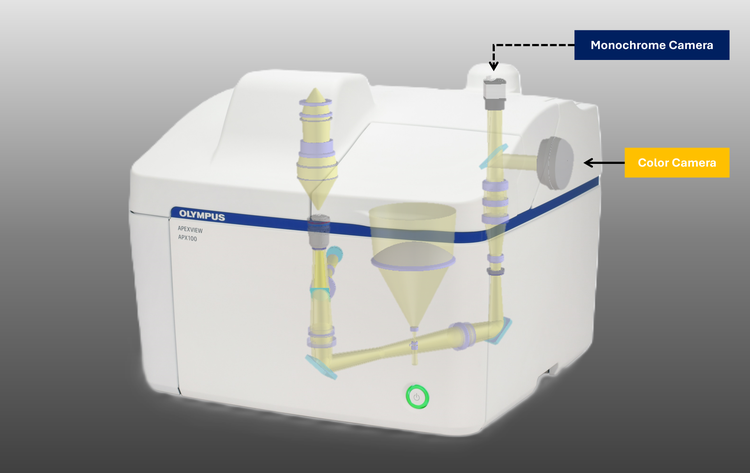
Carefully observing structural differences in roots across species is crucial for understanding plant function. The APX100’s dual camera system—featuring both a high-sensitivity monochrome camera for fluorescence and a color camera for natural imaging—enables us to capture both types of images simultaneously. This capability is of great value in plant research.
Although microscopy represents only a portion of the overall research process, I’ve come to realize that performing this part with high reliability and efficiency is essential to supporting the overall quality of the research.
This image shows the enzymatic activity of acid phosphatase, which plays a role in solubilizing phosphate:
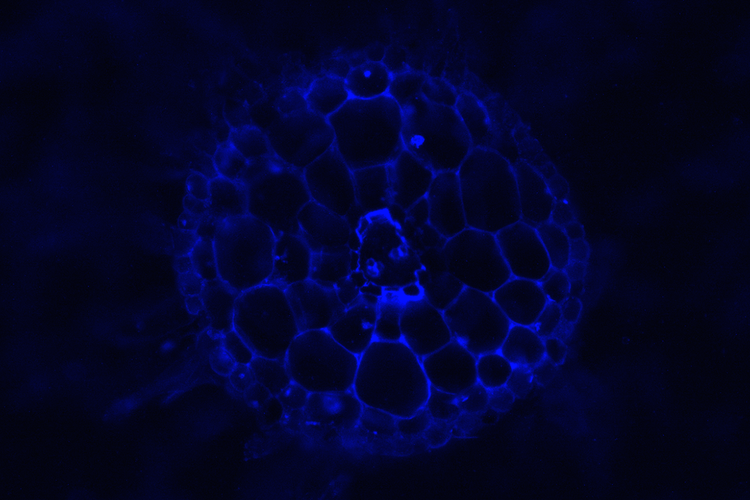
Figure 2. Fluorescence imaging of histochemically detected acid phosphatase activity in cluster rootlets. Image courtesy of Dr. Hirotsuna Yamada, Hiroshima University.
¹ Acid phosphatase: An enzyme that hydrolyzes phosphate groups from organic compounds. In plants, it is secreted from roots to convert organic phosphorus in the soil into inorganic phosphate (Pi), facilitating phosphorus uptake. Its activity is enhanced under acidic conditions.
² Suberin: A hydrophobic cell wall component that forms concentric layers around vascular bundles in plant roots. It functions as a physical barrier that regulates water and solute movement and prevents the intrusion of harmful substances. Typically found in endodermal and exodermal cells.
³ Lignin: A major component of plant cell walls that provides structural strength and protects plant tissues from microbial and insect attack.
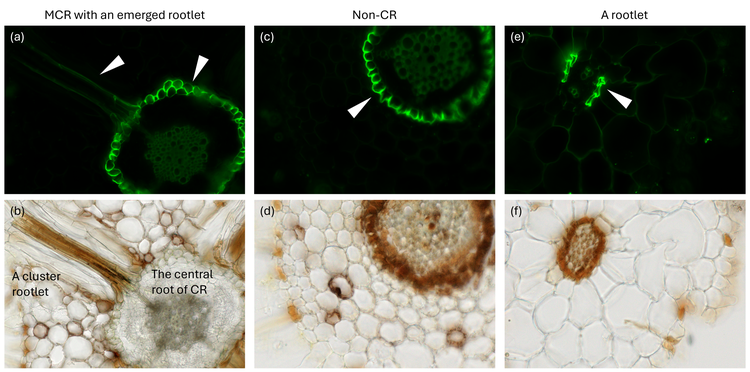
Figure 3. Fluorescence and brightfield images of mature cluster roots (mature-CR) and non-cluster roots (non-CR). Image courtesy of Dr. Hirotsuna Yamada.
In both cluster and non-cluster roots, suberin was detected in the central region corresponding to endodermal cells (a, c), appearing green under fluorescence. In the rootlet portion of cluster roots (A rootlet), suberin accumulation in endodermal cells is limited (e).
In contrast to typical plants, the outer suberin layer (suberized exodermis), which usually forms a protective barrier, is absent in the roots of the studied species (a, c, e).
The structural features of each root type were confirmed under brightfield microscopy based on cellular morphology and the accumulation of lignin (brown coloration) (b, d, f).
What are your future research goals?
Dr. Yamada: Moving forward, I aim to elucidate the temporal dynamics and uptake pathways of phosphorus in cluster roots—from the moment of root exudation to actual phosphorus absorption. We are also working to identify upstream regulatory factors that control cluster root formation. Understanding the spatial and temporal expression patterns of these genes will be key.
Microscopy will continue to play a central role in advancing this research. Using the APX100, we plan to generate high-resolution stitched images that capture wide areas of root tissue, as well as acquire multi-dimensional datasets.
Ultimately, I hope to uncover new perspectives on the phosphorus uptake mechanisms of cluster roots and explore how these insights can be applied to develop crops with enhanced phosphorus acquisition capabilities.
A Closer Look at Favorite APX100 Features
The APX100 microscope is known for making exceptional imaging easy for researchers of all levels. We spoke with the faculty members of the Graduate School of Integrated Sciences for Life at Hiroshima University to learn about their favorite APX100 features for conducting imaging and research.
1. Smart Sample Navigator
When a sample is placed on the microscope, the smart sample navigator instantly captures a macro image and uses AI to automatically detect the sample. From there, the researchers simply select the desired observation method. Now they can easily obtain high-resolution images of the desired area directly from the macro view.
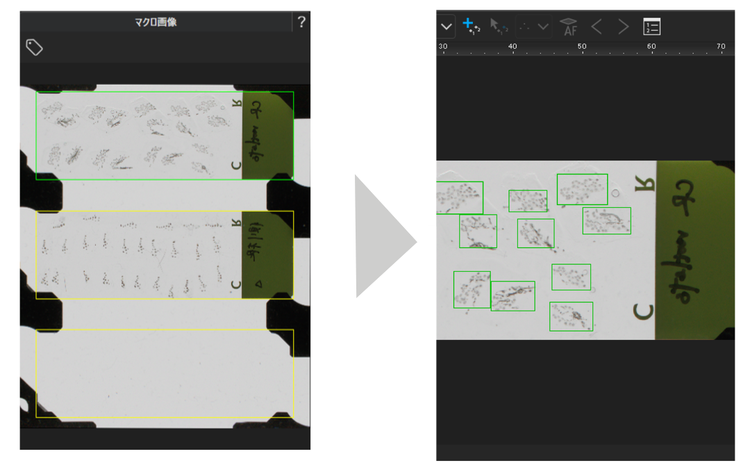
Figure 4. Cluster root section sample. Image courtesy of Dr. Hirotsuna Yamada, Hiroshima University.
After the macro camera captures an image of the entire sample, the AI-assisted detection system automatically identifies the sample region.
2. High-Performance System with Dual Cameras
The APX100 microscope integrates two cameras in a single system: a color camera with excellent color reproduction and a high-resolution, high-sensitivity monochrome camera. The system automatically switches between them based on purpose.
3. Reliable Image Quality and Data Transparency
The APX100 microscope is owned by Associate Professor Dr. Yuki Kobayashi of Hiroshima University. Through shared use within the university, researchers now efficiently acquire data across multiple laboratories.
Dr. Kobayashi shares how the APX100’s imaging workflow facilitates data quality and transparency.
“I really appreciate the workflow that allows contrast adjustment after image capture. Being able to present raw data before any adjustments provides confidence in data integrity and transparency, even for those unfamiliar with microscopy.” - Dr. Yuki Kobayashi, Associate Professor, Hiroshima University
This workflow plays a critical role in ensuring the reliability of research data. When submitting papers or conducting collaborative research, the researchers can present original data—enhancing reproducibility and transparency.
Acknowledgments
We would like to thank the faculty members of the Graduate School of Integrated Sciences for Life at Hiroshima University for their cooperation in this interview.
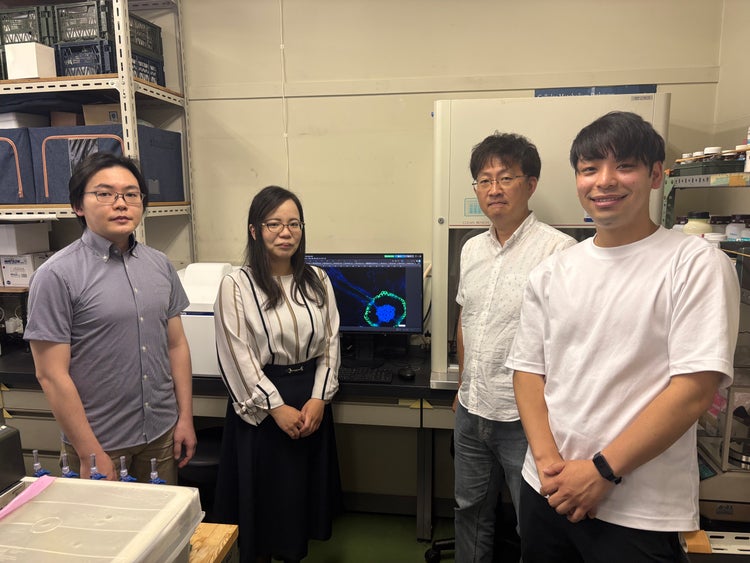
From left to right: Associate Professor Yuki Kobayashi, Assistant Professor Akie Hamamoto, Professor Atsushi Wazaki, and Assistant Professor (Special Appointment) Hirotsuna Yamada. Image courtesy of Dr. Hirotsuna Yamada.
Disclaimer: The opinions and statements expressed in this interview are those of the individual researcher and do not necessarily reflect the views or claims of Evident. The products and technologies mentioned are intended for research use only and are not designed for clinical or diagnostic applications.
References
Yamada, Hirotsuna, and Jun Wasaki et al. 2024. “HalALMT1 Mediates Malate Efflux in the Cortex of Mature Cluster Rootlets of Hakea laurina, Occurring Naturally in Severely Phosphorus-Impoverished Soil.” New Phytologist.
Featured Products
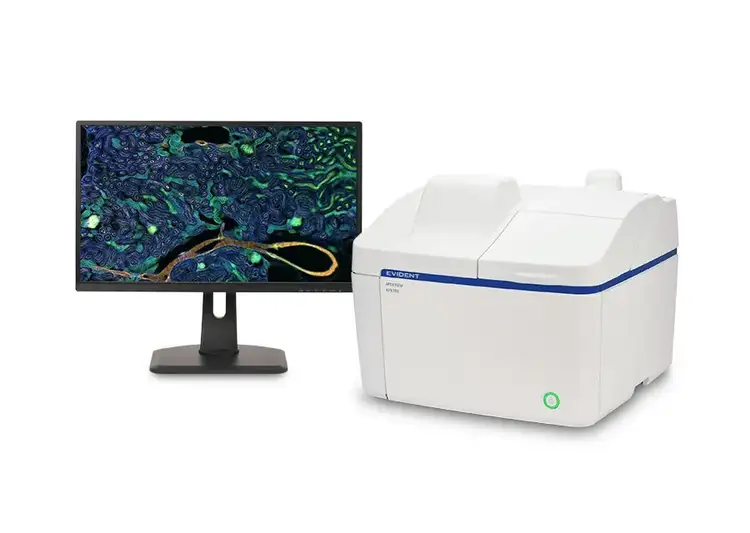
APX100
Benchtop Fluorescence Microscope
The APEXVIEW APX100 benchtop fluorescence microscope makes it fast and simple to acquire expert-quality images. Built with renowned Evident optics, an intuitive user interface, a powerful AI, and a suite of smart features, the APX100 system combines ease of use with high-quality image data to fit your research needs.
- Easy-to-use, all-in-one microscope system
- Publication-quality images in a few clicks
- Fast, efficient data management