IVF/ICSI Microscopes
Clinical Application
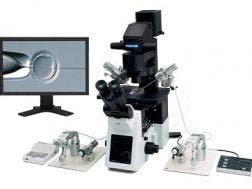
Intracytoplasmic sperm injection (ICSI) is an in vitro fertilization technique in which a single sperm is injected into the oocyte cytoplasm using a pipette. Our inverted microscope system helps improve the quality of ICSI, which requires both speed and precision. With an optical system exclusively developed for ICSI, the microscope enables clear visualization of the spindle in a metaphase II oocyte through the oculars. Observing the spindle helps improve ICSI precision by confirming the oocyte’s phase of maturation and the position of the pipette injection to avoid damage to the spindle. The motorized unit also contributes to faster ICSI through its streamlined operation, helping alleviate stress on the oocyte. Optional differential interference contrast (DIC) observation units enable researchers to use intracytoplasmic morphologically selected sperm injection (IMSI) to confirm the shape, size, and number of vacuoles in the head of the sperm.
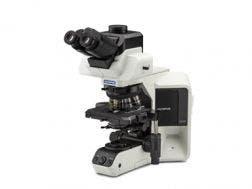
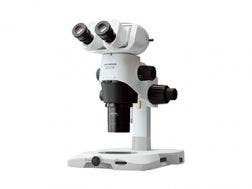
*IX3-ICSI/IMSI, BX53, and SZX16 are research use only.
IVF/ICSI Microscope Solutions: Build Your Configuration


IVF and ICSI FAQs
Why are inverted microscopes ideal for ICSI?
Inverted microscopes are the primary choice for ICSI procedures due to their design that positions the objective lens below the stage. This configuration enables embryologists to observe and manipulate oocytes and sperm from underneath, creating a sufficient workspace for micromanipulation tools, such as holding pipettes and injection needles.
The IX73 inverted microscope, when paired with high-resolution X Line™ objectives, offers a stable and precise imaging platform, making it an ideal solution for embryologists performing ICSI.
What are recommended objectives and magnifications for IVF labs?
When observing oocytes and performing procedures such as ICSI, it is essential to use objectives with a long working distance and a high numerical aperture (NA). A long working distance allows for comfortable manipulation of samples and micromanipulators without risking contact. A high NA provides improved resolution and image quality, enabling clear visualization of transparent cellular structures.
In the IX73 system, relief contrast objectives are used. These objectives are designed for contrast techniques that generate relief-like images, facilitating the observation of details in transparent samples such as oocytes and sperm. These objectives include an adjustable correction collar that compensates for optical aberrations caused by the thickness and refractive index of plastic culture vessels, delivering sharp and high-quality images. Typically, magnifications between 200X and 400X are used (for example, 20X and 40X objectives), offering a good balance between detail and field of view for micromanipulation tasks.
Why is optical contrast important for ICSI procedures?
Live embryos are unstained and often difficult to observe in detail under standard brightfield illumination. To overcome this, optical contrast techniques such as differential interference contrast (DIC), Hoffman modulation contrast (HMC), and Evident’s relief contrast can be used to achieve high-resolution imaging without the need for staining. These methods enhance the visibility of transparent cellular structures, enabling accurate visualization and precise micromanipulation while minimizing cellular damage.
The IX73 system is designed to provide exceptional flexibility in observation, enabling users to quickly and easily switch between various contrast methods, including relief contrast (RC), differential interference contrast (DIC), and polarized light (SLICSI)
Thanks to its motorized condenser and intuitive controls, changing modes can be done seamlessly without disrupting workflow or compromising sample stability—an essential feature during delicate procedures like ICSI. This capability provides optimal visualization of different cellular structures as needed, enhancing both accuracy and efficiency in the laboratory.
What are the advantages of using relief contrast objectives?
What other optical components are important for ICSI procedures?
One critical component is the condenser system, which plays a vital role in the light path of an inverted microscope during ICSI procedures. Condensers must accommodate necessary optical inserts for both DIC and relief contrast observation.
Models such as the IX3-MLWCDA and IX2-MLWCD are compatible with both DIC and relief contrast optical elements and are widely used in IVF laboratories. The IX3-MLWCDA, a motorized high-NA condenser, is integrated into the IX73-ICSI system. It supports motorized adjustments—such as switching between DIC, phase contrast, or relief contrast—via a dedicated hand switch. This automation minimizes manual handling and vibration, enabling embryologists to concentrate on delicate micromanipulation tasks.
What is the importance of meiotic spindle observation?
Observing the meiotic spindle prior to performing intracytoplasmic sperm injection (ICSI) is crucial to ensure the quality and viability of the oocyte. The meiotic spindle is a key structure that organizes chromosomes during cell division, and its integrity indicates that the oocyte is at the appropriate stage for injection.
The IX73 inverted microscope enables noninvasive visualization of the meiotic spindle using polarized light contrast techniques directly integrated into the inverted microscope. This technology allows for quick identification of the spindle’s position and orientation, facilitating precise injection and minimizing cellular damage.
The system enables embryologists to switch effortlessly between spindle observation and other contrast techniques without the need for equipment changes or complex adjustments. This integration saves valuable time during procedures and reduces oocyte handling, improving the efficiency and consistency of the process.
What types of micromanipulation devices is the IX73 compatible with?
The IX73 inverted microscope is designed to be highly compatible with a wide range of micromanipulation techniques. Its modular architecture and open stage design allow for the precise integration of the most used micromanipulation systems in IVF laboratories.
The IX73 system can be integrated with both manual and motorized micromanipulators from leading manufacturers. Its stable platform, high numerical aperture condenser, and compatibility with advanced contrast techniques (such as relief contrast and DIC) provide the imaging quality and precision required for safe and effective micromanipulation. For detailed model and compatibility information, please ask your sales representative.