Microscopi a super-risoluzione
Immaginate di osservare processi dinamici rapidi all'interno di una cellula, con dettagli sorprendenti fino alla scala nanometrica. Con i microscopi a super-risoluzione di Evident, i ricercatori possono rilevare rapidamente le dinamiche cellulari su scala ultra-piccola in campioni 3D e negli esperimenti su cellule vive.
Combinando l’acquisizione rapida delle immagini, algoritmi avanzati e una risoluzione XY fino a 120 nm, i sistemi di microscopia a super-risoluzione di Evident sono progettati per rivelare dettagli fini ad alta velocità. Che si tratti di ottenere rapidamente immagini time-lapse per cellule vive, organoidi o screening di piastre, questi strumenti aprono nuove finestre sull'invisibile. Combinando ottiche di precisione con flussi di lavoro ottimizzati, i microscopi a super risoluzione Evident trasformano dettagli sorprendenti in informazioni scientifiche.
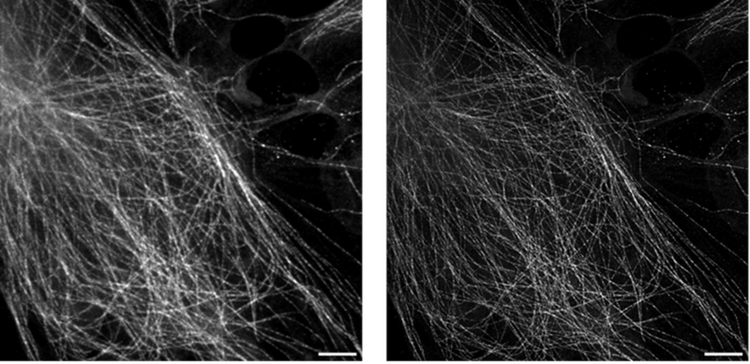
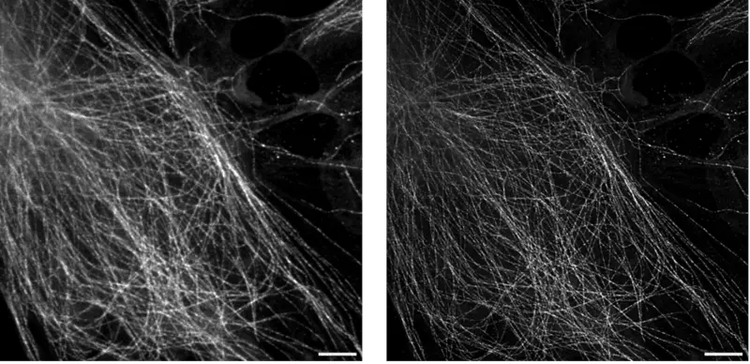
Microtubuli di cellule PtK2.
A sinistra: Immagine confocale a disco rotante (ingrandita digitalmente 2,8X) acquisita utilizzando IXplore IX85 Spin (disco da 50 µm).
A destra: Immagine a super risoluzione acquisita utilizzando IXplore IX85 SpinSR (disco SoRa, lente di proiezione: 2,8X).
Obiettivo: UPLXAPO100XO (NA 1,45). Barra in scala: 5 µm.
Sistemi di microscopi a super-risoluzione
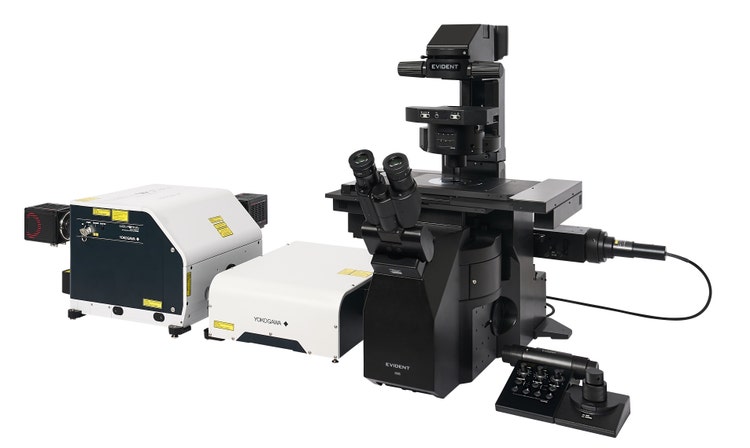
IXplore IX85 SpinSR
Cattura dinamiche cellulari ultra-piccole con sorprendenti dettagli in super-risoluzione.
- Scopri di più grazie all'imaging ad alta velocità in una risoluzione fino a 120 nm
- Progettato per mantenere la vitalità cellulare in esperimenti time-lapse a lungo termine
- Con tecnologia a disco rotante Yokogawa
- Potenziato dalla piattaforma IXplore™ IX85 e dall'algoritmo di super-risoluzione TruSight™ SR di Evident
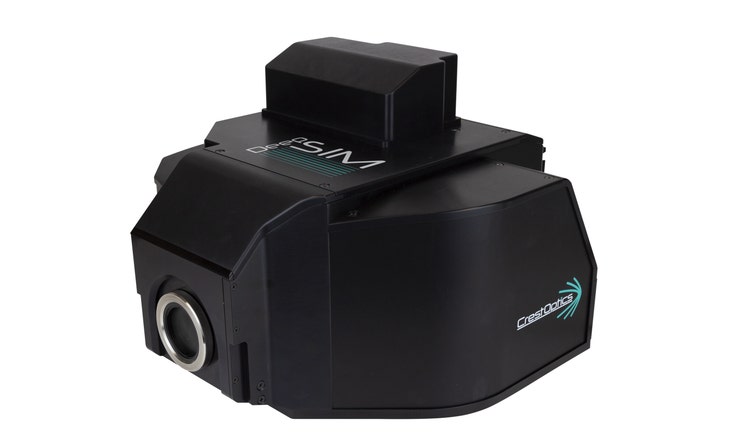
CrestOptics DeepSIM
Microscopia a illuminazione strutturata in grado di rispondere senza difficoltà alle domande più complesse in ambito biologico.
- Risoluzione dei dettagli più fini fino a 100 nm in senso laterale e 300 nm in senso assiale
- Progettata per l’imaging in profondità; dati a risoluzione superio-re su una profondità Z superiore a 50 μm in campioni spessi preparati in modo convenzionale
- Illuminazione a reticolo delicata a oltre 10 fps per l’osservazione di cellule vive e le riprese time-lapse
- Basato sulla tecnologia 2D Lattice SIM, compatibile con qualsiasi telaio verticale o invertito dotato di porta per telecamera
Risorse per la microscopia a super-risoluzione
La corsa alla microscopia a super-risoluzione: la deconvoluzione è sufficiente?
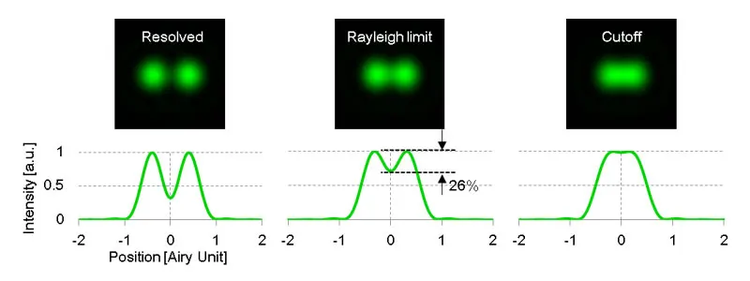
La microscopia a super-risoluzione si riferisce a qualsiasi tecnica ottica utilizzata per visualizzare campioni a una risoluzione superiore al limite di diffrazione dei microscopi ottici convenzionali. Scopri quali sono i limiti dei microscopi a super-risoluzione e come abilitare l'imaging in super-risoluzione sul tuo sistema di microscopia.
Come Evident Super Resolution e la tecnologia a disco rotante permettono di ottenere un imaging in super-risoluzione rapido, profondo e affidabile delle cellule vive
Olympus Super Resolution (OSR) è la tecnologia precedente rispetto all’algoritmo TruSight SR di super-risoluzione di Evident. In questo white paper, scopri i principi alla base della tecnologia OSR e il design ottico ottimizzato che ha permesso lo sviluppo del nostro nuovo algoritmo all'avanguardia.
Come l’algoritmo TruSight™ SR ottiene imaging a super-risoluzione nella microscopia confocale a disco rotante
L'algoritmo TruSight SR di Evident è una nuova tecnologia di super-risoluzione derivata da Olympus Super Resolution (OSR) e integrata nel microscopio IXplore IX85 SpinSR. Leggi questo white paper per scoprire come TruSight SR contribuisce a migliorare la qualità delle immagini al microscopio.
Super-Resolution Microscopy FAQs
Qual è l'uso della microscopia a super-risoluzione?
Come posso migliorare la risoluzione delle mie immagini con le soluzioni di microscopia a super-risoluzione di Evident?
Poiché la risoluzione di un obiettivo è determinata dalla sua lunghezza d'onda di emissione e dall'apertura numerica (NA), scegliere un obiettivo con un'apertura numerica elevata è un modo efficace per migliorare la risoluzione delle immagini. Gli obiettivi Evident X Line™ e il nostro obiettivo A Line™ HR hanno aperture numeriche più elevate.
Per migliorare la risoluzione durante la super-risoluzione 3D delle cellule vive, è importante minimizzare l'aberrazione sferica dovuta alla discrepanza dell'indice di rifrazione. I nostri obiettivi a immersione in olio di silicone A Line offrono un indice di rifrazione molto simile a quello delle cellule vive, consentendo immagini 3D più luminose e con una risoluzione più elevata, con un'aberrazione sferica minima.