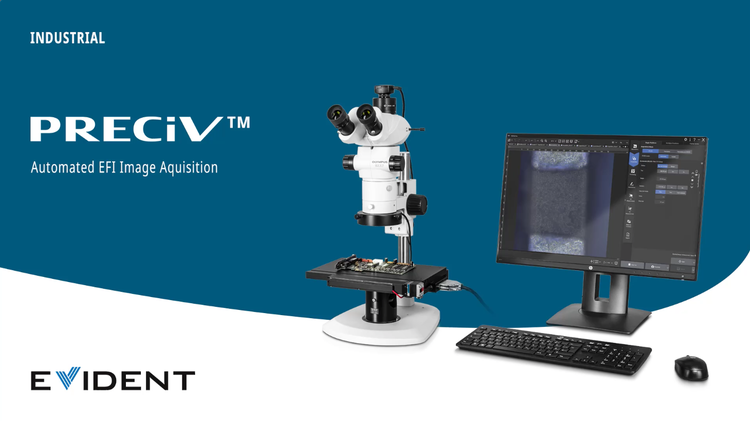
Digital Cameras for Industrial and Material Science
Evident continues to reimagine, manufacture, and advance world-class microscope cameras, and our commitment remains unaffected by Olympus’ past divestiture of its consumer camera division.
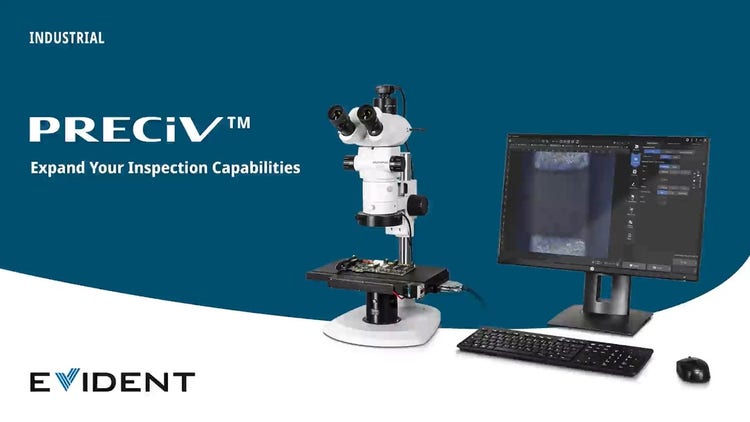
Digital Cameras for Microscopes
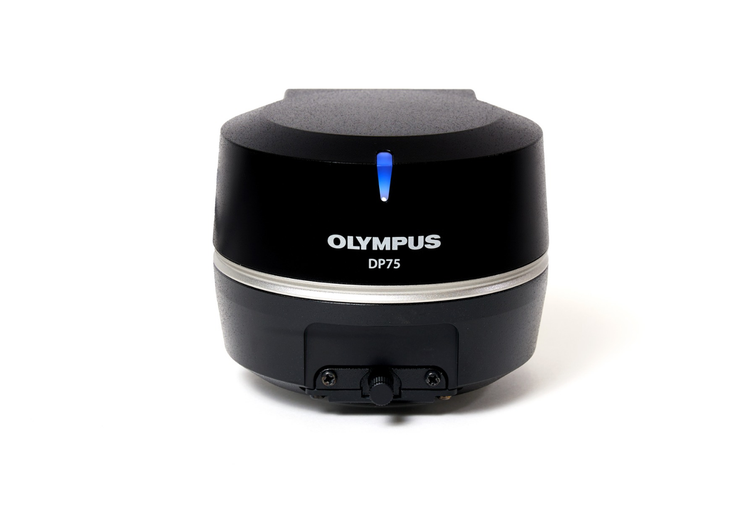
DP75 Digital Camera for Microscopes
Make your microscope inspections more efficient with the powerful DP75 digital microscope camera. This high-performance tool is tailored for a range of applications and enables you capture high-resolution brightfield, darkfield, MIX (brightfield and darkfield), polarization, DIC, fluorescence, and near-infrared (NIR) observation* images.

LC35 Digital Camera for Microscopes
The LC35 digital microscope camera provides cost-effective brightfield images for a range of samples under different observation conditions. With a 3.5-megapixel CMOS sensor, and up to 40 fps frame rate, and easy integration with Olympus microscopes and software, the LC35 color microscope camera balances image quality with affordability.

DP28
Providing color accuracy and 4K resolution, the DP28 digital microscope camera’s powerful features and wide field of view capture images that enhance tasks such as conferencing, teaching, and clinical research. Integrate it seamlessly into your microscopy workflow for improved work efficiency and image quality.
- 4K resolution
- Color reproduction that rivals the human eye
- 8.9-megapixel CMOS sensor
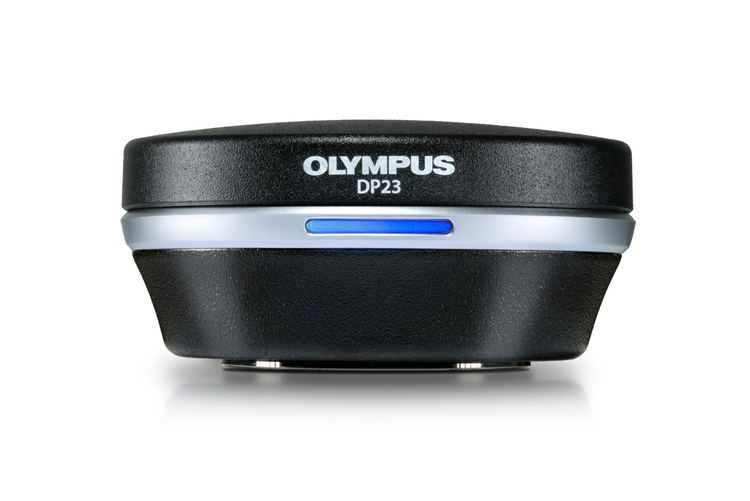
DP23
Enabling fast, easy capture of high-quality images that can be clearly observed on a large screen, the DP23 microscope digital camera eases routine life science and clinical research, conferencing, or teaching. Integrate it seamlessly into your microscopy workflow and easily share or stream images.
- Share images using the DP23-AOU network solution
- Clearly observe live images on a large screen
- Fast, high-quality imaging for conferences and teaching

Related Applications

Using a Microscope to Inspect the Solder Wettability of Mounting Components
After electronic components are mounted on a printed circuit board, they are visually inspected to determine whether they are mounted properly. In the past, the boards were photographed using a CCD camera to check the condition of the mounting. One problem with this method is that light from the camera can reflect off the solder, making it difficult to capture clear images of the mounted components. To compensate, inspectors adjust the illumination for each board being photographed, but this is difficult to do without any human error.

Defect Detection on Etched Silicon Carbide (SiC) Wafers
Silicon carbide (SiC) is an important material in the semiconductor industry, as it is used for its technical and physical properties in modern circuits. SiC devices are revolutionizing power electronics across industries, offering increased efficiency, power density, and reliability in applications such as electric vehicles, renewable energy systems, and industrial drives.

Nonmetallic Inclusion Analysis in Steel
Nonmetallic inclusions are compound materials embedded inside steel during the manufacturing process. Inclusions have a different chemical origin and give different mechanical properties to steel, such as formability, toughness, machinability, and corrosion resistance. As a general rule, the fewer or less severe the inclusions, the higher the quality of the steel. Therefore, analyzing and documenting nonmetallic inclusions is important for quality control.
Related Categories
Digital Camera for Microscope FAQs
How to choose a microscope camera?
Software for Digital Cameras
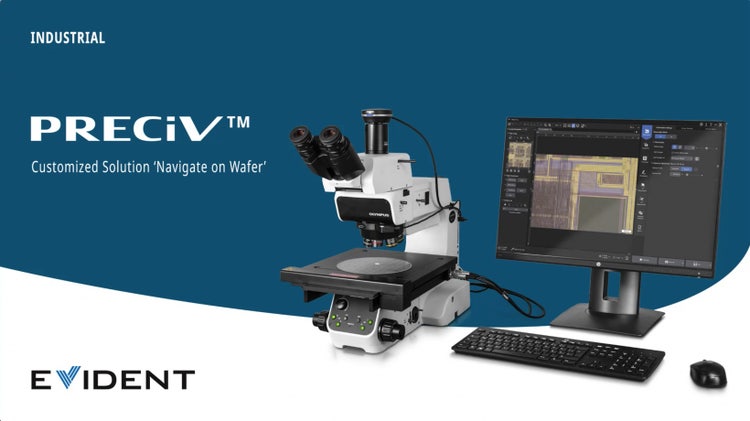
PRECiV™ Image Analysis Software: Navigate on Wafer
The Navigate on Wafer customized solution offers a multiposition measurement workflow for PRECiV users without a CAD drawing of their wafer layout.
PRECiV™ Tutorial: Automated EFI Image Acquisition
This video tutorial will provide you with detailed instructions on how to acquire 3D images.