IXplore IX85 Inverted Microscope Platform
The IXplore™ IX85 motorized inverted microscope platform is a fully modular system engineered for widefield fluorescence imaging, live-cell time-lapses, and high-content screening. With an industry-leading 26.5 mm field number, end-to-end automation, and dedicated live-cell tools—including TruFocus™ Z-drift compensation and environmental control compatibility—the IXplore IX85 adapts to your research without compromise.
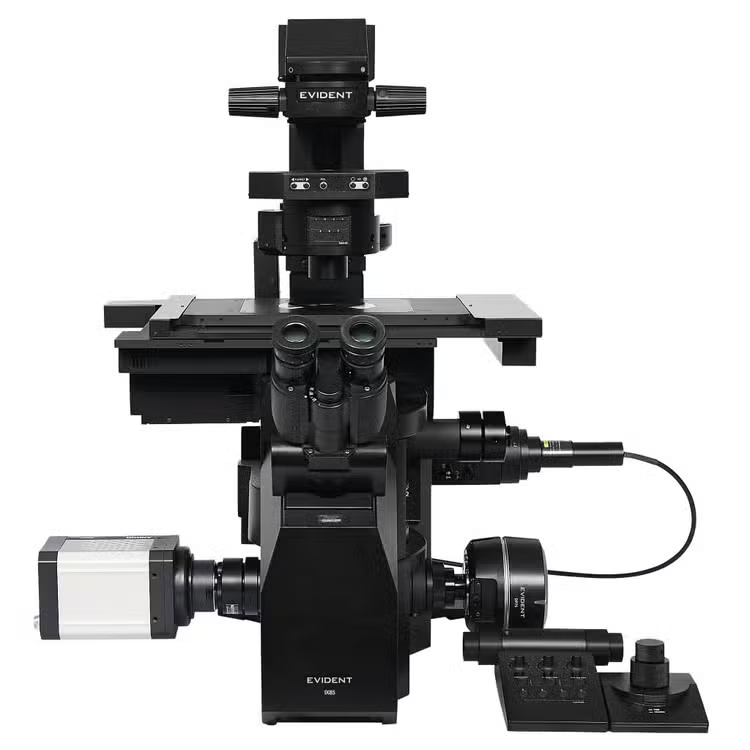
IXplore IX85 Motorized Inverted Microscope Platform
Clearer Insights, More Discovery
The IXplore™ IX85 platform delivers an unmatched level of customizability, enabling you to design or build an intelligent, high-performance imaging system to meet your specific goals. With an industry-leading field number (FN) of 26.5 mm plus advanced end-to-end imaging and workflow features, the IXplore IX85 helps you capture more than ever before while dramatically reducing your acquisition times.
Engineered for demanding research applications, the IXplore IX85 platform offers standalone imaging performance while providing a scalable path to advanced confocal solutions. This includes IXplore Spin series spinning disk systems for high-speed imaging and FLUOVIEW™ FV5000 and FV5000MPE laser scanning microscopes for photon-level quantitation.
Powering Discovery Across Applications
Live-cell imaging and dynamic processes
- Live-cell time-lapse imaging for cancer, stem cell, and neuroscience research
- Cell migration and division tracking
- Long-term monitoring of cellular dynamics
Screening and large-scale acquisition
- High-content screening and drug discovery
- Well-plate and large-area acquisition
- High-throughput assay development
3D models and complex samples
- Organoid and 3D cell culture imaging
- Developmental biology and embryo imaging
- Spatial analysis in complex biological models
Fluorescence and multiplex imaging
- Multicolor widefield fluorescence
- Colocalization and interaction studies
- Protein interaction and localization studies
Expand Your View, Enhance Your Vision
See and capture more—and reduce your acquisition times—with an unmatched field of view (FOV) in the industry and advanced end-to-end imaging features that set a new standard in clarity and precision, including groundbreaking new objective technology.
Unmatched 26.5 mm FOV
View more of your sample at once with an industry-leading field number (FN) of 26.5 mm on two integrated imaging ports. Cover larger areas in fewer images, get more data in each image, minimize the need for image stitching, and speed up your workflows.
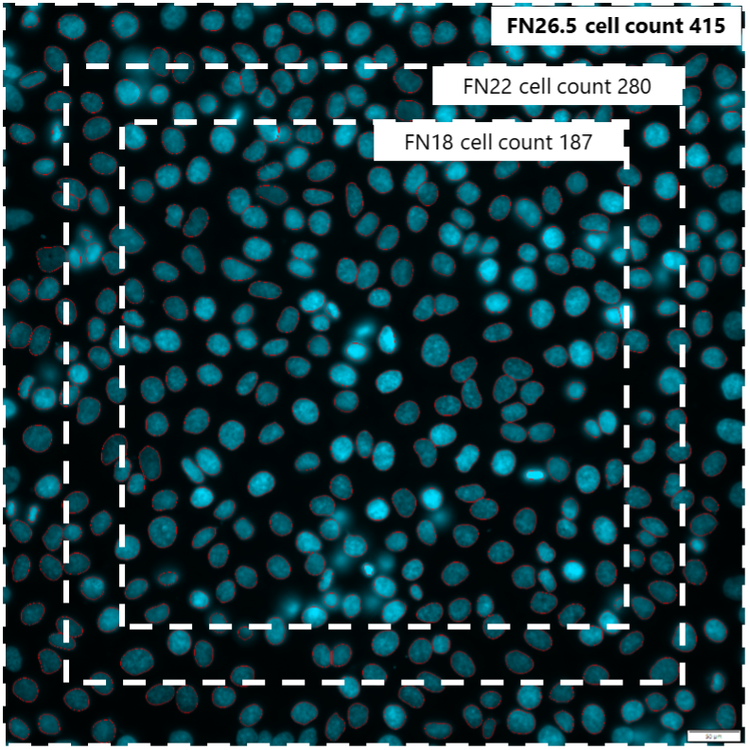
Comparison of how many cells you can acquire in different FN.
Clearer Insights
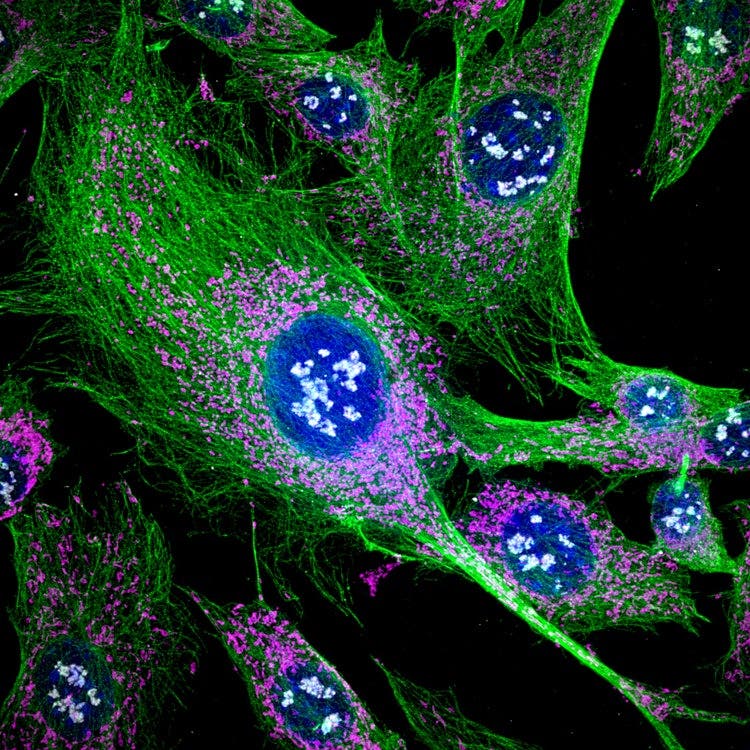
Cultured NIH 3T3 cells. Blue: nuclei. Green: tubulin. Red: HSP60. Gray: fibrillarin. Sample provided by EnCor Biotechnology Inc.
Experience New Levels of Precision and Clarity
With advanced end-to-end imaging features, the IXplore IX85 sets a new standard in precision and clarity—enabling you to see more fine details and easily obtain impactful, publication-ready images.
See More with Deeper Imaging
See deeper into your samples, catch more signal, and image the real shape of cells over time—all without the hassle of immersion liquid.
Pair the IXplore IX85 with the world’s first multi-immersion silicone gel objective lens (LUPLAPO25XS). Featuring groundbreaking silicone gel pad technology, LUPLAPO25XS delivers the image quality of silicone immersion with the ease of use of a dry objective.
- Easy objective switching: Seamlessly switch between dry objectives and your silicone gel pad objective. No need to clean or reapply the immersion medium.
- More stable time-lapse imaging: Silicone gel pad maintains stable structure and moisture content for reliable time-lapse imaging
- Simplified well plate imaging: The gel pad moves with your objective. No need to wipe or replace oil as you navigate your sample.
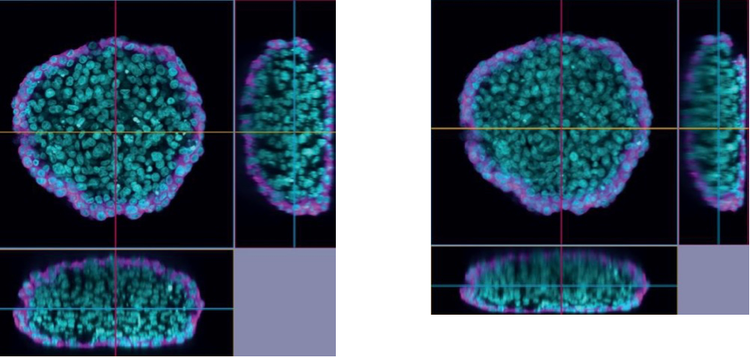
XYZ image comparison. Left: LUPLAPO25XS silicone gel pad objective, NA 0.85. Right: UPLXAPO20X dry objective, NA 0.8. Cleared HeLa* 1 cell spheroid (cyan: nuclei, magenta: microtubules). Captured on the IXplore IX85 Spin. *To learn more about the origin of HeLa cells, visit henriettalacksfoundation.org.
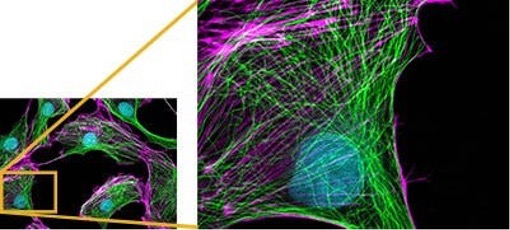
Images acquired using an X Line UPLXAPO60XO objective lens.
Consistent Quality
Evident’s expansive range of X Line™ and A Line™ objectives can meet any research need, pushing your system further. Taking full advantage of the IXplore IX85’s 26.5 mm FOV, X Line objectives deliver exceptional correction of spherical and chromatic aberrations throughout a wide field of view. With high numerical apertures (NA) and outstanding transmission, they provide sharp, consistent images.
Edge-to-Edge Clarity and Precision
Intelligent Shading Correction automatically compensates for uneven illumination across the field of view to generate stitched images without manual adjustment, improving efficiency and consistency in large-area imaging.
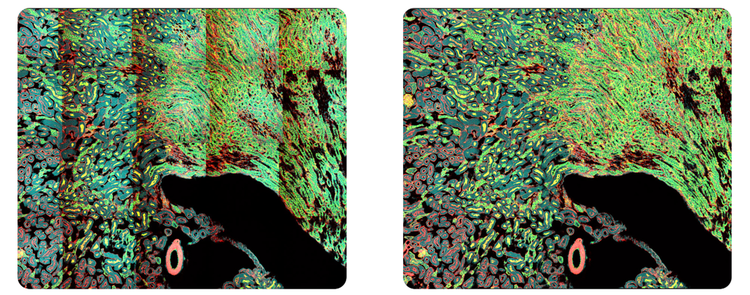
Left: Without Intelligent Shading Correction. Right: With Intelligent Shading Correction.
Stunning 3D Images
Use TruSight technology to create 3D images with confocal-like sharpness at the speed of a widefield microscope. Explore 3D samples in real time with advanced software solutions that help you see more, faster.
End-to-End Automation
Optimize Your Workflow, Accelerate New Discoveries
The IXplore IX85’s automated acquisition features, customizable interfaces, and task management software help you work efficiently while staying confident in your results.
Automated Spherical Aberration Correction
The automated correction collar automatically fine-tunes your objective settings and optimizes image quality by reducing spherical aberrations caused by variations in cover glass thickness.
- Create sharper, more detailed images and eliminate time-consuming manual adjustments with the click of a button.
- Compatible with over 18 different objectives to meet your research needs.
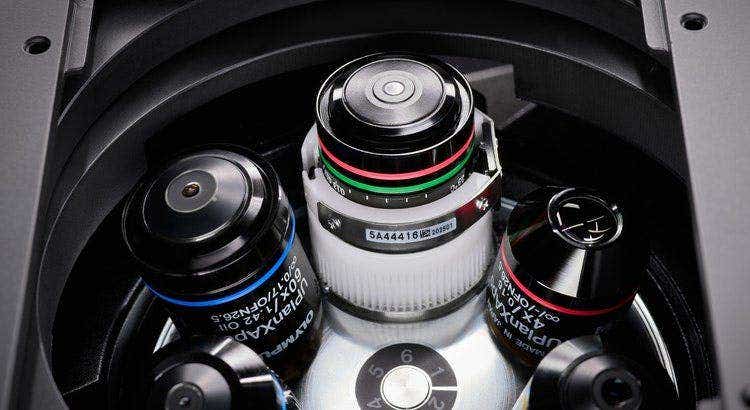
Automated correction collar on the IXplore IX85 platform.
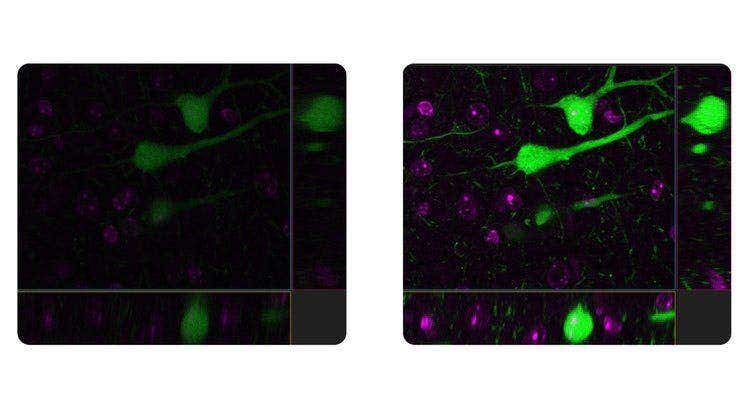
The automated correction collar automatically fine-tunes your objective settings and optimizes image quality. Left: Without auto correction collar. Right: With auto correction collar.
Real-Time Image Acquisition and Analysis
Further enhance productivity with real-time image processing and analysis. Advanced imaging tools support consistent, accurate results.
- Quickly locate samples and acquire high-magnification images.
- Automatically analyze key features in your images.
- Easily manage multidimensional tasks, including 5D experiments.
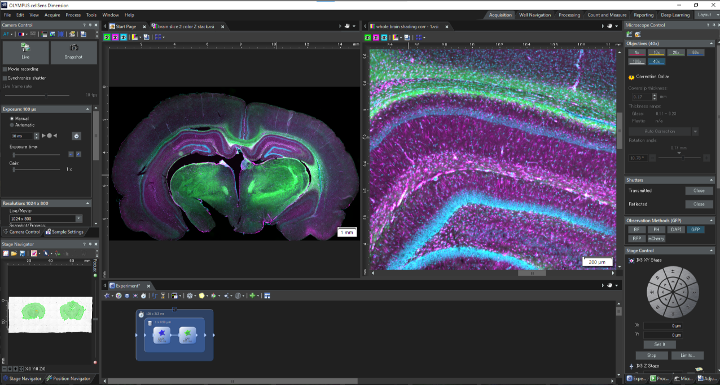
Your Live Cells in Focus
The IXplore IX85 platform offers enhanced rigidity to reduce the effects of vibration and temperature on your microscope. This facilitates reliable live-cell and time-lapse imaging by helping maintain the desired focus position on the Z-axis. Pair the IXplore IX85 with our TruFocus™ Z-drift compensator to capture cellular dynamics through high-precision, multipoint time-lapse images that are aligned and in focus.
Close Monitoring of Cell Migration Growth
Use cellSens™ Object Tracking and Count and Measure solutions to analyze the movement and division of live cells in time-lapse or Z-stack image sets. Confluency Checker tools are a proven way for you to measure confluency on phase contrast images as well as fluorescence.
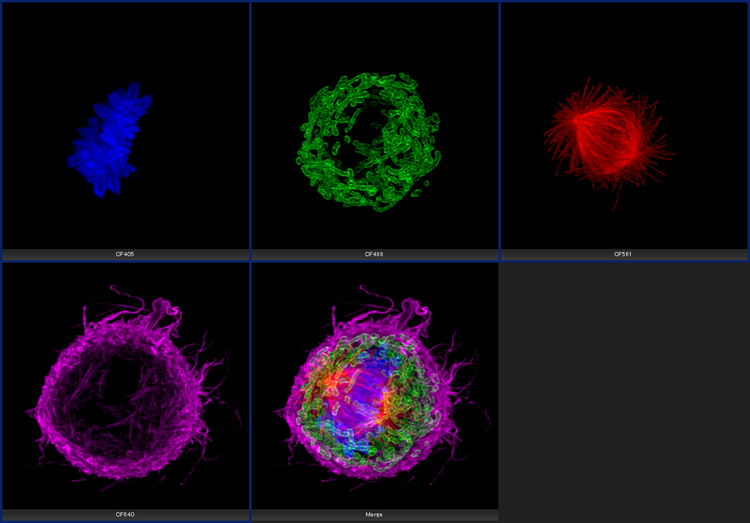
Cultured Cos 7 cell.
Blue: Nuclear, Green: Mitochondria, Red: Tubulin, Magenta: Actin.
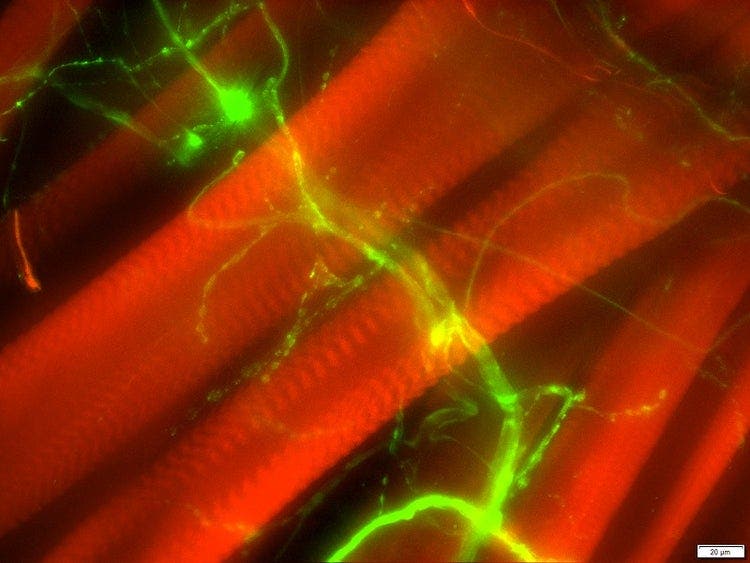
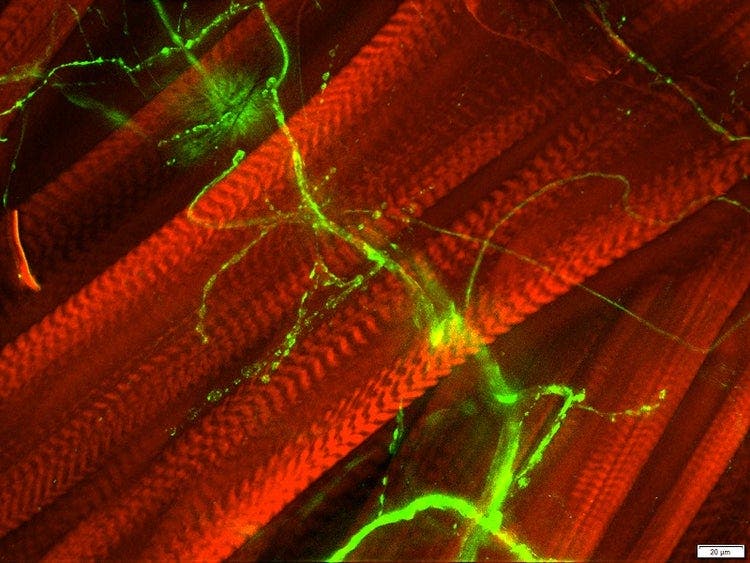
Left: Without TruSight / Right: With TruSight
Improve Experiment Efficiency with Advanced Deconvolution
With cellSens Dimension software, you can use live 2D deblurring for preview and acquisition to enable exceptional focusing on thicker specimens.
- More advanced TruSight™ deconvolution is available that uses an iterative algorithm to produce improved resolution, contrast, and dynamic range
- To further improve experiment efficiency, define deconvolution processing as a macro function in the Graphical Experimental Manager (GEM)
Fully Automated Efficiency
The Graphical Experimental Manager (GEM) of cellSens Dimension software enables fully automated multidimensional observation (X, Y, Z, T, wavelength, and positions) to make experiment setup even easier.
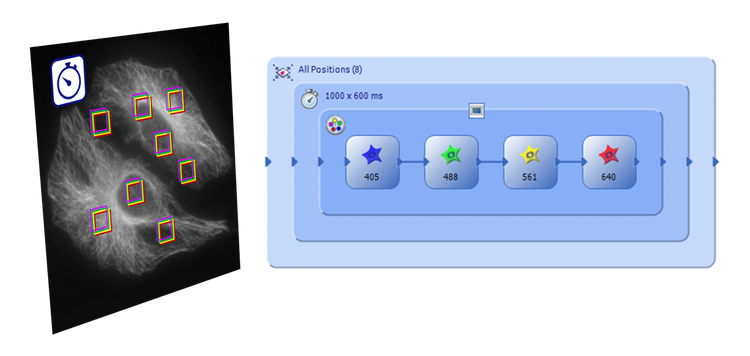
Unmatched Customizability
One Platform, Infinite Possibilities
Stay at the forefront of imaging technology with the IXplore IX85’s unmatched customizability. Empower your lab to be prepared for your research needs now and in the future.
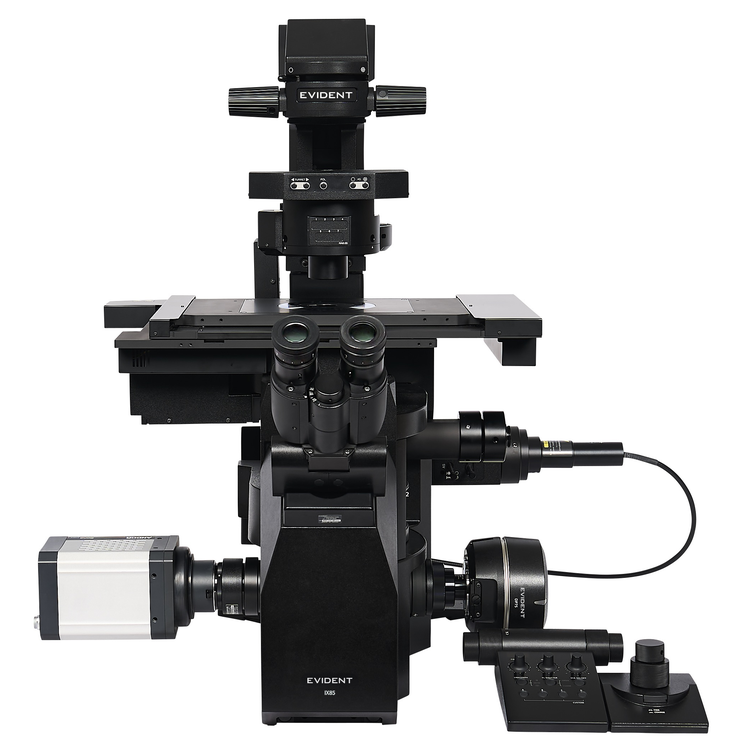
New Built-In Ports
Two built-in camera ports (left and right) and an optional third port enable enhanced functionality and the capacity to create a multi-camera configuration setup. Four optical paths are available: left (100%), right (100%), binocular (100%), and BI 50%/L 50%.
Versatile Deck Structure
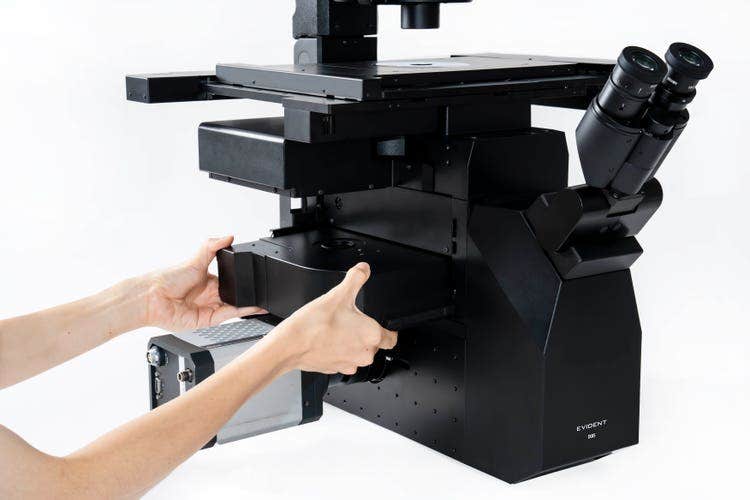
Customize your microscope setup for your own experiments. An open frame design makes it simple to add or swap modules to customize functions as needed. You can also upgrade from one to two decks as research needs change.
New Built-In Threaded Holes
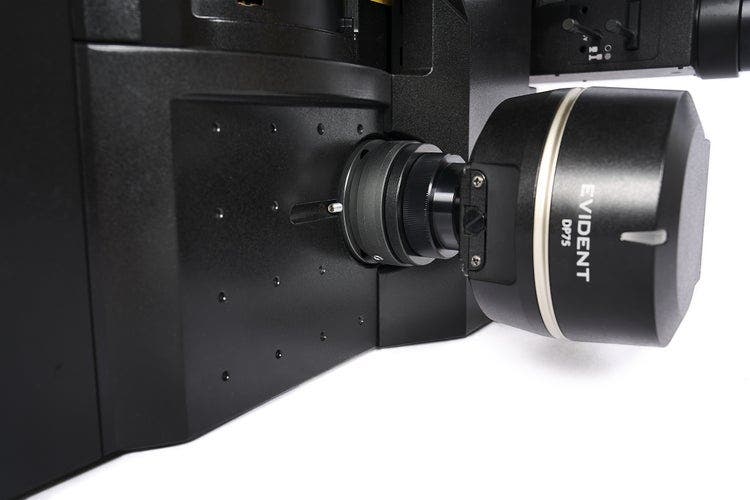
Built into the frame, threaded holes around the camera ports turn the IXplore IX85 into a canvas for innovation, whether you’re building a custom system or integrating the frame into your product.
Future-Proof Reliability
Ideal for busy lab settings, long-term imaging projects, and live-cell imaging, the IXplore IX85 platform provides durability and performance backed by exceptional service and support.
Confidence in Every Use
The IXplore IX85’s durable frame design is built to withstand a multitude of uses, ensuring consistent performance and reducing downtime. The platform provides maximum stability, minimizing small movements that could disrupt delicate long-duration imaging experiments.
With the same service and support that you’ve come to know and expect from Evident, you can be confident that your IXplore IX85 will perform as intended for years to come.
Upgrade and Expand Your Imaging Technology as Needs Evolve
The IXplore IX85 lets you upgrade and expand your imaging platform as research needs evolve by adding features such as TruFocus Z-drift compensation, environmental control, and imaging modalities like confocal laser scanning, spinning disk, and photomanipulation. For high-content screening, integration with scanR analysis software streamlines data processing and quantitative evaluation. Third-party integration is easy with support for incubation systems, motorized stages, and more.
Related Products
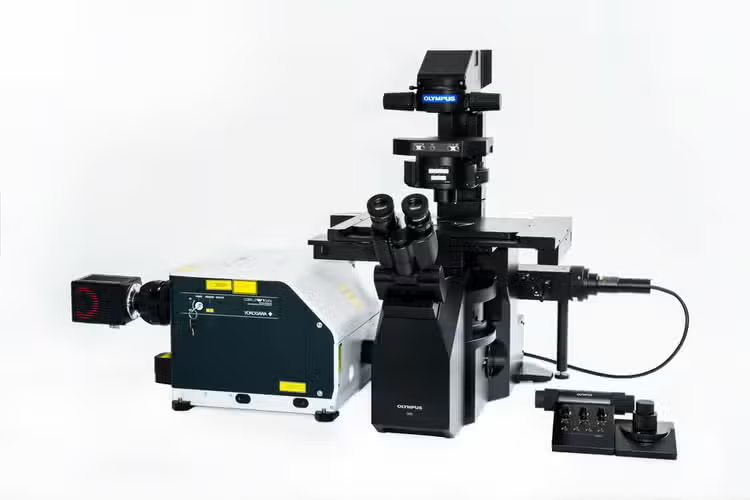
IXplore IX85 Spin Series
Spinning Disk Confocal Microscopes
Capture fast, dynamic biological processes with the speed required for real-time insight. The IXplore™ IX85 Spin series of spinning disk confocal microscopes is designed to deliver fast, precise fluorescence imaging across a wide range of live-cell and time-lapse studies. Integrating proven Yokogawa and CrestOptics spinning disk technologies with the adaptable IXplore IX85 platform, these solutions combine optical performance, automation readiness, and configuration flexibility within a scalable research ecosystem. From core facilities to advanced cell biology and drug discovery labs, the Spin series is designed to evolve alongside your research.
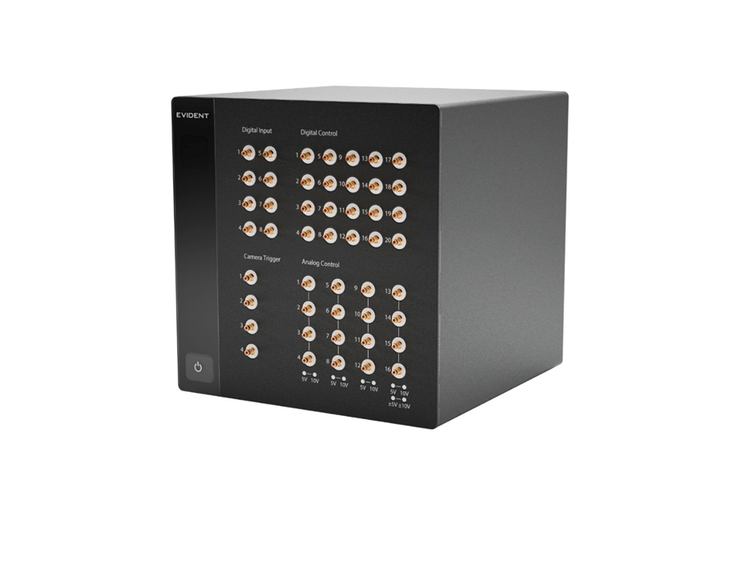
U-XRTC
Real-time device synchronization for live-cell and time-critical experiments.
- Precisely controls cameras, lasers, and stages at high speeds
- Unlocks full system performance for higher throughput
- Enables more reliable data quality and quantitation
- Supports higher cell viability with microsecond precision
- Future-ready platform for advanced imaging setups
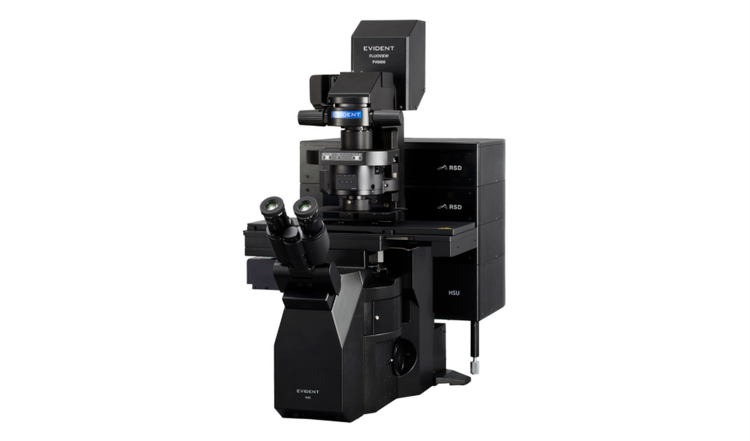
FV5000
Confocal Laser Scanning Microscope
- Extraordinary clarity, speed, and reliability driven by groundbreaking innovations
- SilVIR™ detectors deliver photon-level quantitation, exceptional sensitivity, and ultra-high signal-to-noise
- Unmatched dynamic range captures the full signal spectrum and prevents saturation
- High-speed 2K resonant scanning and high-density 8K galvo scanning in one platform
- FLUOVIEW Smart™ software simplifies operation with intuitive controls and AI-powered automation
- TruResolution™ auto correction collar optimizes focus for over 20 objectives
- Modular design supports up to 10 laser lines and future multiphoton upgrades
- Laser Power Monitor (LPM) ensures stable illumination and reproducible results over time
Specifications
| IX85P1ZF | IX85P2ZF | ||
| Microscope frame | Optical system | UIS2 optical system | |
| Revolving nosepiece |
Motorized 6-position revolving nosepiece (DIC slider attachable), One position for Automated Correction Collar Simple water proof structure |
||
| Focus |
Stroke: 10.5 mm Minimum increment: 0.01 um, Maximum nosepiece movement speed: 3mm/s |
||
| Intermediate Magnification Changer |
3 positions (Coded) 1X / 1.6X / 2X |
||
| Light path selection |
Motorized 4 positions Eyepiece 100%, left 100%, right 100%, eyepiece 50%/left 50% |
||
| Deck insert layer | 1 layer | 2 layers | |
| Maximum port field number | Left/Right side port: FN26.5, BI port: FN22 Deck right side port: FN18 |
Left/Right side port: FN18, BI port: FN22 Deck right side port: FN18 |
|
| Focus compensator |
TruFocus Z drift compensator |
Offset method (Focus search, one-shot focus, continuous focus), Class 1 laser product, laser wavelength: 830nm |
|
| Transmitted light illuminator |
Pillar tilt mechanism (30 ° inclination angle, with vibration reducing mechanism), Condenser holder (with with 88 mm stroke, refocusing mechanism), Field iris diaphragm adjustable, 4 filter holders Light source: High power LED light source |
||
| Observation tube | Widefiled (FN22) |
U-TBI90BK Wide field tilting binocular U-BI90 Wide field binocular U-TR30-2/U-TR30NIR Wide field trinocular |
|
| Stage | Motorized stage |
IX5-SSA: Stage stroke: X: 116mm x Y: 78mm, maximum stage movement speed: 40mm/s, Knob controller 3rd party motorized stage |
|
| Mechanical stage with right handle | Stage stroke: X: 116mm x Y: 78mm, | ||
| Mechanical stage with left handle | stage position locking function | ||
| Right handle stage | Stage stroke: X: 50mm x Y: 50mm | ||
| Gliding stage | Upper circular stage 360 ° rotatable, 20 mm (X/Y) travel | ||
| Plain stage | 232 mm (X) x 240 mm (Y) stage size, stage insert plate exchangeable (ø110 mm) | ||
| Condenser |
Motorized long working distance condenser |
W.D. 27 mm, NA 0.55, motorized turret with 7 position slots for optical devices (3 positions for ø30 mm and 4 positions for ø38 mm), motorized aperture and polarizer |
|
|
Long working distance universal condenser |
NA 0.55, W.D. 27 mm 5 positions for optical devices (3 positions for ø30 mm and 2 position for ø38 mm) | ||
| Ultra long working distance | NA 0.3, W.D. 73.3 mm, 4 positions for optical devices (for ø29 mm) | ||
| Fluorescence illuminator |
L-shape-fluorescence illuminator |
L-shaped design with exchangeable FS and AS modules, slider shutter and ND filter poket | |
| Fluorescence mirror turret |
Motorized fluorescence mirror turret |
Motorized turret with 8 positions, built-in shutter, simple waterproof structurer | |
| Fluorescence light source |
U-LGPS: LED and LDP light source, Class 1 laser product 3rd party LED light source |
||
| Control unit (IX5-MCZ) | Nosepiece position, light path selection, filter turret position, FL shutter ON/OFF, DIA LED power, DIA LED ON/OFF, 4 customizable button | ||
| Control box (IX5-CBH) | PC interface | USB (Type-C), RS-232C | |
| Operating environment |
• Indoor use • Ambient temperature: 5 ºto 40 ºC (41 º to 104 ºF) • Maximum relative humidity: 80% for temperatures up to 31 ºC (88 ºF), decreasing linearly through 70% at 34 ºC (93 ºF), 60% at 37 º C (99 ºF), to 50% relative humidity at 40 ºC (104 ºF) • Supply voltage fluctuations: Not to exceed ±10% of the normal voltage |
||