Inverted Microscopes for Life Science and Clinical Applications
Inverted microscopes feature an optical design with objectives positioned below the stage, making them ideal for observing cultures, specimens in flasks and well plates, and other samples that require stable, high-resolution imaging. Evident offers a broad selection of inverted microscopes for life science research and clinical diagnostics, designed to support a wide range of applications from live-cell imaging to routine pathology.
Our inverted microscope lineup combines advanced optical performance, flexible configuration options, and user‑centric ergonomics to support demanding research workflows and critical clinical procedures. Whether you’re studying cellular dynamics in the lab or performing IVF and other clinical studies, Evident’s inverted microscope solutions support reliable, high‑quality results.
Fig. 1 - Mouse embryo. SOX1 (Cy3), CDX2 (green), DAPI (blue). Courtesy of Dr. Yingying Chen, Naihe Jing’s La
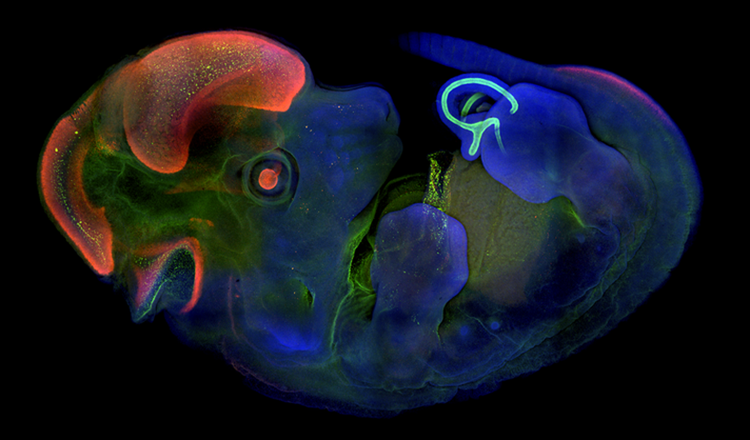
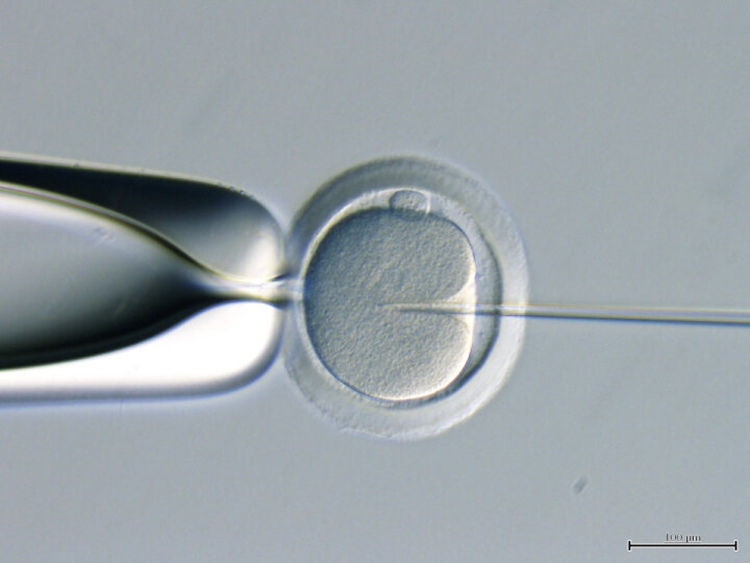
Fig. 2 - Microscopic image of an oocyte during an IVF procedure.
Life Science Inverted Microscopes
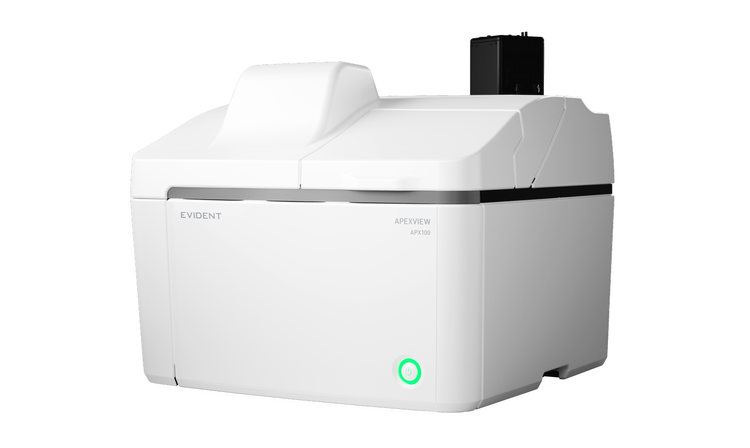
APX100
Benchtop Fluorescence Microscope
The APEXVIEW APX100 benchtop fluorescence microscope makes it fast and simple to acquire expert-quality images. Built with renowned Evident optics, an intuitive user interface, a powerful AI, and a suite of smart features, the APX100 system combines ease of use with high-quality image data to fit your research needs.
- Easy-to-use, all-in-one microscope system
- Publication-quality images in a few clicks
- Fast, efficient data management
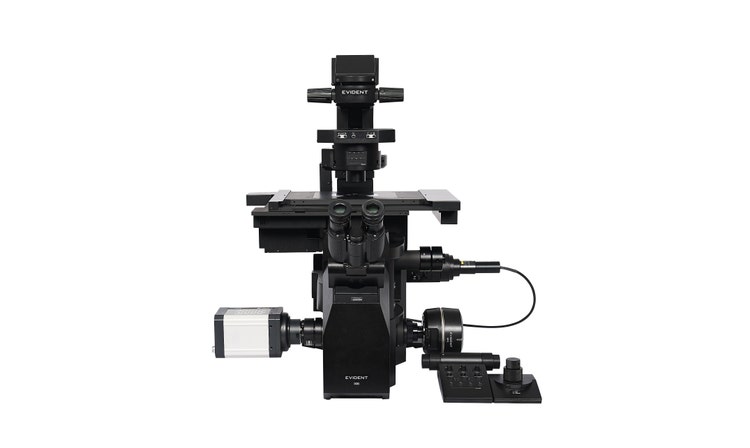
IXplore IX85
Motorized Inverted Microscope Platform
The IXplore™ IX85 platform delivers exceptional flexibility, enabling you to design and build a high-performance imaging system tailored to your specific research needs. With its modular architecture, industry-leading 26.5 mm field number (FN), and broad compatibility with advanced imaging modalities, it provides a powerful foundation that evolves with your applications.
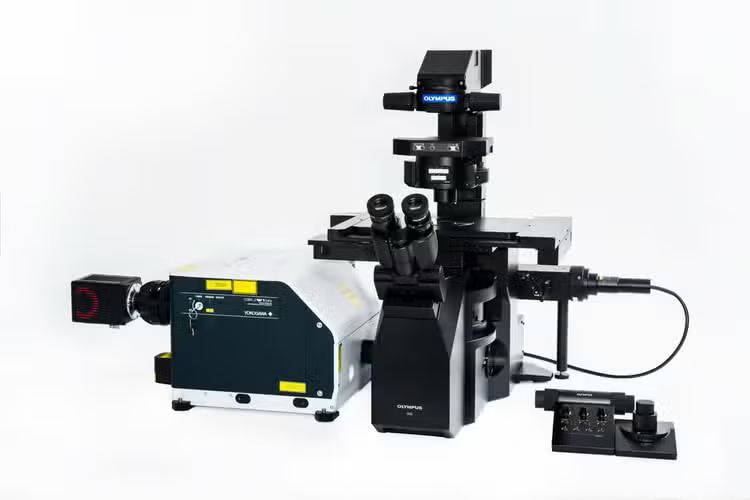
IXplore IX85 Spin Series
Spinning Disk Confocal Microscopes
Capture fast, dynamic biological processes with the speed required for real-time insight. The IXplore™ IX85 Spin series of spinning disk confocal microscopes is designed to deliver fast, precise fluorescence imaging across a wide range of live-cell and time-lapse studies. Integrating proven Yokogawa and CrestOptics spinning disk technologies with the adaptable IXplore IX85 platform, these solutions combine optical performance, automation readiness, and configuration flexibility within a scalable research ecosystem. From core facilities to advanced cell biology and drug discovery labs, the Spin series is designed to evolve alongside your research.
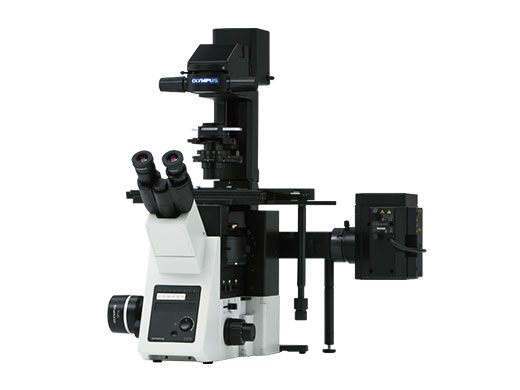
IXplore IX73
Compound Microscope System
Optimized for basic multicolor fluorescence imaging and routine experiments, the IXplore™ IX73 system is easy to operate and ergonomically designed. It captures high-quality, publication-worthy images while providing accurate and repeatable results at high magnifications. The IXplore IX73 system’s simplified workflow and ease of use facilitate a wide range of standard imaging applications.
- High repeatability and accuracy for standard imaging tasks
- Benefit from the same optical capabilities found in high-end IXplore systems
- Easily upgrade to encoded and limited motorized functionality to boost the reproducibility of experiments
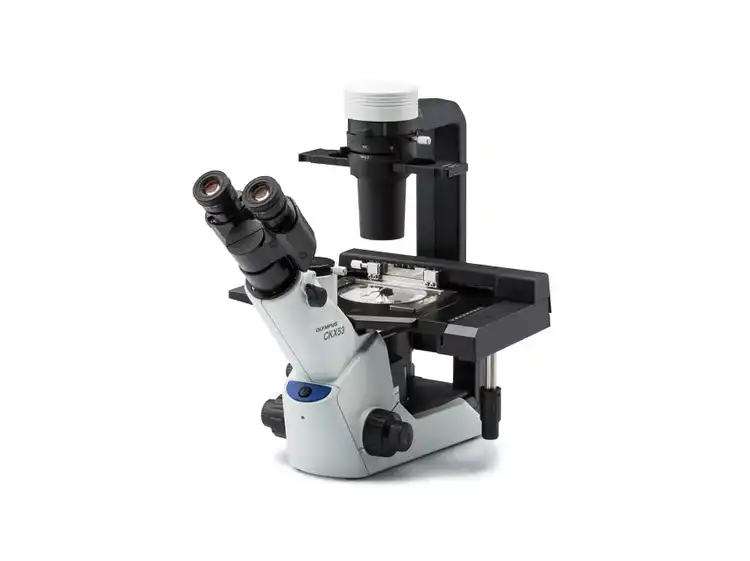
CKX53
Compact Cell Culture Microscope
The CKX53 microscope eases the cell and tissue culture workflow, simplifying steps such as live cell observation, cell sampling and handling, image capture, and fluorescence observation. Its integrated phase contrast system, compact, ergonomic design, and stable performance enable simple, efficient cell observation in bright field and fluorescence. The universal sample holder and expandable stage accommodate a wide variety of cell culture container types and sizes.
- Precentered phase contrast that can be used from 4x to 40x without changing the phase plate
- Inversion contrast (IVC) technique provides clear three-dimensional views
- Fluorescence with a 3-position slider
- View multilayer tissue flasks up to 190 mm (7.5 in.) tall thanks to the easily detachable condenser
Clinical Inverted Microscopes
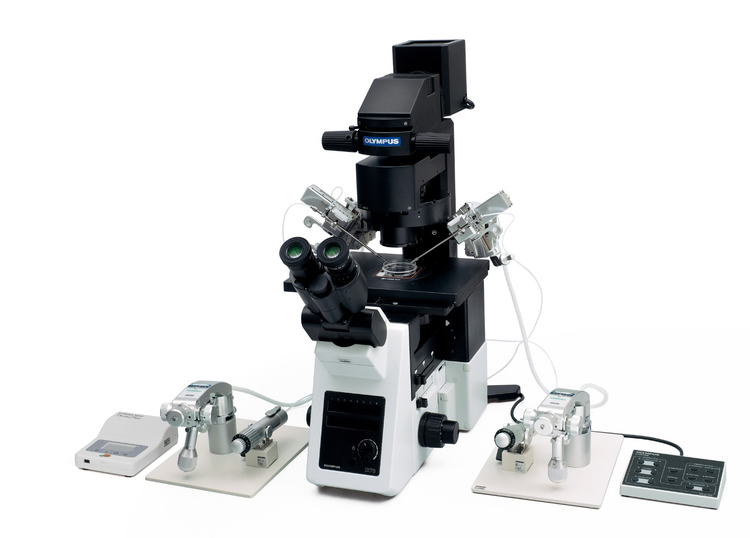
IX3-ICSI/IMSI
As the demand for the use of intracytoplasmic sperm injection (ICSI) applications has increased, so has the burden of the microscopy work it involves. Evident’s solutions for in vitro fertilization technology (IVF) help facilitate the ICSI workflow, improving the speed and efficiency of each procedure.
IXplore IX73
Optimized for basic multicolor fluorescence imaging and routine experiments, the IXplore™ IX73 system is easy to operate and ergonomically designed. It captures high-quality, publication-worthy images while providing accurate and repeatable results at high magnifications. The IXplore IX73 system’s simplified workflow and ease of use facilitate a wide range of standard imaging applications.
- High repeatability and accuracy for standard imaging tasks
- Benefit from the same optical capabilities found in high-end IXplore systems
- Easily upgrade to encoded and limited motorized functionality to boost the reproducibility of experiments
Life Science Applications
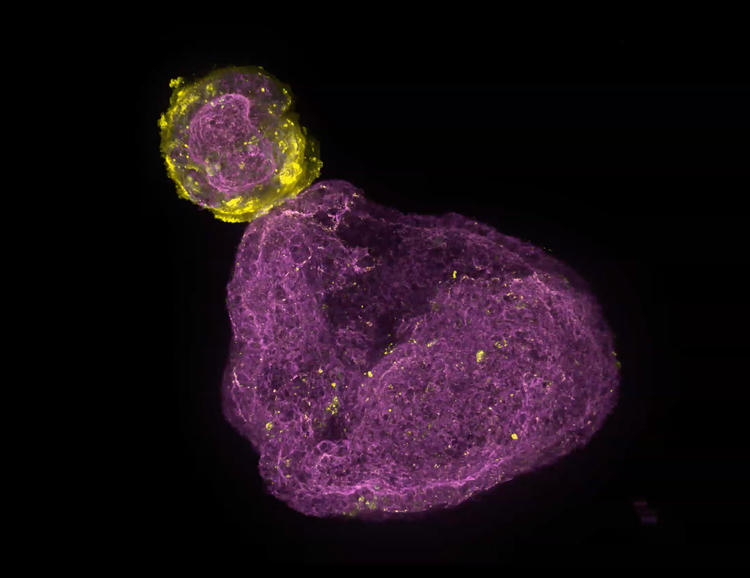
Organoid. Phalloidin (magenta), E-cadherin (yellow).
Evident life science inverted microscope systems are designed to meet specific research and imaging needs—from cost-effective confocal imaging to user-friendly fluorescence and routine cell culture observation. Whether you need specialized techniques like TIRF or a compact benchtop solution, our systems deliver reliable performance, intuitive operation, and high-quality results across a range of life science applications.
Our IXplore™ inverted microscope series is built on the adaptable IXplore IX85 and IX73 platforms, offering scalable imaging solutions tailored to advanced life science research. From high-speed confocal imaging to long-term live-cell observation, each system combines high optical performance with automation and the modularity to meet the evolving needs of your lab.
Inverted microscopes are essential tools in life science research, enabling high-resolution observation of live cells and tissues in culture vessels. Widely used in cell biology, drug discovery, and cancer research, they support critical applications such as cell tracking, viability analysis, and high-content screening in physiologically relevant environments.
Cell Biology
In cell biology, inverted microscopes are widely used to observe and analyze live cells in culture, enabling researchers to study cellular structure, behavior, and interactions in real time. Their design enables easy access to samples in flasks or dishes, supporting applications such as cell viability assays, morphology studies, and time-lapse imaging of dynamic processes like cell division, migration, and differentiation.
Drug Discovery
In drug discovery, inverted microscopes play a key role in evaluating cellular responses to candidate compounds under physiologically relevant conditions. They enable high-throughput imaging, live-cell analysis, and quantitative assays to assess drug efficacy, toxicity, and mechanism of action, supporting informed decision-making throughout the screening and development process.
Cancer Research
In cancer research, inverted microscopes are used to study tumor cell behavior, proliferation, and interactions within the microenvironment. They support live-cell imaging, 3D culture analysis, and time-lapse studies that help researchers investigate cancer progression, metastasis, and treatment response at the cellular level.
Clinical and IVF Applications
IVF/ICSI
In IVF and ICSI procedures, inverted microscopes provide the high-resolution, stable imaging needed to observe oocytes, assess sperm morphology, and perform delicate micromanipulations such as sperm injection. Their ergonomic design and optical clarity support precise handling of gametes and embryos, helping to ensure accuracy and efficiency throughout the fertilization process.
Inverted Microscope FAQs
The term "compound" describes an optical design principle. A compound microscope uses two or more lens sets—an objective and eyepiece—whose magnifications multiply to produce the final image. In everyday lab use, a compound microscope implies an upright configuration: objectives above the stage, condenser and light source below, and specimen on a glass slide. This is the classic microscope found in teaching labs, clinical pathology, and histology departments around the world.
In an inverted microscope, the optical compound components are positioned in an inverted configuration. It retains the same optical principle as a compound microscope—objective plus eyepiece creating the total magnification—but positions the objective below the stage and the condenser and light source above. The component positioning means that transmitted light is directed from above, and the resulting image is viewed from below. This makes inverted microscopes suitable for viewing cell culture vessels, including glass flasks or petri dishes where the specimens adhere to the bottom of the vessel.
| Feature | Compound (Upright) | Inverted |
| Objective position | Above specimen | Below specimen |
| Light/condenser | Below stage | Above stage |
| Ideal sample format | Glass slides with coverslips | Culture dishes, flasks, multi-well plates |
| Access above the specimen | Blocked by the objective | Open |
| Typical applications | Histology, pathology, stained preparations | Live-cell imaging, IVF, micromanipulation |
| Working distance above | Limited | Unrestricted |
| Cost | Generally lower | Generally higher |
| Center of gravity | Higher | Lower (more stable) |
As previously stated, an inverted microscope is a microscope with its transmitted light source and condenser above the stage pointing down, while the objectives and turret are below the stage pointing up. Open-frame inverted microscopes, like our IXplore™ Standard and IXplore Pro systems, are great solutions for labs looking to adapt and customize a system to their needs. The systems work with multimodal solutions, such as TIRF illuminators or spinning disk confocal modules, to offer flexible imaging options. When using open-frame inverted microscopes for fluorescence imaging, a dedicated darkroom is usually required to avoid interfering signals from room lights.
If there is not enough space for a dedicated darkroom, an enclosed, all-in-one inverted fluorescence system, such as the APEXVIEW™ APX100 benchtop fluorescence microscope, is the best option. An all-in-one inverted fluorescence microscope is an automated research microscope with a box frame that enables users to image under normal lighting conditions. Its automated workflow removes complex steps typically involved in setting up an advanced fluorescence or confocal system, and these compact and versatile inverted microscopes can be placed almost anywhere in a lab or core facility.