Upright Microscopes for Life Science and Clinical Use
Upright microscopes are a cornerstone of the laboratory, delivering clarity to reveal the fine details of samples.
Trusted for high-quality observation and imaging, Evident upright microscopes feature advanced optics and oculars for life science research and clinical diagnostics. Our FN26.5 ocular offers an industry-leading field of view for a more immersive viewing experience. This wider view is complemented by an ergonomic design for comfort and efficiency during long hours of observation, while our renowned X Line™ objectives and True Color LED illumination show your samples in true-to-life colors for confident evaluations and decisions.
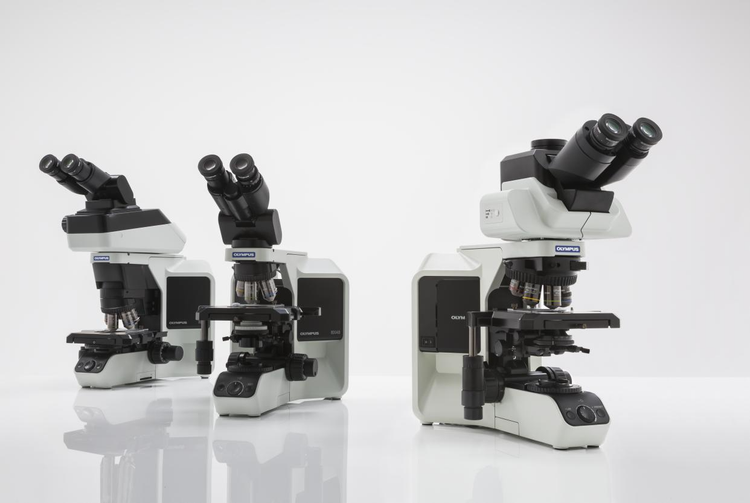
Built on a rich history of Olympus excellence, our flagship BX™ series upright microscopes feature a modular design to meet diverse observation and imaging needs—from complex multidimensional experiments with automated fluorescence to routine clinical lab testing and pathological assessments. Explore our selection below to find the best upright microscope for your work.
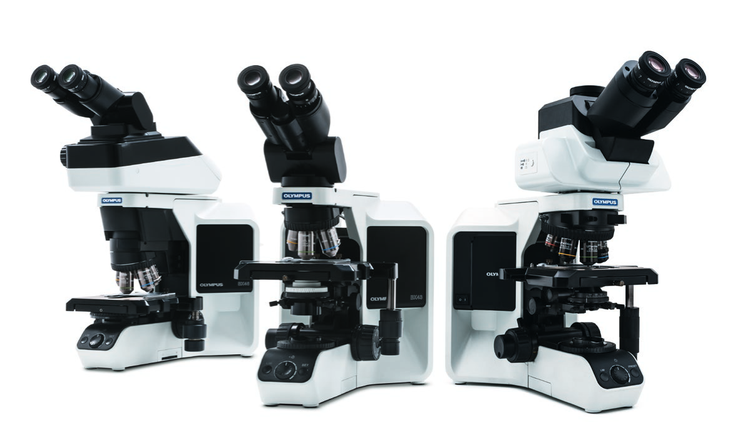
Upright Microscopes
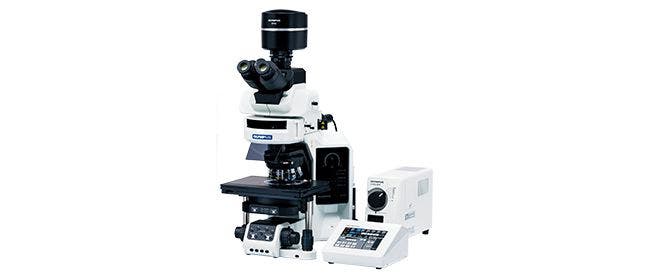
BX63
- Fully motorized system allows automation of complex multidimensional experiments
- Accurate motorized Z-drive
- High stability due to fixed stage design
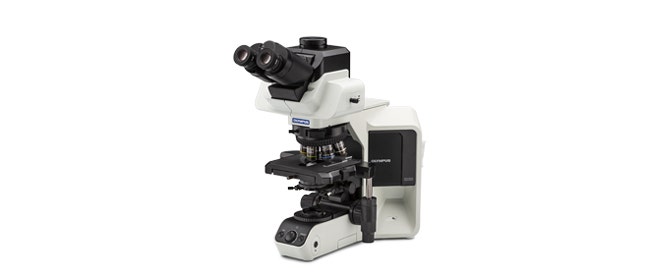
BX53
- High-luminosity True Color LED illumination
- Modular concept enables individual components to be motorized
- Easily acquire multi-color fluorescence images
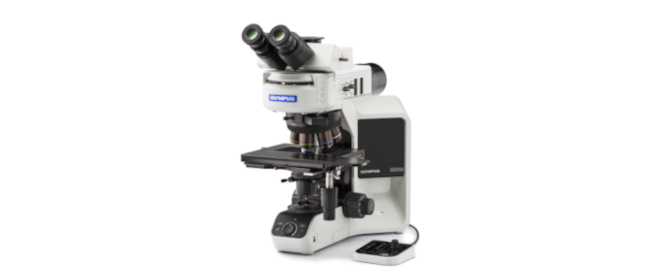
BX53M
- Modular materials-science microscope with flexible configurations for general or specialized observation
- Intuitive, ergonomic controls that simplify complex tasks and improve reproducibility
- Advanced contrast and imaging options with high-quality optics for accurate, reliable inspections
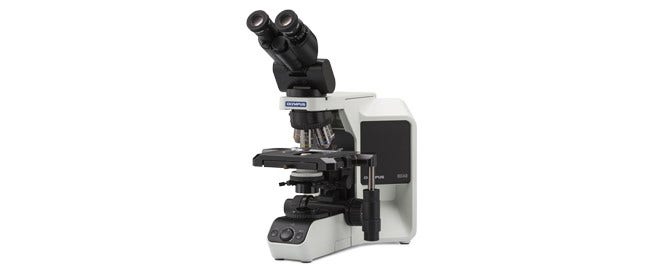
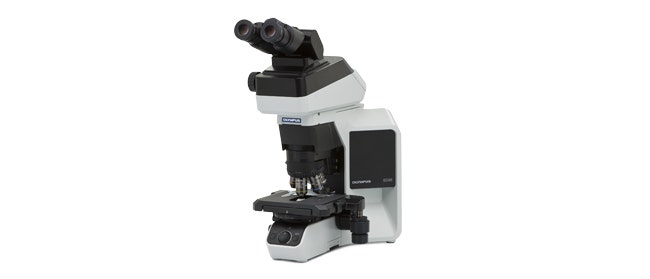
BX46
- Exceptionally ergonomic design
- World’s first tilting telescopic lifting tube
- Ultra-low fixed stage
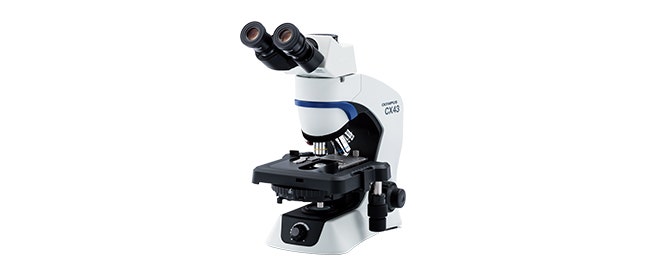
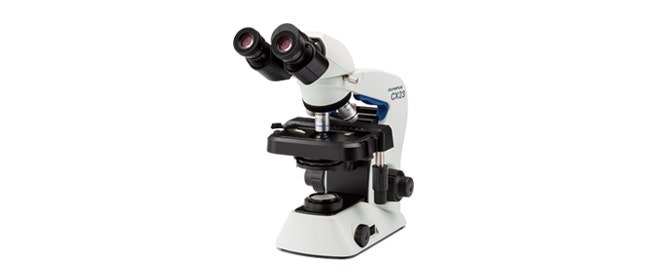
CX43
- Ergonomic design
- Ideal for versatile applications
- Long-lasting LED illumination
* Optional single line LED light source for fluorescence (peak excitation wavelength 470 nm only)
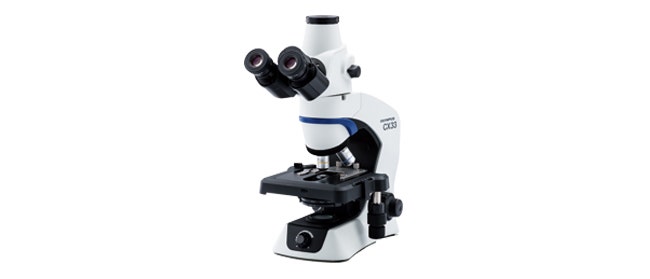
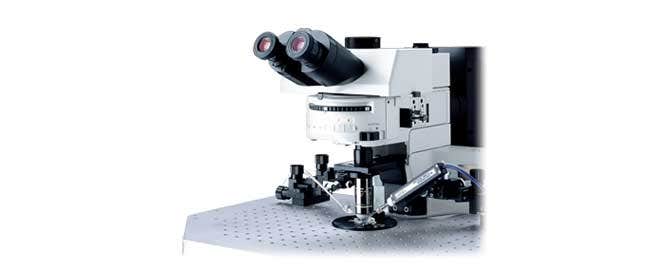
BX51WI
- Ideally suited to brain-slice and in-vivo electrophysiology
- Water immersion optics designed for electrophysiological applications
- Stability and reliability due to fixed stage concept
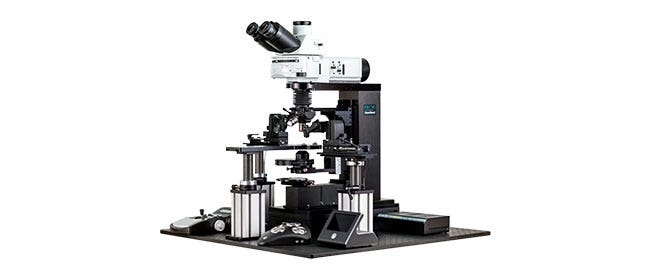
OpenStand Microscope Frame
- Modular and flexible electrophysiology solution
- Configurable with Olympus optics and Prior Scientific accessories
- Motorized Z accommodates a wide specimen range
Upright Microscope Resources
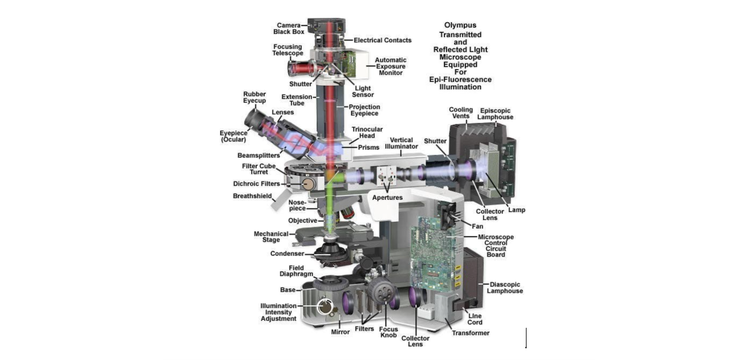
Upright Fluorescence Microscope Design
Learn about the design of upright fluorescence microscopes in our knowledge hub.


Microscope Museum
Explore the history of our upright microscopes designed throughout a century of innovation.
Upright Microscope Resource Videos
Introduction to the BX53 Upright Microscope
This video takes a closer look at the BX53 upright microscope, a flexible and customizable system offering a wide range of observation methods including phase contrast and fluorescence. High-performance X Line™ objectives with bright LED lighting delivers sharp, high-resolution images with better color accuracy for pathology and laboratory applications.
Related Applications
Routine Microscopy: Improving Productivity Through Better Ergonomics
In this article, James Geary, physiotherapist at the Royal Lancaster Infirmary, Lancaster, UK, describes the issues encountered by professionals carrying out daily microscopy tasks. A five-point checklist will detail a step-by-step guide to setting up a microscope with ergonomics in mind and Delaram’s story will demonstrate how changes in both equipment and customisation can have immediate real-world benefits, reducing pain and improving productivity.
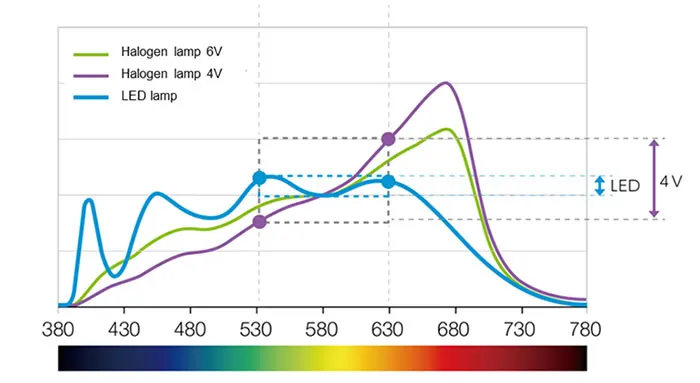
Identifying Collagen Fiber Types I and III Stained with Picrosirius Red Using the BX53 Microscope Equipped with Olympus’ High Luminosity and High Color Rendering LED
To observe collagen fibers, samples can be stained with Masson trichrome (MT), Elastica van Gieson (EVG), or Elastica Masson (E-M); however, distinction between collagen fiber types I and III is not possible with this method. In drug discovery research, quantitative evaluation of the collagen fibers is required, so it is necessary to be able to distinguish between collagen fiber typesⅠand III. Researchers in this field are turning their attention to polarized light observation of collagen fibers stained with Picrosirius Red because this method allows the required distinction between the two fiber types.

Facilitating Malaria Research with a Battery-Powered Microscope Illumination Solution
Evident’s Customized Solutions team can co-create solutions with you to solve specific microscopy problems or enhance the functions of our standard microscopes. Here, we demonstrate how we provide capability beyond the conventional by supporting microscopy training in remote locations.
Related Categories
Upright Microscope FAQs
In an upright microscope, the light source and condenser are located beneath the stage and, therefore, the specimen. Light is transmitted through the sample from below, and it can then be viewed from above with an ocular lens.
While with an inverted microscope, gravity naturally causes cells to sink to the bottom and adhere to the coverslip, when using an upright microscope for cell biology applications, the samples are instead squeezed between the coverslip and a slide. This allows the sample to be successfully viewed and analyzed with the upright microscope from above.
An upright microscope has its objective lenses positioned above the stage and the light source below. This setup is ideal for viewing prepared slides, such as tissue sections or cell smears, using transmitted light. Commonly used in pathology, microbiology, and general laboratory research, upright microscopes are well suited for analyzing thin or fixed specimens.
An inverted microscope, on the other hand, places the objective lenses below the stage and the light source above the sample. This configuration is especially useful for observing living cells in culture dishes or flasks, without requiring thin sectioning. Inverted microscopes support applications like cell culture, developmental biology, and live-cell imaging—offering a convenient way to study cells over time.