Stereo Microscopes
A stereo microscope uses two optical paths to produce a three-dimensional view of solid specimens at low magnification. Also called a stereoscopic microscope or a dissecting microscope, it supports life science and industrial work ranging from dissection, developmental biology, and macro fluorescence imaging to electronics, metals, and quality control inspection.
Built on more than 100 years of optical innovation, Evident stereo microscopes combine high-quality optics with modular configurations, generous working space, and ergonomic accessories for clear, comfortable observation.
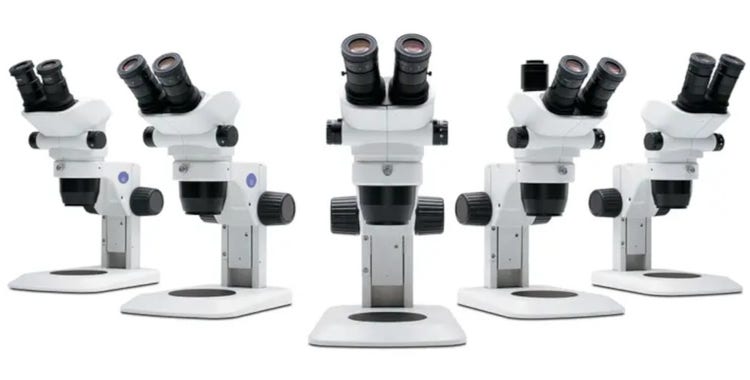
EVIDENT Stereo Microscopes
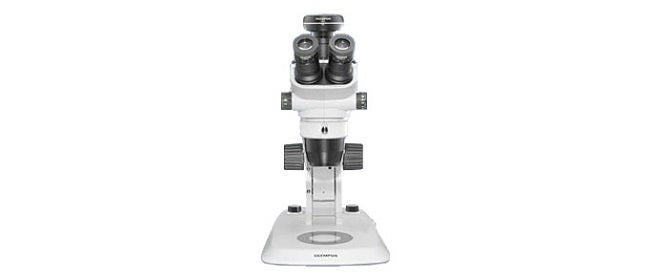
SZ61/SZ51
Research Stereo microscope System
The compact SZ61 and SZ51 stereo microscopes deliver flat, natural color images, smooth macro-to-micro-observation, and generous depth of field for routine life science, production, assembly, and inspection tasks.
- SZ61: magnification range of 6.7x–45x, zoom ratio of 6.7:1
- SZ51: magnification range of 8x–40x, zoom ratio of 5:1
- Greenough optical system for excellent image flatness, large depth of field, and excellent stereoscopic view
- High color fidelity for observing and documenting specimens in natural colors
- Reflected and transmitted LED illumination options for wide-ranging observation
- Antistatic construction and an available trinocular SZ61 model for digital imaging
- Wide choice of auxiliary objectives to modify magnification from 2x to 270x and a working distance up to 350 mm
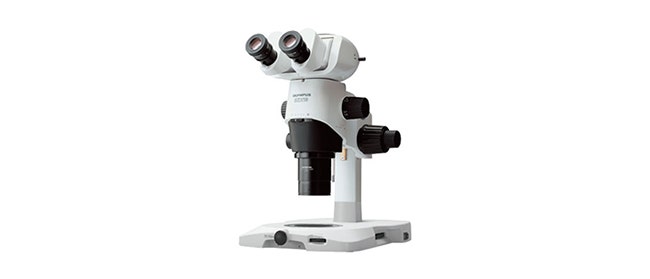
SZX16
Advanced Stereo Microscope
The SZX16 stereo microscope delivers exceptional optical clarity, enabling labs to detect, document, and identify the smallest details.
- Outstanding resolution of 900 line pairs per mm (0.3 NA)
- Ultra-wide 16.4:1 zoom ratio
- Zoom range of 0.7x–11.5x (1X objective)
- 6 objectives ranging from 2.1x to 230x magnification (10X ocular)
- Built-in aperture to adjust light intensity and depth of field
- Dual objective turret
- Galilean optical system with minimized distortion
- Excellent stereoscopic depth and accurate color representation
- Supports darkfield, oblique contrast, polarization, and excellent fluorescence capabilities
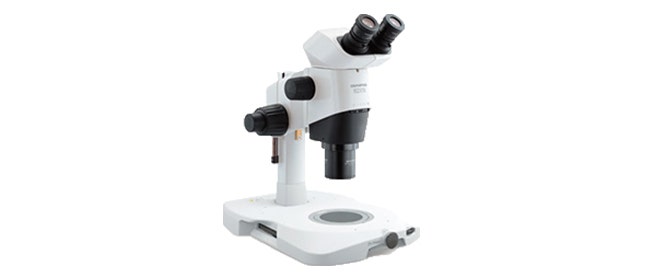
SZX10
Flexible Stereo Microscope
The SZX10 stereo microscope adapts into a flexible, all-in-one microscope suited for a wide range of samples and observation tasks.
- High-resolution imaging at 600 line pairs per mm (0.2 NA)
- Wide zoom ratio of 10:1
- Zoom range 0.63x–6.3x (1X objective)
- 8 objectives ranging from 3.2x to 126x magnification (10X ocular)
- Built-in aperture to adjust light intensity and depth of field
- Dual objective turret
- Galilean optical system with minimized distortion
- Excellent stereoscopic depth and accurate color representation
- Supports darkfield, oblique contrast, polarization, and simple fluorescence observation
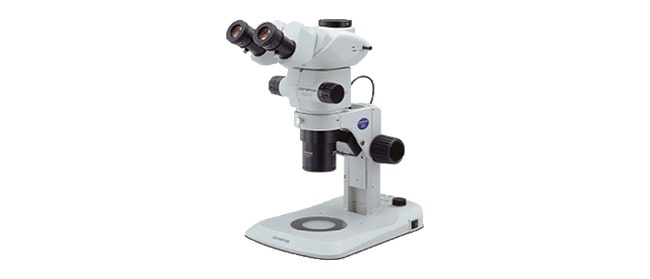
SZX7
Cost-Efficient Stereo Microscope
The SZX7 stereo microscope combines high-quality Galilean optics, ergonomic operation, and configuration flexibility for life science, materials science, production, and QC inspection.
- 7:1 zoom ratio with a 0.8x–5.6x zoom range (1X objective)
- 8 objectives ranging from 4x to 112x magnification (10X ocular)
- High color fidelity and brilliant, highly resolved images
- Wide range of ergonomic solutions for comfortable observation
- Supports darkfield, polarization, oblique contrast, and simple fluorescence observation
- Versatile LED, fiber optic, coaxial, and ring light illumination options
- Built-in ESD protection and ergonomic controls for comfortable operation
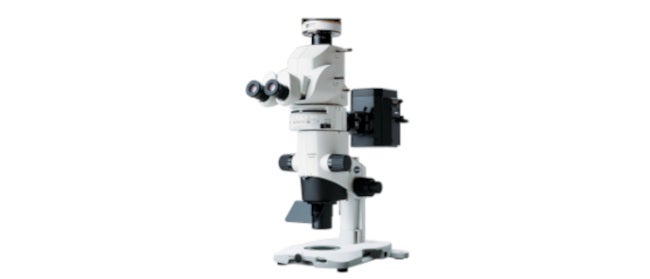
MVX10
Macro Zoom Imaging System
The MVX10 macro zoom microscope system combines a fluorescence-optimized single-zoom optical path with a broad observation range for imaging whole organisms, tissues, organs, and cellular-level gene expression.
- Plan apochromatic objectives (high NA up to NA 0.5) for maximum resolution and strong fluorescent performance
- 10:1 zoom ratio with a 0.63x–6.3x mono-zoom range
- Wide zoom ratio of 10:1
- 3 objectives ranging from 4x–250x magnification (10X ocular)
- Maximum 55 mm for large or fast-moving specimens
- Supports darkfield, oblique contrast, polarization, and simple fluorescence observation
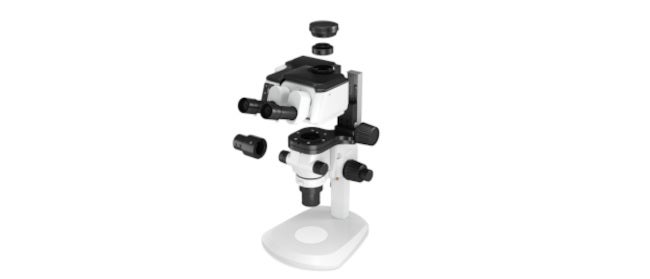
SZX-AR1
Augmented Reality Microscope System
The SZX-AR1 augmented reality microscope system adds in-view digital guidance to compatible SZX™ stereoscopic microscopes to simplify complex manufacturing, assembly, and training tasks.
- Compatible with SZX7, SZX10, and SZX16 stereo microscopes
- Projects images, videos, notes, reticles, grids, and zoom-linked gauges
- Keeps operators focused on the eyepieces while they follow work instructions
- Supports remote guidance through third-party collaboration software
- Captures images and video for documentation, analysis, and record-keeping
Which Stereo Microscope Is Right for You?
For guided assembly, training, and remote support, add the SZX-AR1 augmented reality system to a compatible SZX7, SZX10, or SZX16 microscope. Our experts can help you identify the right stereo microscope system for your application and goals.
Types of Stereo Microscopes
Whether you're inspecting electronic components, preparing biological samples, imaging fluorescent specimens, or documenting research, Evident offers a stereo microscope designed for your application.
Choose from compact Greenough systems for routine observation, modular Galilean microscopes for advanced research and fluorescence imaging, dedicated macro fluorescence systems for large specimens, ESD-safe configurations for electronics manufacturing, and augmented reality solutions that bring digital guidance directly into your workflow.
With a broad range of optics, stands, illumination, cameras, and accessories, every system can be configured to match your samples, imaging techniques, documentation requirements, and working environment.
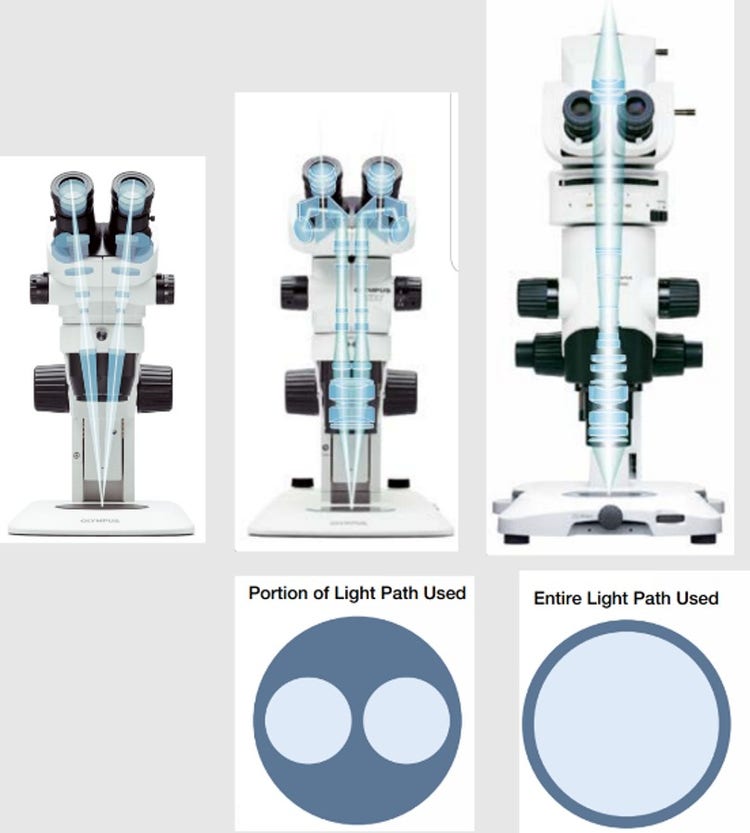
Difference between a Greenough type (left), a Galilean type (center), and a single-zoom optical path (right).
Greenough Type: Efficient and Reliable
The SZ51 and SZ61 are built around the proven Greenough optical design, delivering excellent stereoscopic viewing in a compact and economical package. They are ideal for routine observation, sample preparation, quality control, and educational environments where dependable performance and ease of use are essential.
Galilean Type: Designed for Discovery
The SZX7, SZX10, and SZX16 combine a Galilean optical system with modular flexibility to deliver exceptional image quality, expansive zoom ranges, and outstanding resolution. Whether analyzing and measuring samples, performing micromanipulation, or capturing fluorescence images, these systems provide the optical performance and versatility demanded by advanced life science and materials research.
Single-Zoom Optical Path: Optimized for Fluorescent Specimens
The MVX10 takes a different approach. Its single-zoom optical path maximizes light throughput while maintaining a wide field of view and high resolution across the entire zoom range. Designed specifically for fluorescence imaging, it enables researchers to observe faint fluorescent signals in large specimens to single-level fluorescent signals.
Life Science Applications for Stereo Microscopes
Stereo microscopes support a wide range of biology tasks that benefit from a three-dimensional view, low magnification, and enough working distance to manipulate the specimen.
Dissection and Microsurgery
A dissecting microscope gives physiology, zoology, and anatomy labs an upright 3D view of the specimen while forceps, probes, and fine tools remain in use. The long working distance leaves room for delicate manipulation. Meanwhile, the optional tilting or ergonomic observation tubes help support a more natural posture during microsurgery and extended dissection sessions.
Developmental Biology and Embryology
A stereo microscope lets researchers observe, sort, and track live embryos and model organisms, including zebrafish, Drosophila, and C. elegans, without flattening the sample. Oblique and darkfield illumination improve contrast in transparent specimens. For fluorescence and advanced contrast, choose the SZX16 or SZX10. For high-efficiency macro fluorescence imaging across whole organisms, tissues, and cellular-level gene expression, choose the MVX10.
Fluorescence Screening and Imaging
Fluorescence-ready stereo microscopes support screening and imaging across biological applications. The MVX10 combines large-specimen fluorescence imaging with the flexibility to visualize whole organisms, tissues, and gene expression at the cellular level in a single workflow. The SZX16 and SZX10 support screening of GFP- and RFP-expressing reporter lines in zebrafish, Drosophila, and C. elegans, whole-embryo fluorescence imaging, and sorting fluorescent-positive specimens.
Entomology
A stereo microscope gives entomologists the depth perception and wide field of view needed to examine external morphology, compare body structures, sort specimens, and perform fine preparation work. Researchers can move from an overall view of an insect to smaller features while keeping the three-dimensional context that supports identification and manipulation.
Plant and Botanical Studies
Stereo microscopes reveal the three-dimensional form of seeds, roots, flowers, leaves, and other plant structures at low magnification without compressing them into a flat image. A system such as the SZX10 provides a wide zoom range for screening whole structures and then examining smaller features in greater detail.
Tissue and Neuroscience Sample Preparation
A stable stereo view helps researchers orient tissue, position electrodes, expose anatomical structures, and prepare samples before higher-magnification imaging. The long working distance keeps tools accessible while the broad field of view preserves the relationship between the target area and the surrounding sample. Explore Evident's broader life science microscope portfolio for downstream imaging options.
Aquatic and Marine Biology
Stereo microscopes support the screening, sorting, and identification of plankton, copepods, larvae, and other small marine or freshwater organisms. Their low-magnification 3D view is well-suited to the first examination of a mixed sample before selected organisms move to higher-magnification imaging. See how an SZX16 system was used to screen Arctic plankton in Evident’s story on the National Geographic series, Pole to Pole with Will Smith.
Industrial Applications for Stereo Microscopes
An industrial stereo microscope is a practical tool for inspection, assembly, rework, and quality control because it combines depth perception, a wide depth of field, and room to work with tools.
Electronics and PCB Inspection
For electronics inspection, a PCB microscope or circuit board microscope lets operators examine solder joints, connectors, traces, and small components for defects, then complete rework under magnification. ESD-safe SZX7, SZ61, and SZ51 configurations help protect static-sensitive electronics during inspection and assembly. For automated or monitor-based workflows, explore digital microscopes for inspection and analysis.
Automotive and Precision Parts Inspection
An industrial stereo microscope helps inspectors analyze and measure machined parts for burrs, surface condition, fitting features, and visible contamination while preserving a 3D view of the component. Applications include inspecting fuel-injector nozzle apertures and other small precision features.
Precision Component Assembly
Stereo microscopes support the placement, alignment, joining, and soldering of small components by keeping depth cues visible while operators work with their hands and tools. A generous working distance leaves space around the part, and a broad depth of field helps keep more of the assembly in view. The SZX-AR1 system for compatible SZX microscopes can add in-view instructions and remote guidance for complex procedures.
Metal and Weld Inspection
An industrial stereo microscope provides a low-magnification 3D view for examining surface defects, weld condition, fracture surfaces, corrosion, and machining marks on metal parts. It is useful for initial inspection and documentation before more detailed analysis. For polished sections, microstructure, and higher-magnification materials, explore Evident's metallurgical microscopes.
Cleanliness and Particle Analysis
Stereo microscopes can help QC teams screen components and filters for visible particulate contamination, then document or count particles with a compatible camera and software. Formal particle analysis may require a dedicated, standardized workflow, so continue to Evident's cleanliness and particle analysis solutions for detailed system options.
Gemology and Jewelry Inspection
A jeweler's microscope provides the depth perception needed to inspect gemstones, prongs, settings, engravings, and hallmarks while keeping tools in view. Using a specialized gemological microscope allows for evaluating surface features, inclusions, and workmanship. The SZX7 combines a 7:1 zoom ratio with broad illumination and objective options for varied specimens.
Forensic Examination
Forensic microscopy uses low-magnification stereo observation to screen trace evidence, fibers, questioned documents, tool marks, and ballistic evidence while preserving the three-dimensional context of the sample. A stereo microscope is especially useful for nondestructive examination, sorting, and documentation before specialized comparison or analytical methods. Explore this light microscopy in forensics application note.
Cameras, Measurement, and Documentation
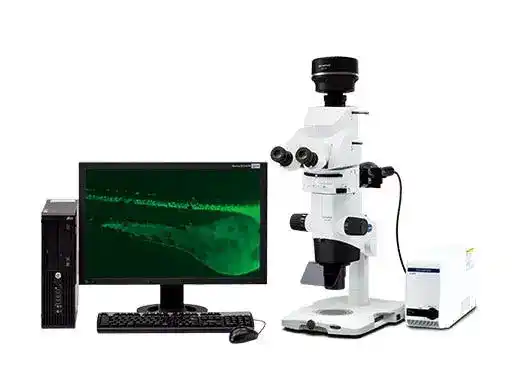
A stereo microscope can become a complete documentation workstation when paired with a digital camera and application-specific software. Capture still images or videos, display a live view on a monitor, make calibrated measurements, annotate findings, and preserve records for research, inspection, training, or reporting.
Microscope Cameras
An Evident digital microscope camera mounts to the trinocular port, the third optical port above the two eyepieces, to capture images and videos or project a real-time view on a screen. A stereo microscope with camera supports research documentation, publication figures, group viewing, inspection records, and clearer communication across teams.
On the MVX10 macro zoom microscope system, a high-sensitivity camera can help capture faint fluorescence signals. Camera selection should match the observation method, required resolution, sensitivity, frame rate, and software workflow.
Measurement and Reporting Software
For life science research, cellSens™ microscope imaging software supports image acquisition, measurement, annotation, processing, sharing, and reporting in packages matched to different imaging needs. It can be used with a compatible stereo microscope and camera configurations for biological documentation and analysis.
For industrial and materials workflows, PRECiV™ image analysis and measurement software connects image acquisition, calibrated on-screen measurements, annotation, analysis, and report generation. Pair PRECiV software with a compatible stereo microscope and digital camera to document inspection results, gauge features, create extended-focus or panoramic images, and maintain visual records.
Stereo Microscope Resources
Explore practical examples, imaging guidance, and workflow ideas for using stereo microscopes in research, inspection, assembly, and quality assurance.

Improving the Efficiency of Quality Assurance Teams Through Microscope Inspections
See how a quality assurance team used an SZX10 stereo microscope to speed up routine material inspections, capture images for review, and communicate findings across internal teams and suppliers.
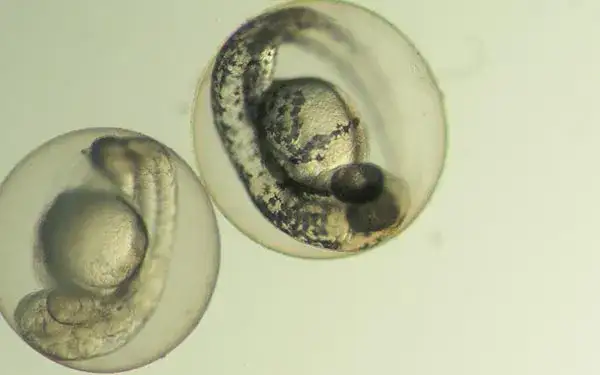
Stereo Microscope Primer: Transmitted Light Observation Methods
Compare brightfield, darkfield, oblique, and polarized transmitted light observation, then learn how sample transparency and structure influence the method you choose.
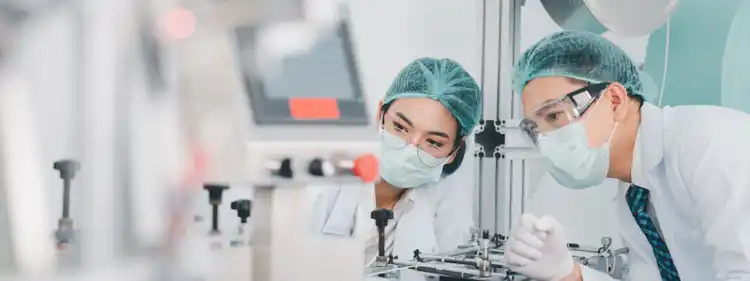
3 Advantages of Using Augmented Reality Microscopes in Medical Device Assembly
Explore how in-view instructions, remote guidance, and shared microscope views can support focus, problem-solving, and training during complex medical device assembly.