Darkfield Microscopes
Darkfield microscopy makes the invisible visible. By directing light obliquely at the specimen so that only scattered and diffracted light from the sample enters the objective, the technique shows transparent, unstained specimens as brilliantly lit objects against a black background. The result is striking contrast without staining or fixation, preserving specimen integrity and enabling live-cell observation.
Evident's microscope platforms are highly modular to support darkfield illumination across research, clinical, and industrial applications. Explore our wide range of conventional and digital microscope solutions designed for seamless and high-contrast darkfield observation.
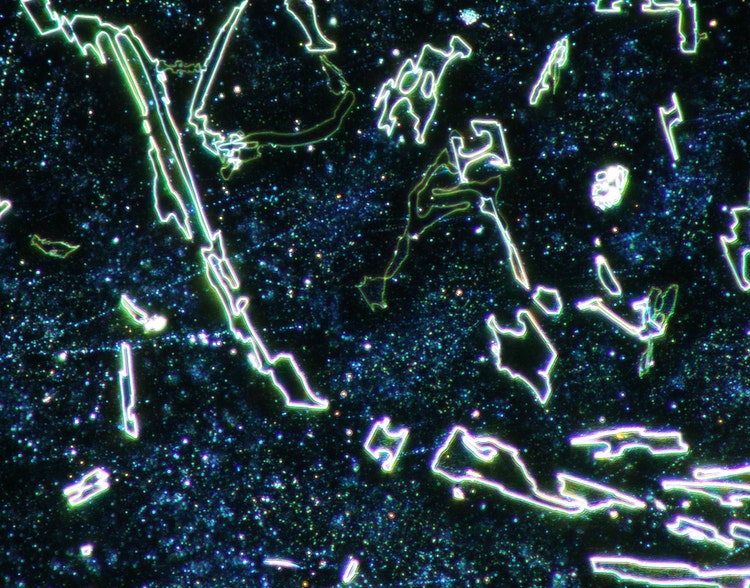
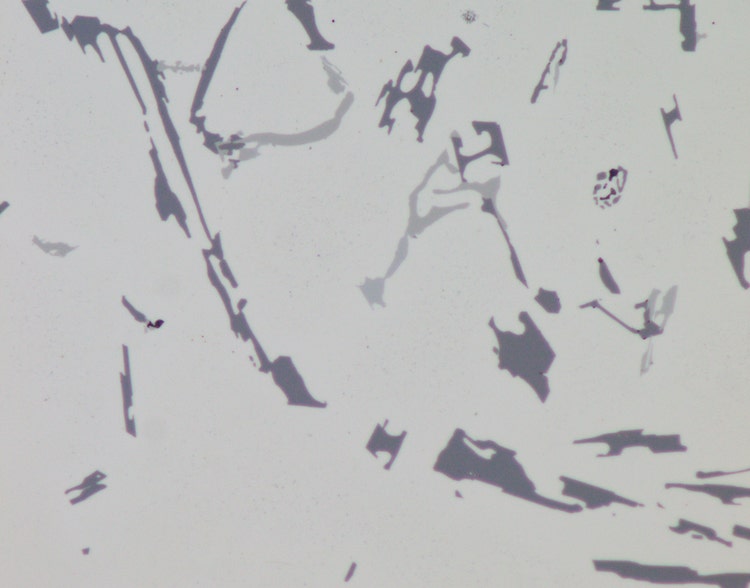
Darkfield image of a polished aluminum–silicon alloy captured with the GX53 metallurgical microscope.
Darkfield-Compatible Microscopes
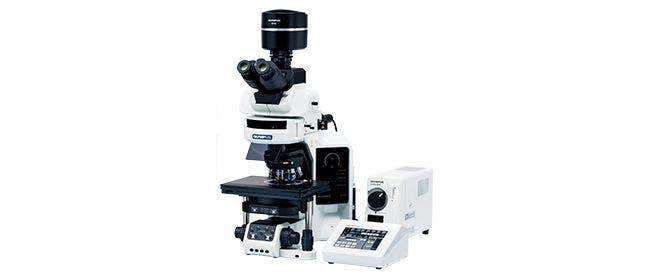
BX63
Automated Fluorescence Microscope
The BX63 automated fluorescence microscope is designed for advanced life science research requiring precise motorization, stable imaging, and efficient multidimensional acquisition.
- Fully motorized system allows automation of complex multidimensional experiments
- Accurate motorized Z-drive
- High stability due to a fixed stage design
- Full condenser compatibility for darkfield illumination
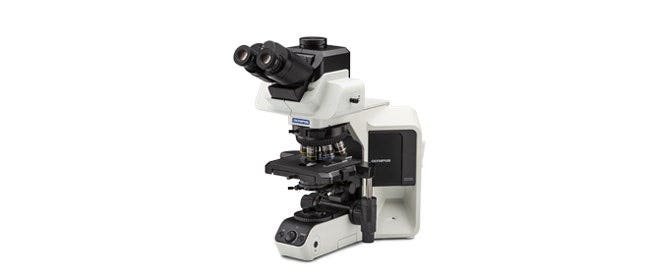
BX53
Semi-Motorized Microscope
The BX53 microscope offers flexible imaging performance for routine and advanced applications, featuring modular motorization options and support for brightfield, fluorescence, and darkfield.
- High-luminosity True Color LED illumination
- Modular concept enables individual components to be motorized
- Easily acquire multi-color fluorescence images
- Full condenser compatibility for darkfield illumination
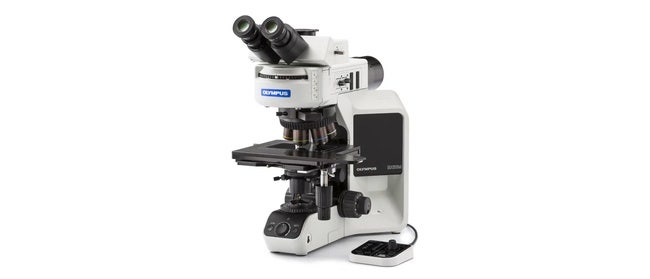
BX53M
Industrial Upright Microscope
Designed with modularity in mind, the BX3M series provides versatility for a wide variety of materials science and industrial inspection applications.
- Modular design with configurations for general or specialized observation
- Intuitive, ergonomic controls simplify complex tasks and improve reproducibility
- Automated light intensity manager for consistent illumination
- Advanced optics and contrast options for accurate, reliable inspections
- IR objective options to view semiconductor patterns through silicon
- PRECiV integration for a seamless workflow from imaging to reporting
- Full condenser compatibility for darkfield illumination
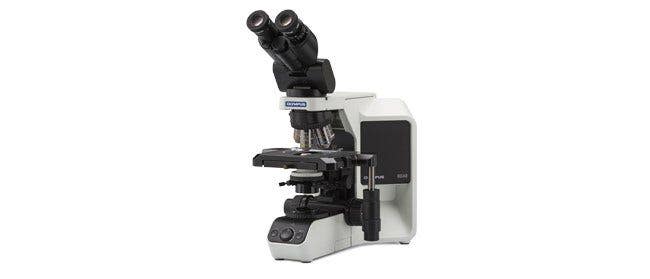
BX43
Standard Microscope
The BX43 upright microscope provides reliable optical performance and intuitive contrast control for routine life science imaging, including brightfield and darkfield observation.
- True Color LED illumination
- Light intensity manager
- Allows easy contrast management
- Full condenser compatibility for darkfield illumination
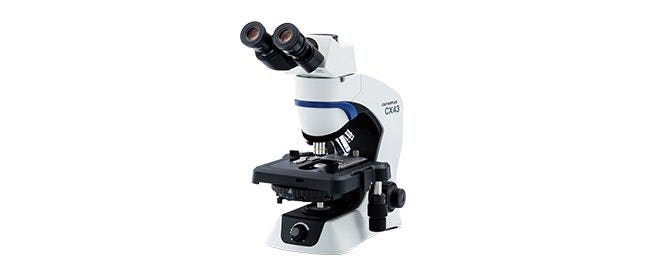
CX43
Biological Microscope
The CX43 biological microscope combines ergonomic operation and versatile imaging capabilities for routine laboratory and educational applications.
- Ergonomic design
- Long-lasting LED illumination
- Accessible darkfield via a condenser
- Optional single-line LED light source for fluorescence
* Optional single line LED light source for fluorescence (peak excitation wavelength 470 nm only)
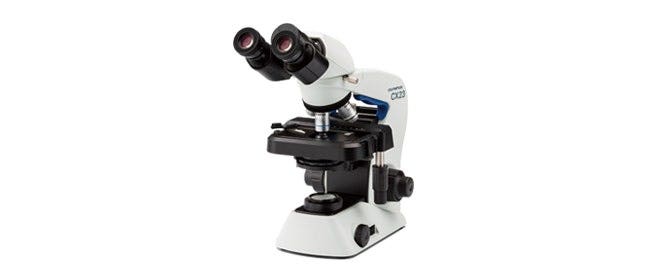
CX23
Student Microscope
The CX23 student microscope offers easy operation and dependable optical performance for classroom and introductory laboratory use.
- Diverse, user-friendly design
- Outstanding optical performance
- Long-lasting LED illumination
- Accessible darkfield via a condenser
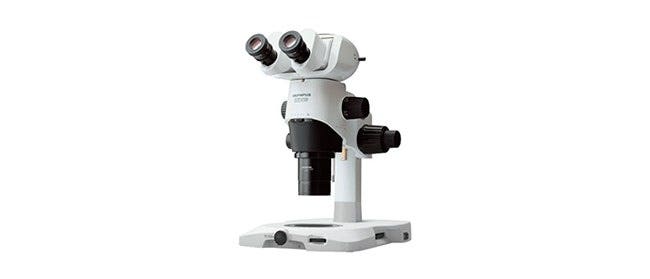
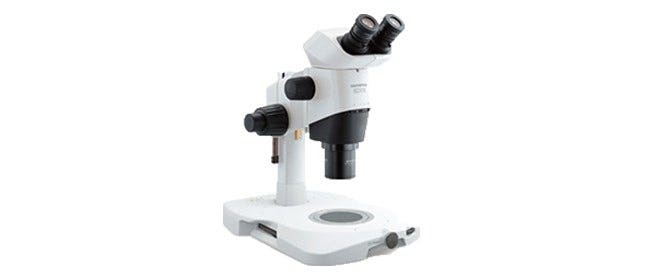
SZX16
Advanced Stereo Microscope
The SZX16 stereo microscope delivers exceptional optical clarity, enabling labs to detect, document, and identify the smallest details.
- Outstanding resolution of 900 line pairs per mm (0.3 NA)
- Darkfield, fluorescence, and polarization capabilities
- Ultra-wide zoom ratio of 16.4:1
- Full zoom range of 0.7x–11.5x with our dual turret
- Ergonomic solutions for comfortable observation
SZX10
Flexible Stereo Microscope
The SZX10 stereo microscope adapts into a flexible, all-in-one microscope suited for a wide range of samples and observation tasks.
- High-resolution imaging at 600 line pairs per mm (0.2 NA)
- Supports darkfield, polarization, and simple fluorescence observation
- Wide zoom ratio of 10:1
- Galilean optical system helps minimize distortion
- Excellent stereoscopic depth and accurate color representation
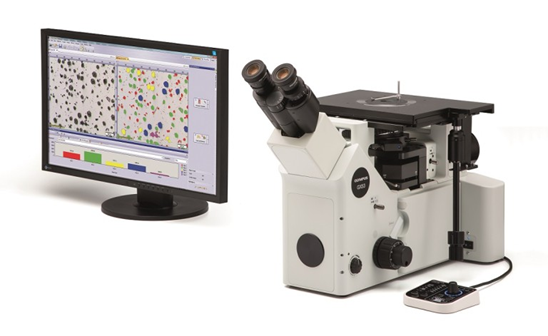
GX53
Inverted Metallurgical Microscope
The GX53 microscope delivers high clarity and reliable performance for metallurgical inspection, enabling efficient analysis of metals and industrial materials.
- Design suited for polished metals, welds, and large or heavy samples
- High‑resolution images under brightfield, darkfield, DIC, or MIX observation
- Modular accessories meet a variety of metallurgical inspection needs
- Long working distance objective options support faster inspections
- PRECiV integration for compliant metallurgical analysis workflows
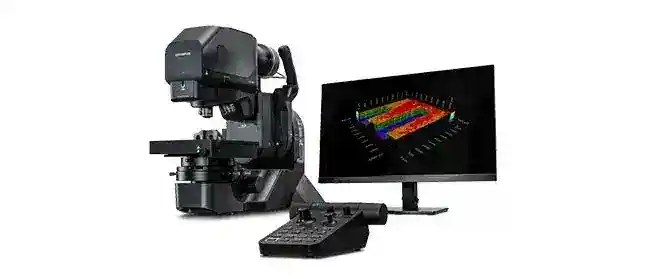
DSX2000
Digital Microscope Series
The award-winning DSX2000 series empowers users of all levels to achieve fast, precise results and capture exceptional images beyond 4K resolution.
- Full motorization simplifies tasks for researchers and QC professionals
- Fast macro-to-micro inspections with a wide magnification range of 21–7,300X
- Seven observation methods at the click of a button for versatile sample analysis
- 20 objective lens options adapt imaging to different samples and applications
- Macro camera accessory for fast, flexible imaging of large samples
- PRECiV integration unlocks efficiency with Live AI and other smart tools
- Guaranteed* accuracy and repeatability with professional on-site calibration
*The guaranteed accuracy and repeatability apply only if the device has been calibrated according to the manufacturer's specifications and is in defect-free condition. Calibration must be performed by an Evident technician or an Evident-authorized specialist.
What Is Darkfield Microscopy?
Darkfield microscopy uses oblique illumination to make transparent or low-contrast specimens appear bright against a dark background.
a. A darkfield condenser blocks direct light and sends a hollow cone of light toward the sample.
b. When the light strikes the specimen, the specimen scatters the light in many directions.
c. Only scattered light enters the objective lens, making the specimen appear bright against a dark background.
Darkfield microscopy enables high-contrast imaging without staining and can detect particles about 30 nm and larger. For proper darkfield imaging, the condenser NA must exceed the objective NA. Objectives with built-in iris diaphragms can reduce the effective NA, enabling darkfield with standard condensers.
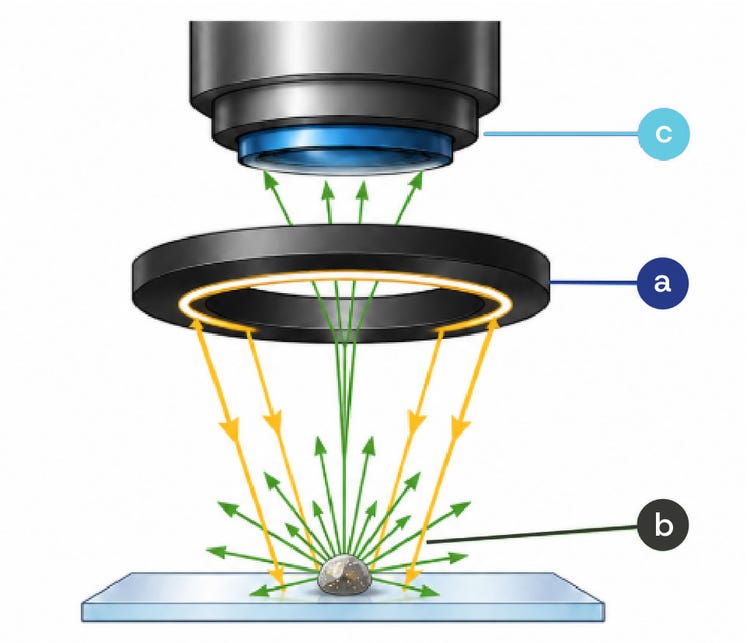
Reflected darkfield illumination
What Can You See with Darkfield Microscopy?
Living Microorganisms
Darkfield microscopy makes transparent specimens appear bright against a dark background, enabling clear observation of living bacteria, spirochetes, protists, algae, and blood cells without staining. The technique is commonly used for motility studies and live-cell imaging.
Blood and Clinical Samples
Darkfield microscopy supports the observation of delicate clinical specimens while preserving sample integrity. It is used to visualize Treponema pallidum and evaluate abnormal red blood cell morphology in fresh samples.
Nanoparticles and Colloids
Gold, silver, and silica nanoparticles scatter light strongly under darkfield, making particles approximately 10–100 nm visible for analysis. Applications include nanoparticle tracking and localized surface plasmon resonance (LSPR) studies.
Surface Defects and Industrial Inspection
Scratches, polishing marks, corrosion pits, inclusions, and contaminants on metals, glass, and semiconductor materials become highly visible in darkfield. The enhanced contrast helps improve defect detection and surface inspection workflows.
Unstained Tissue Sections
Collagen, elastin, and connective tissue structures naturally reflect and scatter light, allowing unstained tissue sections to appear bright in darkfield. This enables structural observation with minimal sample preparation.
Darkfield vs. Brightfield: Key Differences
Brightfield microscopy uses direct illumination to show dark specimens on a bright background, while darkfield microscopy uses oblique illumination to display bright specimens on a dark background. Brightfield is commonly used for stained or fixed samples, while darkfield is well-suited for live, unstained, and transparent specimens.
Brightfield
Darkfield
Darkfield can also detect smaller particles and fine structures that are difficult to see with brightfield. Modern research microscopes, including Evident BX™ and IX™ series microscope platforms, enable you to switch between brightfield and darkfield illumination in seconds by changing the condenser or rotating a condenser turret position.
Darkfield Microscopy Applications in Life Science
Microbiology
Darkfield microscopy enables researchers to observe the motility and morphology of living bacteria without fixation or staining. Fine structures such as bacterial flagella become highly visible, making the technique valuable for applications including Helicobacter pylori motility studies.
Cell Biology
Darkfield microscopy is used to track large organelles, vesicles, and exosome-like particles in living cells with enhanced contrast. The technique can also be combined with fluorescence microscopy for correlative live-cell imaging applications.
Parasitology
Darkfield microscopy helps researchers identify blood parasites and protozoa in fresh, unstained blood preparations. The enhanced contrast supports rapid visualization of transparent or low-contrast organisms.
Developmental Biology
Darkfield illumination enhances structural visibility while preserving live specimens. The technique is used to image transparent embryos and larvae, including zebrafish and C. elegans, during early developmental stages without labeling.
Marine Biology
Darkfield microscopy allows direct examination of marine microorganisms in seawater samples with minimal sample preparation. The technique improves contrast for observing transparent aquatic organisms and particulates.

Medaka captured with darkfield on an SZX stereo microscope.
Darkfield Applications in Materials Science and Industrial Imaging
Surface Defect Detection
Darkfield microscopy enhances the visibility of scratches, polishing marks, corrosion pits, and inclusions on metals, ceramics, and glass surfaces. Defects scatter oblique illumination strongly, enabling faster and more reliable inspection than brightfield imaging alone.
Semiconductor and Wafer Inspection
Particles, residue, and surface contamination on semiconductor wafers become easier to detect under darkfield illumination. The technique improves contrast for identifying defects that may be difficult to observe using brightfield.
Glass Inspection and Quality Control
Crystalline inclusions, bubbles, and surface imperfections in flat and hollow glass scatter light efficiently in darkfield. This supports rapid, nondestructive quality control in glass manufacturing and inspection workflows.
Fiber and Textile Analysis
Individual fibers and fine surface features appear bright and well-defined in darkfield microscopy. Applications include forensic fiber analysis, textile inspection, and contamination detection.
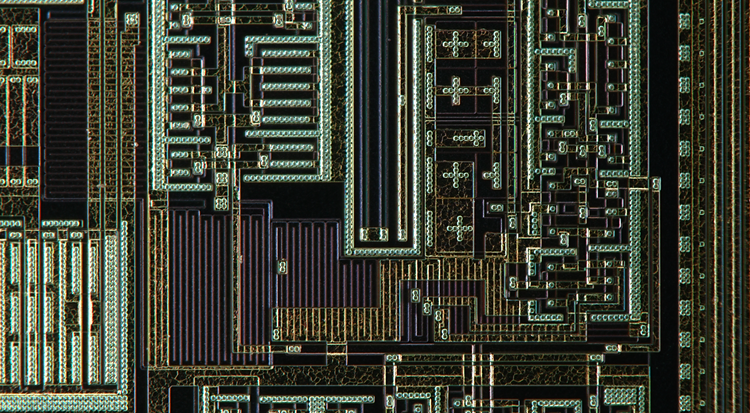
Darkfield image of a semiconductor sample imaged with the DSX2000 digital microscope.
Choosing the Right Darkfield Microscopy Configuration
The best darkfield microscopy setup depends on your sample type and application. Evident’s darkfield-compatible microscopes support seamless switching between observation methods and deliver clear, high-contrast observation.
Life Science Research
Microscope system: BX™ and CX™ upright microscopes with a dry darkfield condenser (NA 0.8–0.95) for imaging at 2X–40X magnification; or SZX™ stereo microscopes with fiber-optic ring lights or coaxial illuminators
- Suited for live cells, microbiology samples, and transparent specimens
- Compatible with standard glass slides and dry objectives
- No immersion oil or staining required
Industrial Inspection and Forensic Analysis
Microscope system: SZX stereo microscope with fiber-optic ring lights or coaxial illuminators
- Darkfield enhances scratches, particles, fibers, and surface contamination
- Ideal for quality control, failure analysis, and forensic examination
- Transmitted darkfield option for transparent or semitransparent samples
Materials Research and QC Inspection
Microscope system: DSX2000 series digital microscope
- Enables rapid inspection of surface defects and material features
- MIX illumination combines darkfield and brightfield to reveal more in one image
- Transmitted darkfield option for transparent or semitransparent samples
Metallurgical Inspection and Analysis
Microscope system: GX53 inverted metallurgical microscope
- Design suited for polished metals, welds, and large or heavy samples
- High‑resolution images under brightfield, darkfield, DIC, or MIX observation
- Directional darkfield helps reveal surface texture while reducing glare
Frequently Asked Questions About Darkfield Microscopy
What is darkfield microscopy used for?
Do I need a special microscope for darkfield observation?
What’s the smallest thing visible with darkfield microscopy?
Is darkfield microscopy used in clinical applications?
Darkfield Microscopy Resources

Darkfield Illumination Microscopy Guide
Find darkfield troubleshooting tips and configuration best practices in this comprehensive guide.
What Is Darkfield Microscopy?
Explore answers to commonly asked questions about darkfield microscopy, including insights into its limitations and advantages.
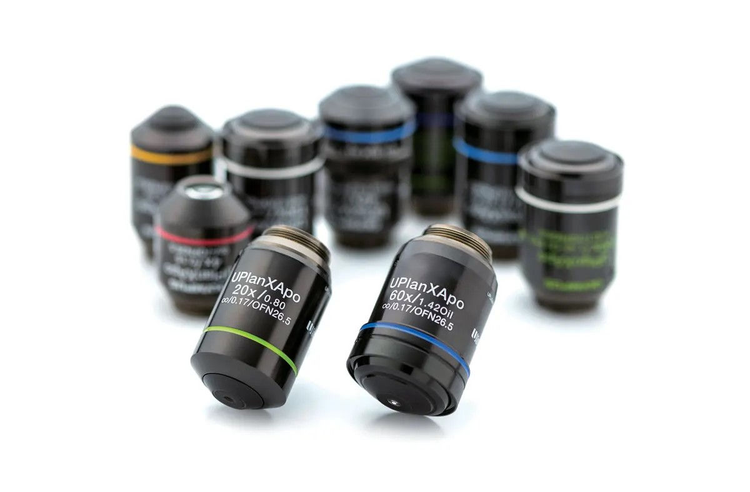
Darkfield Objective Lenses
Browse objective lenses suited for darkfield microscopy and compare options in seconds with our objective finder tool.